Algeria
 Egypt
 Libya
 Morocco
 Sudan
 Tunisia
 Benin
 Burkina Faso
 Cabo Verde
 Côte d'Ivoire
 Ghana
 Guinea
 Guinea-Bissau
 Liberia
 Mauritania
 Niger
 Nigeria
 Senegal
 Sierra Leone
 The Gambia
 Togo
 Cameroon
 Central African Republic
 Chad
 DR Congo
 Equatorial Guinea
 Gabon
 Republic of the Congo
 São Tomé and Príncipe
 Burundi
 Comoros
 Djibouti
 Eritrea
 Ethiopia
 Kenya
 Madagascar
 Malawi
 Mauritius
 Mozambique
 Rwanda
 Seychelles
 Somalia
 South Sudan
 Tanzania
 Uganda
 Angola
 Botswana
 Eswatini
 Lesotho
 Namibia
 South Africa
 Zambia
 Zimbabwe
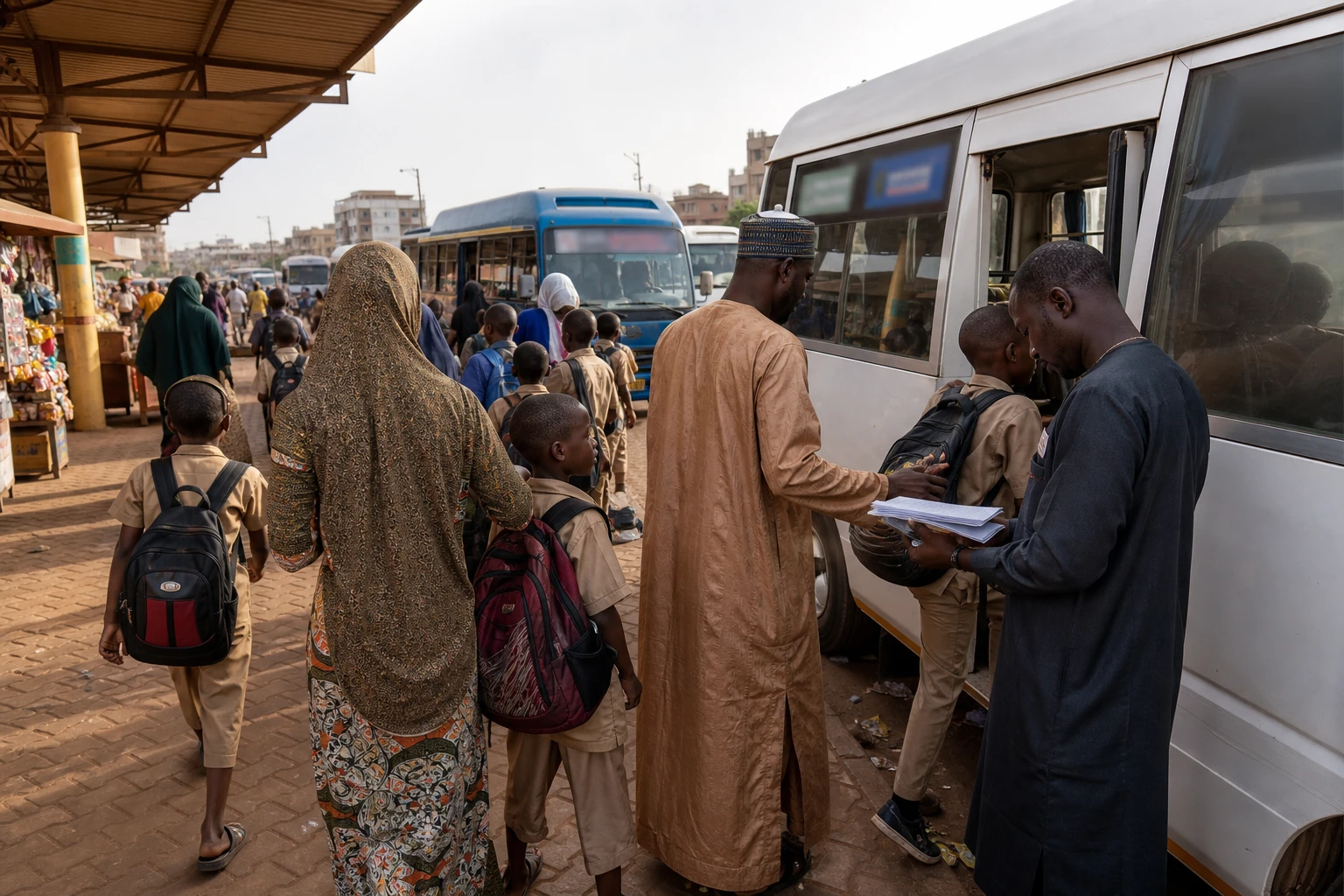
In Bamako, the start of the school year on Thursday 1 October 2026 opens a new year amid tension. In several regions of Mali, thousands of children remain without classrooms, even as the authorities have placed education at the heart of their national agenda.
A school year that does not include every pupil
According to data from the Mali Education Cluster, 2,444 schools were still closed at the end of April 2026. This coordination mechanism brings together the Ministry of National Education, UNICEF and Save the Children, among others.
The closures affect more than 733,000 pupils. They also affect nearly 14,700 teachers, who are unable to reach their posts or are affected by the suspension of school activities. In total, the country has 11,860 schools listed in the available data.
The figure gives a sense of the scale of the crisis. More than one school in five is therefore not operating normally. The situation is not limited to damaged buildings. In several localities, families have left their villages, teachers have been displaced and schools are sometimes being used as shelters by people fleeing violence.
The causes vary from one area to another. Some schools have been looted or damaged. Others have closed following threats against staff. Population displacement and flooding have also disrupted the continuity of lessons in some regions.
The Education Cluster has, however, recorded the reopening of 12 schools between March and April 2026, notably in the regions of Sikasso, Ségou and Mopti, as well as in the Nara cercle. This remains a limited result given the number of schools still closed.
The north and centre at the heart of the difficulties
Regional disparities remain particularly pronounced. In the Kidal region, 84% of schools are reportedly closed. In Ménaka, more than half of schools are unable to take in pupils.
Central Mali also remains highly exposed. The areas of Bandiagara, Douentza and Ténenkou are experiencing prolonged interruptions. In these areas, schooling depends directly on families’ and teachers’ ability to travel safely.
The Ségou region is also among those most affected in terms of the number of non-operational schools, with 506 schools closed according to data reported in June 2026. This contrast is significant. A region may have both a high concentration of schools and a large number of closures, while a less populous area may have a higher closure rate.
For families, the consequences go beyond losing a few months of lessons. Children risk falling behind, not returning to school or having to travel long distances to reach a school that is still open. Adolescent girls are particularly at risk of dropping out permanently when travel, domestic duties or insecurity compound economic hardship.
A political priority confronted by realities on the ground
The start of the school year comes as the president of the Transition, General Assimi Goïta, has proclaimed 2026-27 the “Year of Education and Culture”. The announcement was made on 5 February 2026, during the government’s ceremony to present its New Year’s greetings at the Koulouba Palace.
The Malian authorities present the initiative as a national effort to strengthen the education system, citizens’ training and cultural transmission. The government says it intends to focus on the quality of learning, community partnerships and the promotion of national languages.
This approach, however, creates an obligation to deliver results. Reopening a school depends not only on repairing a building. It also requires securing routes, ensuring teachers are present, rebuilding families’ trust and providing teaching materials.
In major cities, private schools and those still operating can sometimes absorb some of the demand. In Bamako, families with sufficient income can also seek an alternative. In rural areas, by contrast, replacement provision is often non-existent.
The challenge is therefore security-related, administrative and social. A policy focused solely on the number of schools reopened could overlook the quality of lessons, teachers’ regular attendance and the learning conditions of displaced children.
An issue that extends beyond Mali’s borders
The situation in Mali is part of a broader education crisis in the central Sahel. Burkina Faso, Mali and Niger face population displacement, armed threats and difficulties accessing public services. The three countries have also redefined their relations with ECOWAS, the West African regional organisation from which they jointly announced their withdrawal in January 2025.
This regional shift complicates political co-ordination, but does not eliminate shared needs. Children move across border areas. Displaced families cross borders. Teachers and humanitarian actors must therefore work in a regional space where national responses remain interdependent.
For Mali, the next step will be to measure actual reopenings after the start of the school year on 1 October 2026. The situation of teachers, displaced pupils’ access to lessons and the pattern of closures in the north and centre of the country will also need to be monitored.
The “Year of Education and Culture” will only become tangible if it enables children to return to regular, safe and sustainable schooling. For hundreds of thousands of young Malians, this school year is still beginning at a distance from their classrooms.