Algeria
 Egypt
 Libya
 Morocco
 Sudan
 Tunisia
 Benin
 Burkina Faso
 Cabo Verde
 Côte d'Ivoire
 Ghana
 Guinea
 Guinea-Bissau
 Liberia
 Mali
 Mauritania
 Niger
 Nigeria
 Senegal
 Sierra Leone
 The Gambia
 Togo
 Cameroon
 Central African Republic
 Chad
 DR Congo
 Equatorial Guinea
 Gabon
 Republic of the Congo
 São Tomé and Príncipe
 Burundi
 Comoros
 Djibouti
 Eritrea
 Ethiopia
 Kenya
 Madagascar
 Malawi
 Mauritius
 Mozambique
 Rwanda
 Seychelles
 Somalia
 South Sudan
 Tanzania
 Uganda
 Botswana
 Eswatini
 Lesotho
 Namibia
 South Africa
 Zambia
 Zimbabwe
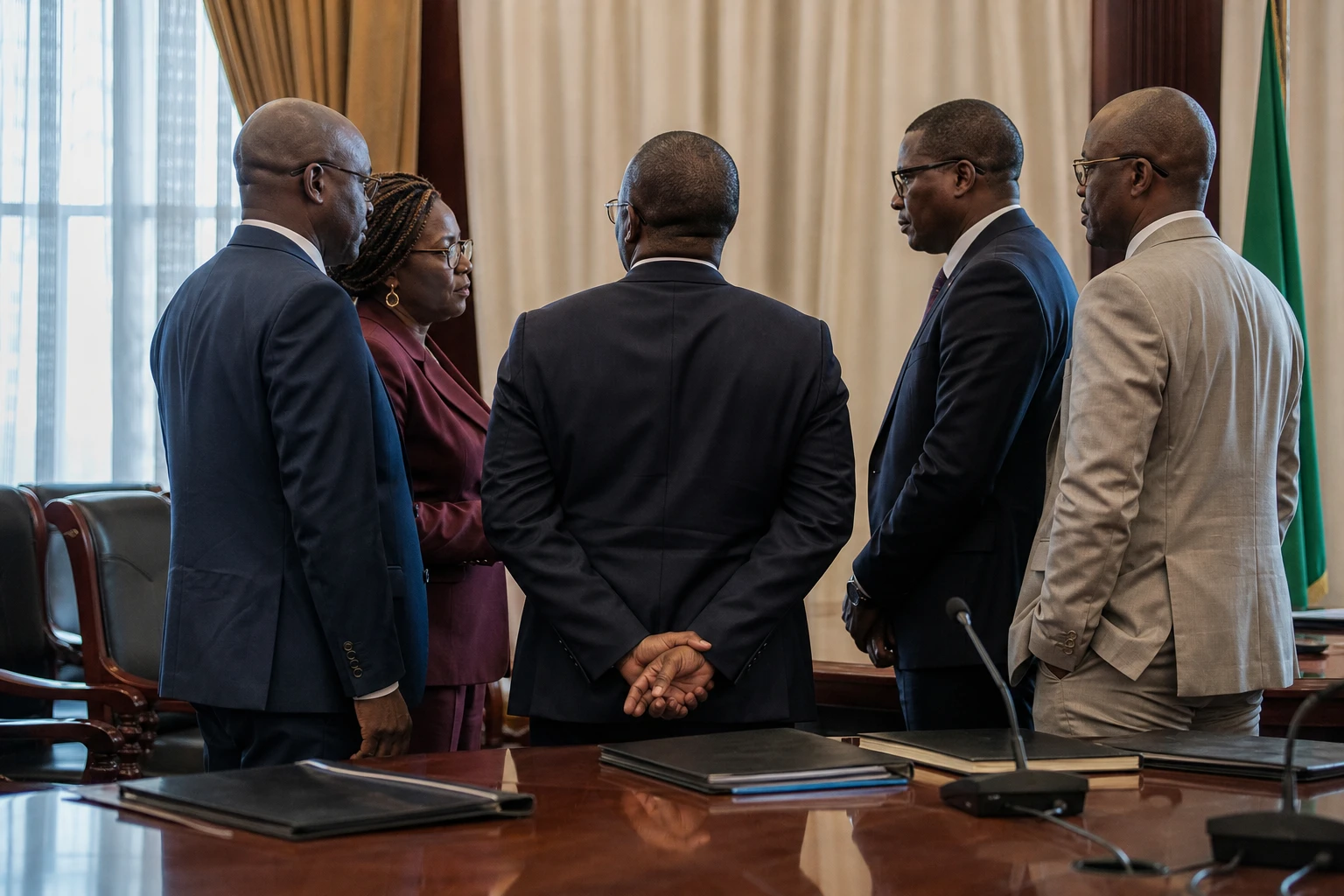
In the east of the Democratic Republic of the Congo, the disarmament of the Democratic Forces for the Liberation of Rwanda (FDLR) remains one of the most sensitive issues in dialogue between Kinshasa and Kigali. For the Congolese government, the challenge is now to convince its African partners that the process can enter a concrete phase, while addressing Rwanda’s objections.
This diplomatic sequence comes as several initiatives seek to bring positions closer in the Great Lakes region. The African Union has appointed Togo’s President of the Council, Faure Gnassingbé, as mediator. The process must also work with the frameworks of the East African Community, the Southern African Development Community and the International Conference on the Great Lakes Region.
A tour to explain the Congolese roadmap
Congolese Minister for Regional Integration Floribert Anzuluni and the President’s senior representative, Sumbu Sita, were received in Lomé on Tuesday 29 September 2026 by Faure Gnassingbé. The following day, they travelled to Luanda, where Angolan President João Lourenço received a special message from Félix Tshisekedi on the peace process in the east of the DRC.
According to information released by the Congolese Press Agency, the delegation presented progress made since the publication of the Congolese protocol on the voluntary surrender, disarmament, demobilisation and cantonment of FDLR fighters. Cantonment refers to the temporary gathering of fighters at designated sites before they are enrolled in a disarmament and reintegration process.
Kinshasa says several factions have signed up to the initiative. Congolese authorities are promoting a procedure based first on the voluntary laying down of arms, followed by the grouping of fighters and their referral to a lasting solution. They present this approach as a way to reduce the risk of clashes and facilitate the return of Rwandan fighters to their country when conditions are in place.
This position was presented in Luanda as Angola retains a special place in the Great Lakes diplomatic architecture. President João Lourenço has long supported mediation efforts between the DRC and Rwanda. Even after the various negotiating formats evolved, Luanda remains a central interlocutor for Kinshasa and its regional partners.
Disagreement with Kigali centres on method and oversight
Rwanda disputes not only how the FDLR should be dealt with. Kigali insists that the arrangements adopted comply with commitments already negotiated in regional frameworks and in the Washington agreement. The Rwandan government believes no party can unilaterally change the steps set out to identify, disarm and neutralise the group.
The difference matters. For Kinshasa, voluntary surrender can be a first political and operational step. For Kigali, it will not be enough unless it leads to the effective dismantling of command structures, verification of fighter numbers and removal of the threat from the Rwandan border.
Rwanda also accuses the Congolese authorities of maintaining cooperation with the FDLR. Kinshasa rejects the accusation. In this stand-off, verification is therefore as important as disarmament. Kigali wants both sides’ commitments assessed against identical criteria and through independent mechanisms.
The peace agreement signed in Washington on 27 June 2025 specifically sought to link the two issues. It provides for implementation of the harmonised plan to neutralise the FDLR and the disengagement of Rwandan forces, described in the text as the lifting of Rwanda’s “defensive measures”. The document thus makes the handling of the FDLR and the Rwandan military presence two connected parts of the same process.
This linkage fuels mistrust. Kinshasa fears that the FDLR threat will serve as a lasting justification for a foreign military presence on its territory. Kigali, for its part, says the withdrawal of its forces cannot be separated from the disappearance of a group it regards as a historic security threat.
An issue that goes beyond the Kinshasa-Kigali stand-off
African mediation is now seeking to prevent the various processes from competing with one another. In January 2026, the African Union called for greater coherence between African initiatives, the Washington agreements and the Doha framework. In July, its panel of facilitators proposed a harmonised six-month roadmap to support the peace process in the east of the DRC.
This coordination reflects realities on the ground. The crisis does not concern only the central authorities in Kinshasa and Kigali. It affects people in North Kivu and South Kivu, local administrations, armed forces, rebel groups, neighbouring countries and regional organisations. It also weighs on trade routes, local markets and the displacement of millions of people.
For people in rural areas, the desired outcome is tangible: being able to travel without armed checkpoints, reach their fields, resume economic activity and regain an administration capable of providing security. In cities such as Goma, Bukavu and Uvira, the challenges also include the presence of armed groups, pressure on public services and the arrival of displaced people.
Disarming the FDLR will not, on its own, resolve the crisis in eastern Congo. Other armed groups remain active. The M23 issue, community tensions, forced displacement, access to land and control of resources will continue to weigh on regional stability. However, a credible mechanism for the FDLR could remove one of the main security arguments used in the stand-off between Kinshasa and Kigali.
The next steps will be decisive
Floribert Anzuluni and Sumbu Sita’s tour is therefore intended both to mobilise support and to clarify the conditions for implementing the Congolese protocol. The government still needs to specify the cantonment sites, the guarantees offered to fighters, the role of observers and the arrangements for transfer to Rwanda or to other support programmes.
Oversight will be central. Without independent verification, either side will be able to dispute figures, fighter movements or whether armed structures have actually been dismantled. Conversely, an arrangement accepted by Kinshasa, Kigali and the African mediators could create a minimum level of trust in an environment marked by mutual accusations.
What happens next will also depend on the mediators’ ability to maintain a common timetable. The African Union, SADC, the East African Community, ECCAS and the ICGLR will need to avoid parallel announcements and conflicting commitments. For Congolese and Rwandans alike, the credibility of the process will be measured less by diplomatic statements than by an actual decline in violence and a retreat of armed groups.