Algeria
 Egypt
 Libya
 Morocco
 Sudan
 Tunisia
 Benin
 Burkina Faso
 Cabo Verde
 Côte d'Ivoire
 Ghana
 Guinea
 Guinea-Bissau
 Mali
 Mauritania
 Niger
 Nigeria
 Senegal
 Sierra Leone
 The Gambia
 Togo
 Cameroon
 Central African Republic
 Chad
 DR Congo
 Equatorial Guinea
 Gabon
 Republic of the Congo
 São Tomé and Príncipe
 Burundi
 Comoros
 Djibouti
 Eritrea
 Ethiopia
 Kenya
 Madagascar
 Malawi
 Mauritius
 Mozambique
 Rwanda
 Seychelles
 Somalia
 South Sudan
 Tanzania
 Uganda
 Angola
 Botswana
 Eswatini
 Lesotho
 Namibia
 South Africa
 Zambia
 Zimbabwe
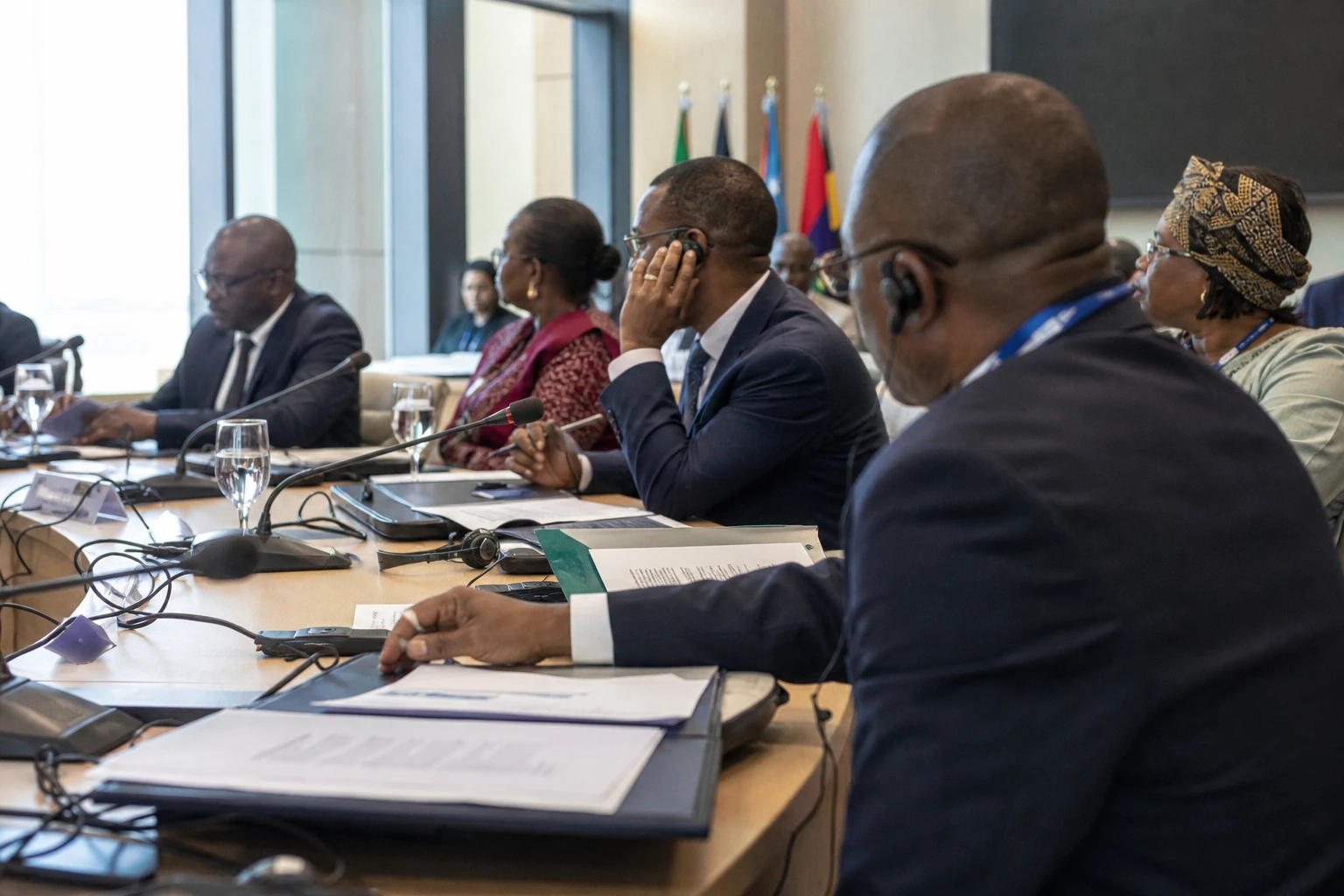
In Monrovia, financial support from the International Monetary Fund comes as Liberia seeks to consolidate a recovery driven by mining, construction and industry. The issue is therefore not limited to the announced amount: it also concerns the Liberian state’s ability to turn exceptional revenues into sustainable investment.
New disbursement follows two reviews
On 28 September 2026, the IMF Executive Board approved the fourth review of the programme agreed with Liberia under the Extended Credit Facility (ECF). It also completed the first review of the Resilience and Sustainability Facility (RSF), a mechanism designed to help countries better absorb climate and economic shocks.
The decision paves the way for the immediate disbursement of about $50 million. The first tranche amounts to $26.2 million under the ECF. The second totals $23.96 million under the RSF. The amounts are calculated in special drawing rights, the IMF’s unit of account.
The Executive Board’s approval confirms the agreement reached in July between Fund staff and the Liberian authorities. At that stage, disbursement was still subject to formal approval by the governing body. The September decision therefore turned an in-principle commitment into actual funding.
The IMF says the authorities met the performance criteria set for the end of 2025. It also highlights progress on fiscal, financial, institutional and climate reforms. These factors enabled the programme to reach this new milestone.
Economic trajectory driven by mining
The current programme is based on an ECF approved in September 2024. The agreement aims in particular to restore macroeconomic stability, preserve debt sustainability and strengthen public governance. In April 2026, the IMF added an RSF of 193.8 million special drawing rights, or about $265 million.
Liberia recorded real growth of 5.1% in 2025. The IMF forecasts an acceleration to 5.5% in 2026. This growth is driven mainly by increased mining output, as well as construction and manufacturing.
This momentum brings revenue and jobs, but also exposes the country to fluctuations in international prices and decisions by a handful of major operators. Monrovia’s priority is therefore to broaden the economic base. The aim is to reduce dependence on mining revenue and strengthen activities capable of creating more value locally.
The programme includes the introduction of value added tax from 2027. The reform is intended to increase domestic revenue. However, it could put pressure on prices if its implementation is not accompanied by appropriate measures for households and small businesses.
The challenge of exceptional revenue and debt
The Liberian government must also manage an exceptional inflow linked to the mining sector. In March 2026, a major iron ore company paid about $200 million under a concession. This sum is a one-off resource, not regular revenue on which the state can sustainably base its budget.
The IMF therefore recommends using this income gradually and transparently. The question directly concerns investment choices: roads, energy, health, education or productive infrastructure. It also concerns expenditure oversight, to prevent a one-off windfall from mainly funding recurring costs.
International financing provides useful budget support, but it does not absolve Liberia of the need to strengthen its own revenues. The country must also continue restructuring weak banks and reduce non-performing loans, meaning loans whose repayment is at risk.
These reforms will affect different groups in different ways. Government agencies and formal businesses will be directly affected by taxation and transparency requirements. In the informal economy, which is widespread in Liberia, the impact will depend more on simplifying procedures, access to credit and price stability.
Climate considerations enter fiscal policy
The RSF adds a specific dimension to the programme. It is intended to help Liberia better anticipate the financial consequences of floods, droughts, storms or health emergencies. The country has begun compiling a database of the budgetary costs associated with disasters and emergency responses.
This approach could improve the state’s preparedness. It would also help identify necessary spending before a crisis, rather than mobilising funds in an emergency. For people living outside Monrovia, the stakes are especially tangible: climate shocks can disrupt transport, weaken local markets and complicate access to essential services.
The success of this component will nevertheless depend on its incorporation into national budgets. Data alone will not be enough if it is not used to select projects, strengthen infrastructure and protect exposed sectors.
A programme watched by ECOWAS
The IMF programme forms part of West Africa’s economic trajectory. Liberia belongs to the Economic Community of West African States (ECOWAS), which is seeking to strengthen macroeconomic stability, regional trade and coordination among its members.
Decisions taken in Monrovia are therefore also of interest to its neighbours. Better fiscal management could support trade and reassure investors. Conversely, rising prices, banking sector weakness or poor management of mining revenue could erode the benefits of the recovery.
The next stage will focus on implementation. Liberia will have to prepare in particular for the value added tax planned for 2027, continue banking reforms, publish governance-related information and use exceptional mining revenues prudently. The $50 million disbursement provides room for manoeuvre. It also raises the bar for measurable results from the Liberian state.