Algeria
 Egypt
 Libya
 Morocco
 Sudan
 Tunisia
 Benin
 Burkina Faso
 Cabo Verde
 Côte d'Ivoire
 Ghana
 Guinea
 Guinea-Bissau
 Liberia
 Mali
 Mauritania
 Niger
 Nigeria
 Sierra Leone
 The Gambia
 Togo
 Cameroon
 Central African Republic
 Chad
 DR Congo
 Equatorial Guinea
 Gabon
 Republic of the Congo
 São Tomé and Príncipe
 Burundi
 Comoros
 Djibouti
 Eritrea
 Ethiopia
 Kenya
 Madagascar
 Malawi
 Mauritius
 Mozambique
 Rwanda
 Seychelles
 Somalia
 South Sudan
 Tanzania
 Uganda
 Angola
 Botswana
 Eswatini
 Lesotho
 Namibia
 South Africa
 Zambia
 Zimbabwe
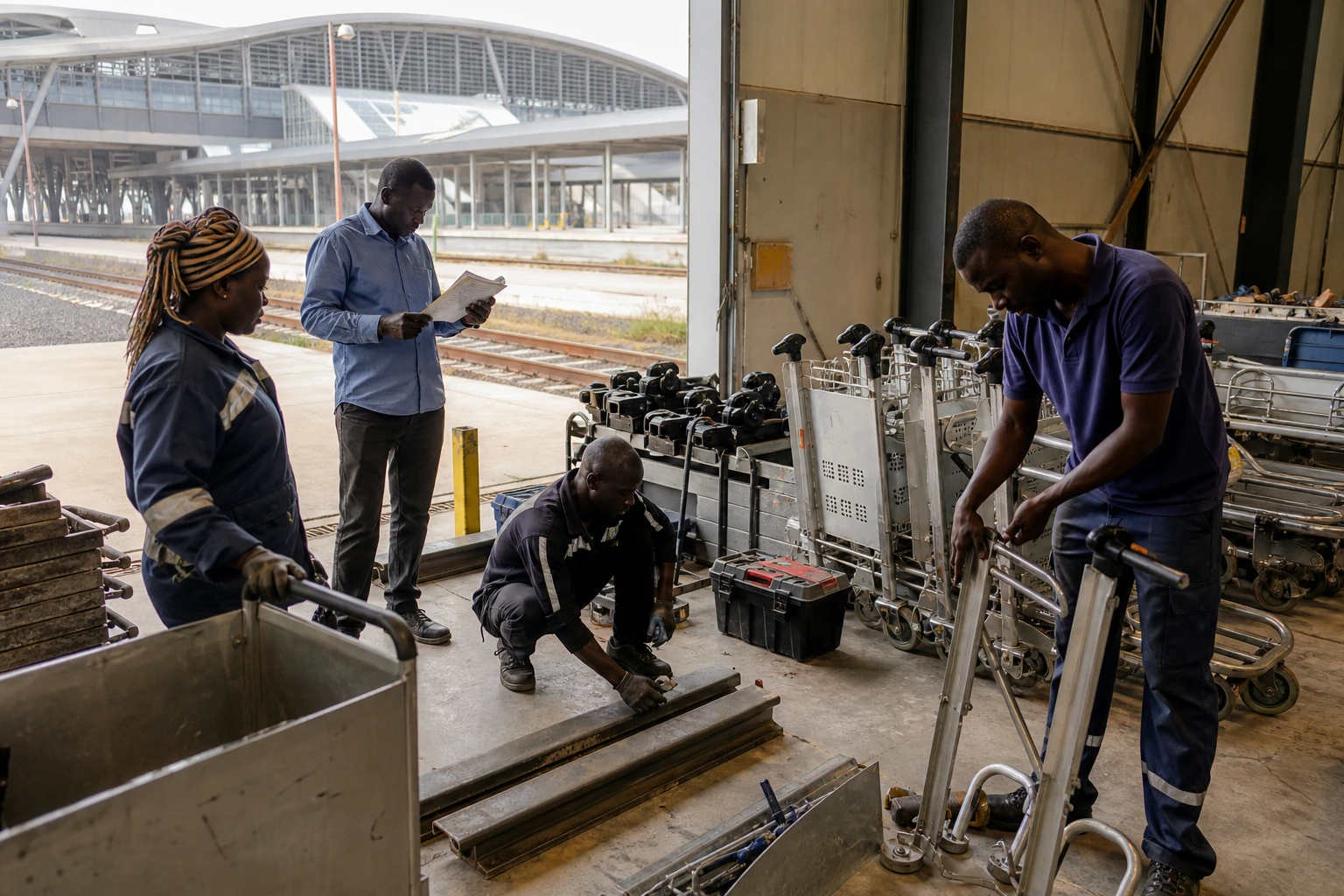
For travellers arriving in Senegal via Blaise-Diagne International Airport, the final leg of the journey to Dakar is no longer spent solely in traffic jams. Since Monday 28 September 2026, the Regional Express Train (TER) has linked Diamniadio directly to the airport complex at Diass. It is a new step for the country’s mobility, just weeks before a sporting event expected to attract thousands of visitors.
An eagerly awaited rail link between Dakar and the airport
Commercial services have begun on a 19-kilometre section between Diamniadio station and Blaise-Diagne International Airport, often known by its acronym AIBD. The extension brings the TER network to 55 kilometres, according to information shared at the inauguration ceremony.
The new section completes the link already in operation between Dakar and Diamniadio. Travellers now have a continuous rail journey between the Senegalese capital, its eastern outskirts, the urban centre of Diamniadio and the airport at Diass.
The Minister of Land and Air Transport, Abdoul Ahad Ndiaye, presented the start of services as a response to daily travel difficulties. He highlighted, in particular, the time lost in traffic jams and the cost they impose on households and the Senegalese economy.
To mark the launch, travel on the new section is to be free for one week from 28 September, according to the Senegalese Press Agency. The period will allow passengers to try the service and operators to monitor initial passenger flows.
The opening follows technical and dynamic testing, then a period of non-commercial operations. The National Company for the Management of the Regional Express Train’s Assets, APIX, the operating company and construction firms all contributed to the project.
A project that goes beyond the journey to the airport
The connection to AIBD meets a practical need first and foremost. The airport is several dozen kilometres from Dakar. Until now, journey times have depended heavily on traffic conditions on the roads linking the capital to Diamniadio and Diass.
The TER therefore offers a more predictable option for air passengers, airport employees and businesses based in the area. It may also make travel easier for residents of the municipalities along the rail corridor, provided that timetables, fares and connections remain suited to everyday needs.
Local access nevertheless remains a key issue. The minister has announced that a station will soon be built at Sébikotane. Until then, a bus shuttle is to link the municipality to Diamniadio. This integration of rail, bus and public transport will be crucial to ensuring that the benefits of the new infrastructure are not limited to travellers who can already reach a station easily.
The project thus serves several groups of users. International passengers want a straightforward connection between the airport and Dakar. Workers need a regular service at peak times. Residents of the municipalities along the route, meanwhile, expect their everyday journeys to improve, not just infrastructure designed for foreign visitors.
These differences in use will need to be taken into account in operating the service. A line that works well for sports delegations will not automatically meet the needs of students, traders, employees and families travelling every day between Dakar, Rufisque, Diamniadio, Sébikotane and Diass.
TER at the heart of preparations for Dakar 2026 Youth Olympics
The service is starting just over a month before the Youth Olympic Games, scheduled to take place in Senegal from 31 October to 13 November 2026. The organising committee believes the TER will be an important link in transporting delegations, officials, volunteers and spectators arriving via AIBD.
Ibrahima Wade, coordinator of the Youth Olympic Games Organising Committee, said around 30,000 people would be accredited for the event. He estimated that at least 15,000 of them could come from abroad. These figures are the organising committee’s projections and should be understood as estimates of expected flows, not as an established attendance record.
For Senegal, the challenge is not simply to host an international competition. It is also to demonstrate that a West African metropolis can manage transport for a major event using connected public infrastructure. The TER will have to handle exceptional demand without degrading service for regular users.
Success will therefore depend on several factors: train frequency, coordination with buses and taxis, passenger information, luggage management and the ability to maintain regular service during periods of heavy traffic. Smooth journeys at the airport will not be enough if connections remain difficult or stations become overcrowded.
A new element in Senegal’s mobility strategy
The TER is part of a broader transformation of the Dakar-Diamniadio corridor. The area is home to housing, industrial activity, government offices, educational institutions and sports facilities. The challenge is to connect these centres more effectively without making cars and road transport the sole basis for urban growth.
The opening of the Diamniadio-AIBD section extends a project launched under Macky Sall’s presidency, but its operation now falls within the course set by the current authorities. The government is emphasising continuity in infrastructure development while announcing adjustments intended to better meet the needs of local areas.
An extension to Thiès is among the next steps mentioned by the ministry. Technical studies have been launched for the link to a major city in western-central Senegal. Its construction would further expand the network, bringing Dakar closer to the country’s interior.
At the level of the Economic Community of West African States, the connection between a capital, an airport zone and secondary urban centres strengthens Senegal’s position in regional exchanges. It could facilitate business, tourist and official travel, although regional integration also depends on air, road and maritime links.
The first test will come immediately: delivering on the promise of reliable transport during the Youth Olympic Games without losing sight of Senegalese people’s needs. After the event, the most important measure will be everyday use. The TER will make a real contribution to easing congestion in Dakar through regular service, accessible stations and good connections.