
 Algeria
 Egypt
 Libya
 Morocco
 Sudan
 Tunisia
 Benin
 Burkina Faso
 Cabo Verde
 Côte d'Ivoire
 Ghana
 Guinea
 Guinea-Bissau
 Liberia
 Mali
 Mauritania
 Niger
 Nigeria
 Senegal
 Sierra Leone
 The Gambia
 Togo
 Central African Republic
 Chad
 DR Congo
 Equatorial Guinea
 Gabon
 Republic of the Congo
 São Tomé and Príncipe
 Burundi
 Comoros
 Djibouti
 Eritrea
 Ethiopia
 Kenya
 Madagascar
 Malawi
 Mauritius
 Mozambique
 Rwanda
 Seychelles
 Somalia
 South Sudan
 Tanzania
 Uganda
 Angola
 Botswana
 Eswatini
 Lesotho
 Namibia
 South Africa
 Zambia
 Zimbabwe
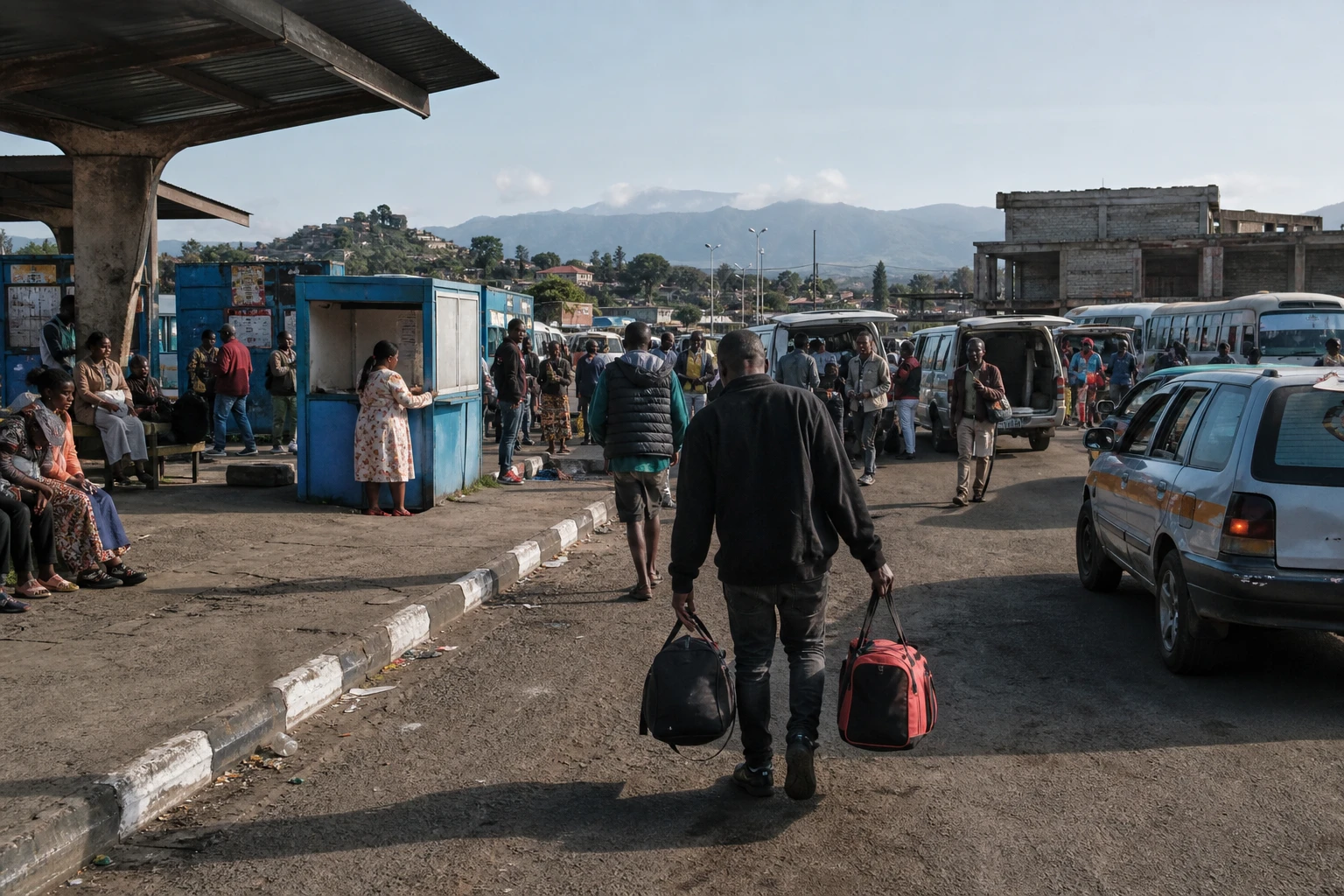
In Buea, the Cameroonian government is trying to bring the anglophone crisis back to the local dialogue table. But in the North-West and South-West, the start of the school year in September 2026 is a reminder of a harsher reality: families, teachers and school administrators remain exposed to violence.
The challenge is therefore no longer simply to bring officials together around a table. It is to restore security that is durable enough to allow schools, public services and economic activity to function in both regions.
In Buea, dialogue focused on results
Prime Minister Joseph Dion Ngute chaired a meeting on community dialogue and peace in the South-West on Monday, 28 September 2026. The meeting was held in Buea, the capital of this anglophone region of Cameroon.
Administrative and municipal authorities, traditional chiefs, religious leaders, political figures, civil society organisations and business operators took part. The stated aim was to strengthen local initiatives capable of reducing violence and encouraging combatants to return to civilian life.
Joseph Dion Ngute called on communities to make direct contact with young people still active in armed groups. He also encouraged surrenders and the referral of former combatants to the National Disarmament, Demobilisation and Reintegration Committee, the body responsible for supporting their transition out of armed struggle.
The head of government stressed the need to move beyond statements of principle. “Dialogue must produce results,” he told participants, according to reports by Cameroonian media and local organisations. He also warned that the South-West could not allow a new generation to regard the conflict as normal.
The meeting also featured the presentation of 25 former combatants from Akwaya who had reportedly agreed to lay down their arms. Their effective reintegration will nonetheless depend on their security, access to livelihoods and acceptance by the communities concerned.
School year remains fragile in the North-West
Events in September highlight the gap between political intentions and conditions on the ground. On 8 September 2026, five staff members at a teacher-training college in Wum, in Menchum division, were abducted during an armed attack.
The victims were released on 9 September after an operation by Rapid Intervention Battalion troops, according to Cameroon Tribune. The attack also claimed the life of a police commissioner, according to several Cameroonian media outlets reporting information provided by regional authorities.
On 25 September, in Bamenda, the principal of Atiela Bilingual High School, Benyella Godwin Tafoang, was shot. Initial reports described an attempted abduction. His death was subsequently reported by several local sources, including Le Bled Parle.
These attacks have an immediate impact on schools. In localities where armed groups impose days of lockdown, curfews or threats against schools, parents have to weigh their children’s education against their safety. Conditions vary greatly from one town to another, as well as between urban centres and rural areas.
A crisis weighing on public services and the economy
The conflict in the North-West and South-West began with demands concerning, among other things, the place of the English language, the organisation of the justice system and education, and a sense of marginalisation expressed by part of the population. The protests gradually turned into armed conflict from 2017 onwards.
The Major National Dialogue held in 2019 led to several measures, including special status for the two regions and a reconstruction plan. However, the persistence of attacks, kidnappings and military operations shows that institutional decisions have not been enough to restore confidence.
In Buea, Joseph Dion Ngute acknowledged that insecurity was holding back investment, damaging infrastructure and complicating the implementation of public projects. The difficulties also affect small traders, transport operators, farmers and informal-sector workers, who depend on regular travel between localities.
The consequences are not the same for everyone. Government departments and large companies can sometimes relocate their operations or strengthen their security. Rural families, isolated teachers and small business owners have far less room to manoeuvre. For them, a transport disruption or the temporary closure of a school can quickly mean lost income or an interruption in services.
Local dialogue and the regional dimension
Cameroon is a member of the Central African Economic and Monetary Community, CEMAC, which brings together six countries for economic and monetary co-operation. The anglophone crisis remains primarily a national issue, but its effects extend beyond Cameroon’s borders through population movements, trade disruptions and humanitarian needs.
It is also unfolding at a time when the African Union is encouraging African solutions to political and security crises. In this context, prioritising community dialogue may meet a genuine demand in the affected areas, provided local actors have a clear mandate and verifiable resources.
The next step will therefore have to be tangible. It will be necessary to assess whether the meetings in Buea lead to mechanisms to protect civilians, a more regular resumption of classes, sustained reintegration of former combatants and effective access to public services.
The Cameroonian government says it wants to avoid another succession of meetings with no impact. In the North-West and South-West, people will judge the process above all by their everyday lives: being able to travel, work, send their children to school and live without the threat of armed violence.



