Algeria
 Egypt
 Libya
 Morocco
 Sudan
 Tunisia
 Benin
 Burkina Faso
 Cabo Verde
 Côte d'Ivoire
 Ghana
 Guinea
 Guinea-Bissau
 Liberia
 Mali
 Mauritania
 Niger
 Nigeria
 Senegal
 Sierra Leone
 The Gambia
 Togo
 Central African Republic
 Chad
 DR Congo
 Equatorial Guinea
 Gabon
 Republic of the Congo
 São Tomé and Príncipe
 Burundi
 Comoros
 Djibouti
 Eritrea
 Ethiopia
 Kenya
 Madagascar
 Malawi
 Mauritius
 Mozambique
 Rwanda
 Seychelles
 Somalia
 South Sudan
 Tanzania
 Uganda
 Angola
 Botswana
 Eswatini
 Lesotho
 Namibia
 South Africa
 Zambia
 Zimbabwe
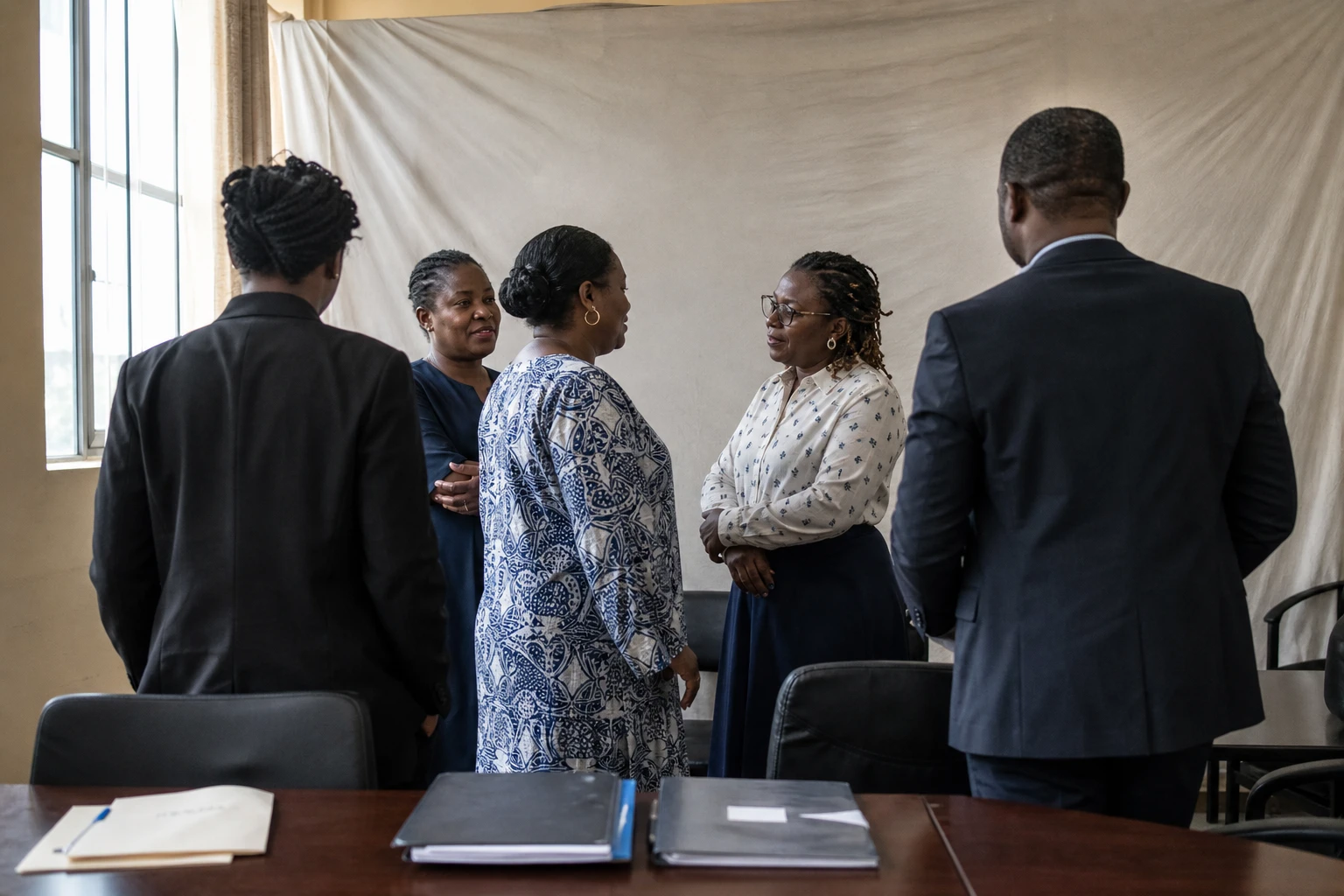
In Yaoundé, families are no longer asking only for perpetrators to be arrested. They want to understand why so many killings of women are still treated as mere private matters. In Cameroon, the rise in femicides has put justice, prevention and victim protection at the centre of public debate.
A rise that worries families
Between January and April 2026, Cameroonian authorities recorded 50 femicides across the country. The figure was disclosed on 19 June 2026 in the National Assembly by Marie-Thérèse Abena Ondoa, Minister for the Promotion of Women and the Family, in response to a question from MP Angèle Toukam Tela.
The ministry also recorded 1,599 cases of gender-based violence during this period. These included 166 rapes, 13 infanticides, three abductions and three cases of physical abuse inflicted on children. The figures give an indication of the scale of the phenomenon, although associations believe official data do not cover every case.
The trend is part of an increase observed over several years. The ministry recorded 57 women killed in 2023, 67 in 2024 and 77 in 2025. Other tallies published by Cameroonian organisations and media show slight differences for some years. They all agree, however, on one point: killings of women are increasing, and domestic violence features prominently in the cases recorded.
In Yaoundé, the case of Géraldine Achia illustrates this reality. The primary-school teacher, who was in her thirties, was found dead after suffering numerous blows. Her partner, considered the main suspect, was arrested several days later, more than 300 kilometres from the capital. He denies the allegations against him.
The victim’s 18-year-old son, Courage Anushuni, must now face the human and material consequences of the tragedy. Géraldine Achia’s sister, Régina Mbatiabuh Ngukum, says she found a body marked by multiple injuries at the hospital. The family also disputes the account that an argument preceded her death.
Debate focuses on impunity and legal classification
For associations working to combat violence against women, the problem is not limited to the number of victims. It also concerns how violence is reported, investigated and prosecuted. In many families, social pressure, economic dependence and fear of reprisals delay complaints.
Activists also denounce the frequent use of amicable settlements. Such mediation can halt proceedings before a full trial begins. Survivors are then exposed to further violence and, according to feminist organisations, the idea that perpetrators face little risk of punishment is reinforced.
Cameroonian law does not yet recognise femicide as a separate offence. When a woman is killed, the charges are generally murder or assassination. A specific law would make it possible to take the context better into account: repeated violence, a partner’s control, previous threats or imposed dependence.
This is not about creating a different justice system for women. It is about better identifying the mechanisms that lead to their killing. In domestic cases, the fatal act is often preceded by assaults, threats or persistent surveillance. An appropriate legal classification could help investigators and magistrates link these elements.
Cameroon already has a national strategy to combat gender-based violence for the period 2022-2026. The challenge, however, is its practical implementation. Victims need accessible services, particularly in regions far from Yaoundé and major urban centres. They must be able to obtain a medical certificate, legal assistance, temporary accommodation and prompt protection.
A movement reaching beyond activist circles
In Yaoundé, associations have organised a growing number of rallies, awareness campaigns and advocacy efforts with parliament. A vigil held on 29 August 2026 by the Central African Network of Young Feminists and the Stop Femicide 237 collective paid tribute to women who had been killed.
The mobilisation followed a series of killings recorded over a few days in August. The organisations called for a specific law against violence towards women and girls. They are also demanding better data collection, as deaths reported by families are not always recorded consistently.
The government says it is working on a draft law that has been in preparation for several years. Representatives of the Ministry for the Promotion of Women and the Family said a consensus had been reached on the text and that its presentation to parliament was being considered for the November 2026 session. This deadline will need to be closely monitored, as several previous announcements have yet to lead to its adoption.
The debate has also reached the public and sporting arenas. Cameroonian international footballer Ajara Nchout Njoya has spoken out against violence against women. Her visibility has helped reach a wider audience, beyond specialist associations and institutions.
A national, regional and continental issue
Cameroon is not alone in facing this crisis. In Central Africa, gender-based violence affects countries grappling with judicial systems that are unevenly accessible, stark economic disparities and social norms that can discourage people from reporting abuse. The Economic and Monetary Community of Central Africa, CEMAC, remains primarily focused on economic integration. The prevention of violence and the protection of women therefore remain largely the responsibility of states and civil society organisations.
Across Africa, United Nations data indicate that the continent has the world’s highest estimated rate of femicides committed by an intimate partner or family member, at about three victims per 100,000 women and girls, compared with 0.5 in Europe. These comparisons should be interpreted with caution, as recording systems differ from one country to another.
For Cameroon, the next steps are twofold. First, it will be necessary to see whether the draft law is indeed put before MPs in November 2026. Its real impact will then need to be assessed: complaints recorded, investigations opened, rulings delivered, witness protection and support for children left behind by victims.
For families, the wait is more immediate. They want reported violence to be taken seriously before it turns deadly. They are also calling for every case to be investigated fully and independently, with proceedings followed through to judgment. For Courage Anushuni and Géraldine Achia’s relatives, the demand can be summed up in one sentence: justice must not stop at the arrest of a suspect.