Algeria
 Egypt
 Libya
 Morocco
 Sudan
 Tunisia
 Benin
 Burkina Faso
 Cabo Verde
 Ghana
 Guinea
 Guinea-Bissau
 Liberia
 Mali
 Mauritania
 Niger
 Nigeria
 Senegal
 Sierra Leone
 The Gambia
 Togo
 Cameroon
 Central African Republic
 Chad
 DR Congo
 Equatorial Guinea
 Gabon
 Republic of the Congo
 São Tomé and Príncipe
 Burundi
 Comoros
 Djibouti
 Eritrea
 Ethiopia
 Kenya
 Madagascar
 Malawi
 Mauritius
 Mozambique
 Rwanda
 Seychelles
 Somalia
 South Sudan
 Tanzania
 Uganda
 Angola
 Botswana
 Eswatini
 Lesotho
 Namibia
 South Africa
 Zambia
 Zimbabwe
In Abidjan, the metro project is entering a phase in which logistics is becoming as decisive as civil engineering. Before trains can run, equipment must be delivered, sites secured and rail systems prepared. In August 2026, five locomotives for work on Line 1 arrived at the Abobo Sagbé site.
A major operation at the heart of the project
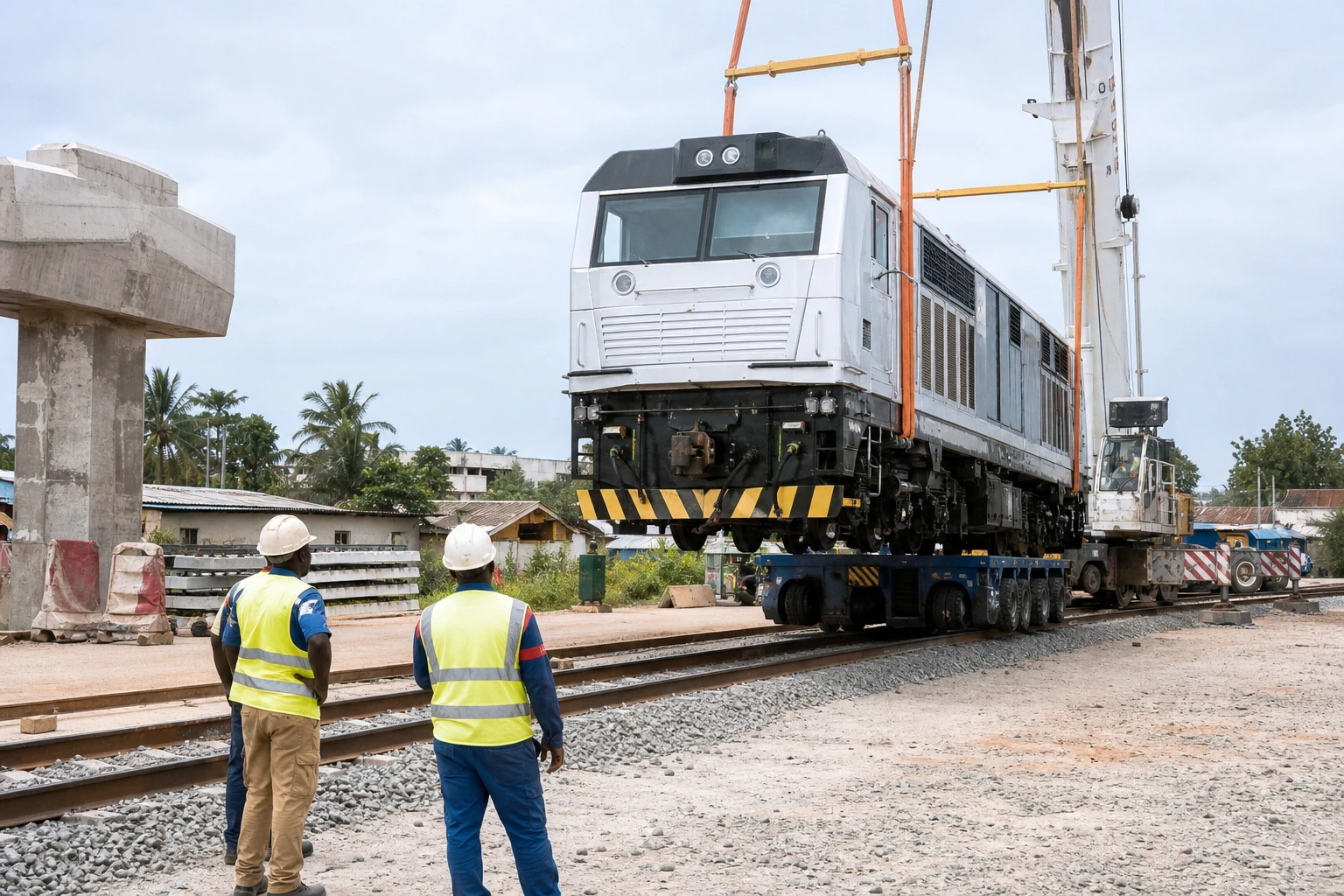
Africa Global Logistics Côte d’Ivoire transported the five locomotives on behalf of Colas Rail. According to information released by the company, they weighed a total of 332.28 metric tonnes. The equipment was collected from the Port of Abidjan before being taken to the receiving site at Abobo Sagbé.
However, the detailed timeline varies across the available reports. AGL says the operation took place from 2 to 4 August 2026. A publication specialising in the rail sector, meanwhile, reports that delivery was staggered: two locomotives on 2 August, two more on 5 August and the last on 12 August. What is clear is that all five machines were delivered during August to strengthen the resources deployed by Colas Rail in Côte d’Ivoire.
The transport involved more than a road journey. Teams unloaded the locomotives from the ship at the port, lifted them, loaded them on to two hydraulic trailers and escorted them to the site. The final step was to unload them and place them on the rails at Abobo Sagbé.
Such an operation requires specific preparation. Teams surveyed the route and assessed constraints relating to the vehicles’ dimensions and weight, lifting manoeuvres and traffic along the roads used.
The operation involved two Nicolas hydraulic trailers, tractor units adapted for abnormal loads and a crane with a stated capacity of 400 tonnes. Lashing, lifting, escort and supervision equipment completed the deployment.
Technical and safety checks accompanied each stage. Marking off work areas, checking equipment and coordinating with port authorities, security forces and technical teams were intended to reduce risks during the manoeuvres.
Abobo Sagbé, a strategic point for Line 1
Abobo Sagbé has an important place in the project’s design. The site is due to house the future line’s rail depot in the commune of Abobo. The depot will support operations involving rolling stock, maintenance and preparation of rail services.
Line 1 will cross the metropolitan area from north to south, between Anyama Centre and Port-Bouët airport. Its route, approximately 37 kilometres long, will serve seven communes and include 18 stations. It will run partly alongside the railway linking Abidjan to Ouagadougou, while relying on a metro infrastructure with standard gauge.
The project is being undertaken by the Société des Transports Abidjanais sur Rail, or STAR. The consortium brings together Bouygues Travaux Publics for infrastructure, Colas Rail for track and electrification, Alstom for rolling stock and systems, and Keolis for operations and maintenance.
The locomotives have arrived as other technical works progress. On 24 August 2026, Colas Rail Côte d’Ivoire teams announced that they had laid the first kilometre of feeder cables on Track 2. These cables carry electricity between substations and the overhead contact line, which supplies power to trains.
This stage shows how the project is advancing through closely linked work packages. Civil engineering must be coordinated with track installation. Electrification must follow the installation of equipment. Logistics must deliver materials when teams are ready to incorporate them into the overall schedule.
A response to pressure on urban transport
For Abidjan residents, the stakes go beyond the arrival of five construction machines. The metropolis is experiencing rapid urban growth and heavy traffic. Line 1 is intended to create a north-south link that can improve journeys between outlying communes, central neighbourhoods and the airport.
The project is designed to carry more than 500,000 passengers a day. It is also intended to connect with other existing and developing networks, including SOTRA buses, lagoon transport and bus rapid transit lines.
However, the impact will not be the same for all residents. Communes along the route will have direct access to stations. In more remote areas, the metro’s effectiveness will depend on connections and the quality of feeder services. Informal-sector workers, pupils and employees who cross the metropolitan area every day will be particularly affected by journey times and the overall cost of travel.
The project will also affect economic activity in neighbouring areas. Construction may temporarily disrupt traffic and access to certain locations. In the longer term, stations and transport hubs could alter commercial flows, business locations and land values. These changes will require close monitoring by local authorities and operators.
A signal for rail infrastructure in West Africa
The locomotives’ arrival illustrates the growing logistical demands of major African rail projects. It also highlights the role of local expertise in complex operations, from route surveys to lifting and placing equipment on the rails.
In Côte d’Ivoire, this momentum forms part of a national drive to modernise transport. It concerns Abidjan, but could also strengthen expertise that can be deployed in other regions, particularly around ports, road corridors and the Abidjan-Ouagadougou line.
At the level of the Economic Community of West African States, rail remains a strategic issue. National networks are still unevenly connected, even as regional trade grows. Equipment, companies and expertise capable of working on urban or intercity projects can therefore contribute to transforming West African corridors.
The next step to watch is the coordination of track works, electrification, signalling and the arrival of rolling stock intended for commercial service. The locomotives’ delivery does not mark the completion of the metro. Rather, it confirms that the project is entering a phase in which technical coordination and adherence to the schedule will have a direct bearing on its planned 2028 opening.
Institutional and industry sources consulted: official presentation of Abidjan Metro Line 1, project profile by Bouygues Construction and specialist coverage of rail works in Côte d’Ivoire.