Algeria
 Egypt
 Libya
 Morocco
 Sudan
 Tunisia
 Benin
 Burkina Faso
 Cabo Verde
 Côte d'Ivoire
 Ghana
 Guinea
 Guinea-Bissau
 Liberia
 Mali
 Mauritania
 Niger
 Nigeria
 Senegal
 Sierra Leone
 The Gambia
 Cameroon
 Central African Republic
 Chad
 DR Congo
 Equatorial Guinea
 Gabon
 Republic of the Congo
 São Tomé and Príncipe
 Burundi
 Comoros
 Djibouti
 Eritrea
 Ethiopia
 Kenya
 Madagascar
 Malawi
 Mauritius
 Mozambique
 Rwanda
 Seychelles
 Somalia
 South Sudan
 Tanzania
 Uganda
 Angola
 Botswana
 Eswatini
 Lesotho
 Namibia
 South Africa
 Zambia
 Zimbabwe
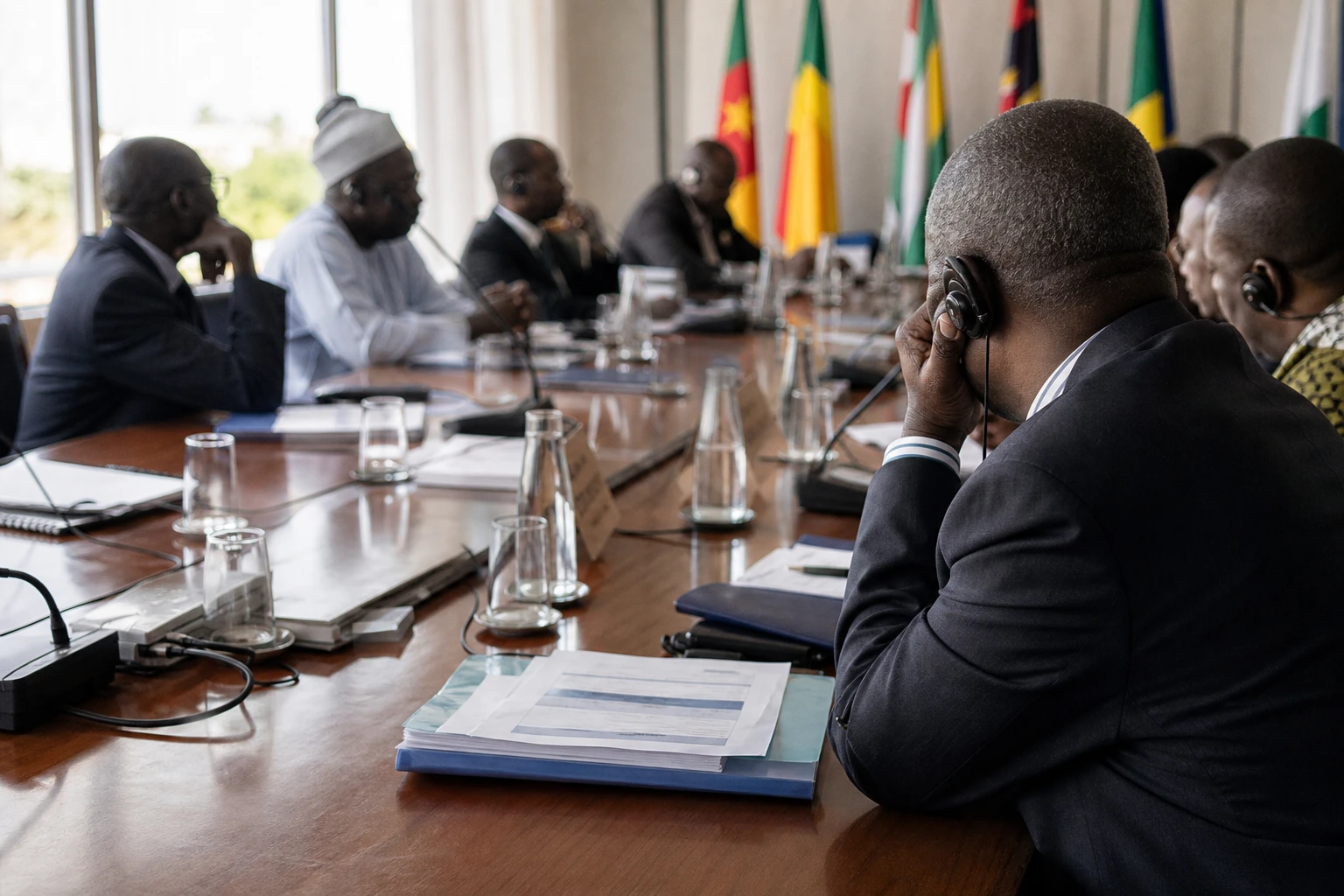
For Togo, the challenge is no longer limited to providing machinery to producers. The aim is now to manage water more effectively, increase yields and bring agricultural services closer to farms, as demand for food grows.
An agricultural programme scales up
The West African Development Bank (BOAD), the joint financing institution of the West African Economic and Monetary Union (UEMOA), has approved a new CFAF 45 billion loan for Togo.
The decision was taken on 24 September 2026, at the bank’s 152nd ordinary board meeting, held in Lomé. The financing is for the third phase of the Agricultural Mechanisation and Irrigation Support Programme, known by its French acronym ProMAI.
With this new allocation, BOAD’s commitments to ProMAI total CFAF 105 billion. This figure combines the CFAF 20 billion approved in October 2025, the CFAF 40 billion granted in June 2026 and the new CFAF 45 billion in funding.
This cumulative amount should be distinguished from a figure of CFAF 182 million, which does not correspond to the financing announced for the programme. The available data instead show total commitments of CFAF 105 billion.
Target: 530 hectares and 100,000 additional tonnes of rice
The third phase provides for the development of 530 hectares and the acquisition of irrigation equipment. Its stated goal is to produce at least 100,000 additional tonnes of rice a year.
BOAD links this increase in production to job creation, particularly for young people and women. The funding is also intended to support higher agricultural incomes and food security.
This is a significant target in view of the sector’s current output. Available data for 2023 show production of about 183,000 tonnes of paddy rice, with an average yield of 1.81 tonnes per hectare.
At that level, the additional 100,000 tonnes would represent more than half of the paddy rice production recorded in 2023. The target is therefore ambitious. Its achievement will depend on equipment being brought into operation, water availability and producers’ access to agricultural services.
The need is also linked to rice processing. In 2023, local milled rice production was estimated at 105,448 tonnes, against demand of close to 206,000 tonnes. The gap shows that increased volumes will need to be accompanied by investment in processing, storage and marketing.
Regional centres closer to producers
The first phase of ProMAI, financed with CFAF 20 billion, focused on acquiring agricultural machinery and irrigation equipment for the Regional Agricultural Mechanisation Centres, known by their French acronym CRMA.
These centres are intended to provide farmers with mechanisation services, such as soil preparation and some crop-related work. They can also support maintenance, training and access to equipment that is too expensive for an individual farm.
The CRMA centres in Tové, in the Plateaux region, and Tchitchao, in the Kara region, are already operational. Their expansion is intended to enable the programme to cover Togo’s main agricultural areas progressively.
The second phase, approved in June 2026, added CFAF 40 billion. It provides in particular for expanding operations to priority agricultural areas and building or rehabilitating water infrastructure.
This approach responds to a practical constraint. Agriculture dependent solely on rainfall remains exposed to shifts in the seasons, dry spells and sharp fluctuations in yields. Irrigation does not eliminate these risks, but it can reduce their impact when accompanied by rigorous water management.
The challenge of access and implementation
For family farms, the programme’s impact will depend less on the amount announced than on the terms of access to services. Machinery hire rates, the proximity of centres and response times will be decisive.
Producers in areas far from Lomé must be able to benefit from the same scheme as those located near the main infrastructure. ProMAI’s success will therefore also be measured in rural regions, not only by the programme’s administrative results.
Maintenance will be just as important. Agricultural equipment delivers lasting gains only if spare parts, technicians and local skills are available. This requirement can create jobs, but it calls for an appropriate system and regular funding.
BOAD and the Togolese authorities have also begun work on the programme’s governance. Manuals covering administrative and financial procedures, monitoring and evaluation, and public procurement were approved in April 2026.
These tools are intended to improve spending traceability and the monitoring of results. They will be particularly useful for verifying the number of hectares actually developed, the volume of rice produced and the number of producers served.
A Togolese priority with a West African reach
ProMAI forms part of a priority shared by UEMOA countries and, more broadly, by the Economic Community of West African States (ECOWAS). The region is seeking to reduce its dependence on food imports while strengthening local value chains.
For Togo, increased rice production could reduce some external purchases. It could also support processors, transporters, traders and input suppliers.
But additional production alone will not be enough. Markets will need to be secured, the quality of local rice improved and post-harvest losses reduced. The price paid to producers will also remain a key indicator of the programme’s economic impact.
The next step will therefore be operational. Stakeholders will monitor procurement, equipment installation, the development of the 530 hectares and producers’ actual access to CRMA services.
In Lomé and across the agricultural regions, the expected result is simple to measure: more productive land, more consistent yields and a larger share of the rice consumed in Togo coming from domestic production.