Algeria
 Egypt
 Libya
 Morocco
 Sudan
 Tunisia
 Benin
 Burkina Faso
 Cabo Verde
 Côte d'Ivoire
 Ghana
 Guinea
 Guinea-Bissau
 Liberia
 Mauritania
 Niger
 Nigeria
 Senegal
 Sierra Leone
 The Gambia
 Togo
 Cameroon
 Central African Republic
 Chad
 DR Congo
 Equatorial Guinea
 Gabon
 Republic of the Congo
 São Tomé and Príncipe
 Burundi
 Comoros
 Djibouti
 Eritrea
 Ethiopia
 Kenya
 Madagascar
 Malawi
 Mauritius
 Mozambique
 Rwanda
 Seychelles
 Somalia
 South Sudan
 Tanzania
 Uganda
 Angola
 Botswana
 Eswatini
 Lesotho
 Namibia
 South Africa
 Zambia
 Zimbabwe
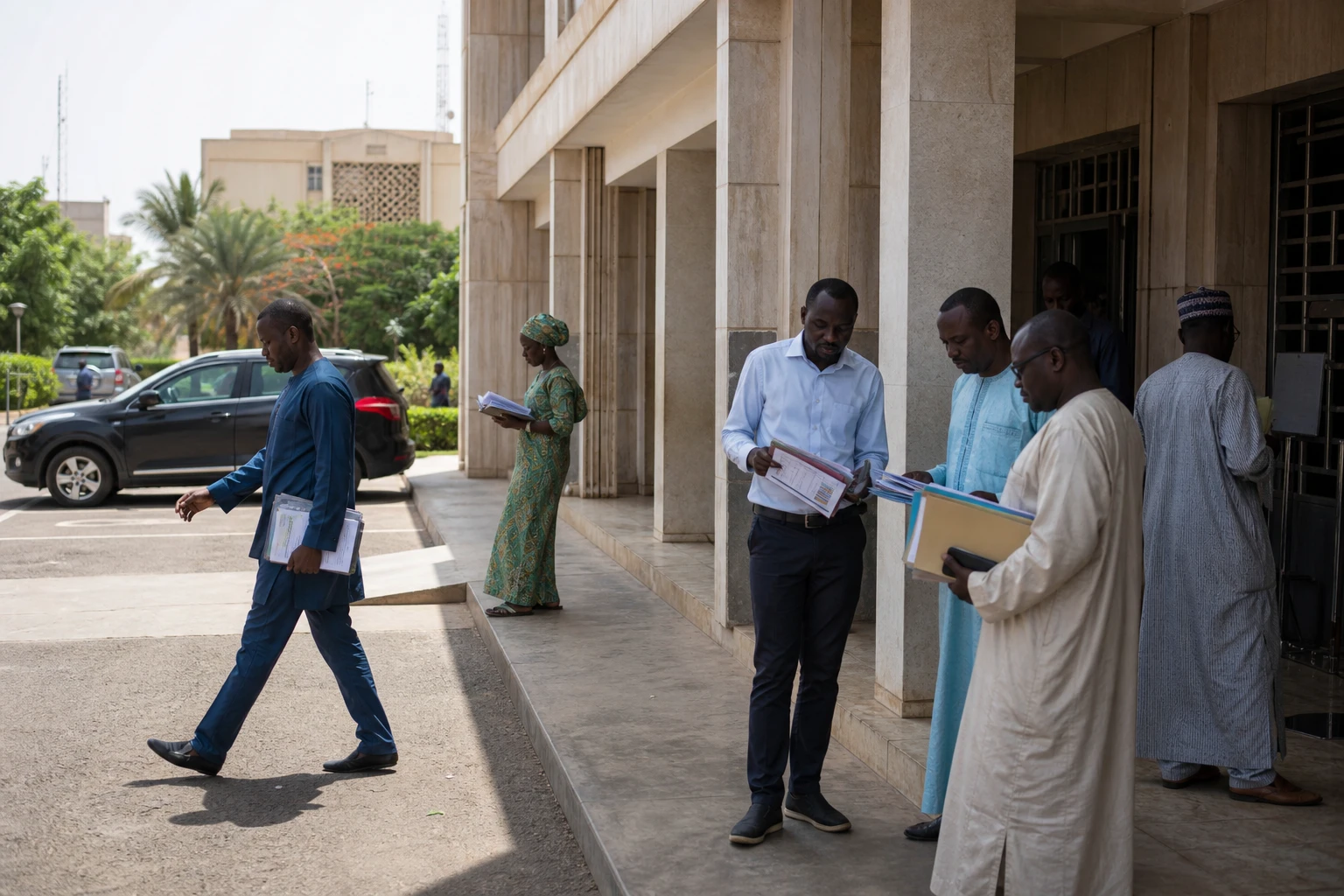
In Mali, the question is no longer just how many Russian fighters are present. It is now about what they actually help protect. In September 2026, several deadly attacks have revived doubts about the effectiveness of the security partnership between Bamako and Moscow.
A series of attacks undermines the narrative of reconquest
On 10 September, the Dioura military camp, in the Mopti region, was attacked by the Group for the Support of Islam and Muslims (JNIM), affiliated with Al-Qaeda. Military, security and local sources cited by Agence France-Presse put the number of Malian soldiers killed at at least 100. Five members of Russia’s Africa Corps are also said to have died, according to the same sources.
The figure is nevertheless difficult to establish. Mali’s military command acknowledged losses but did not publish a detailed toll. JNIM, for its part, released footage of captured soldiers and claimed a higher number of casualties. The Associated Press notes that these estimates could not be independently verified.
This caution is essential. In central Mali, fighting takes place far from Bamako. Families often wait several days before receiving information. The authorities say little about losses, while armed groups use battlefield images to impose their own narrative.
A few days earlier, a joint patrol by the Malian army and the Africa Corps had been ambushed near Kaka, in the Mopti region. Local and regional sources report the deaths of several Russian fighters and traditional Dozo hunters fighting alongside Malian forces. JNIM claimed the operation, but details remain partly contradictory.
These attacks are part of a broader pattern. Since spring 2026, jihadist groups and separatist fighters have stepped up operations against military positions, convoys and supply routes. Gao, Sévaré and several localities in the north have been targeted. The pressure is therefore no longer confined to rural areas. It is also affecting strongpoints considered strategic.
What the Russian presence changes — and what it does not
The Africa Corps is a structure under the authority of Russia’s Ministry of Defence. It took over from the Wagner Group in Mali after the latter’s official withdrawal in June 2025. Its missions cover training, combat support, the use of armoured vehicles, artillery and support for air operations.
Co-operation with Moscow initially met a clear political demand. The Malian authorities wanted to reduce their dependence on France and Western partners. They also sought to strengthen the national army in the name of restored security sovereignty.
But a foreign presence, whatever its origin, is not enough to control a country as vast as Mali. The central questions remain local intelligence, unit mobility, convoy protection and the ability to hold recaptured positions over time.
The attacks at Dioura and Kaka illustrate this difficulty. Modern equipment can strengthen a unit. It cannot replace intelligence networks, knowledge of routes or the trust of local people. In several rural areas, residents have to contend with the armed forces, jihadist groups, community militias and the movement of fighters.
The problem is also institutional. A military operation can retake a locality for a few hours or days. Securing it over the longer term then requires a functioning administration, public services and mechanisms for resolving conflicts. Without these, a unit’s withdrawal can create a new vacuum.
Malian army under pressure
Recent setbacks are directly affecting soldiers’ morale. Accounts gathered by Le Monde Afrique describe anger and demotivation among some military personnel deployed far from the capital.
This tension does not mean that the entire Malian army is demobilised. Rather, it points to a gap between the official narrative and the experience on the ground. The authorities highlight the growing strength of the Malian Armed Forces. Soldiers, meanwhile, judge that promise by the protection available to them, the reinforcements they receive and the care provided to the wounded.
The loss or abandonment of a position also affects local people. In rural areas, markets may close, transport operators suspend journeys and herders change their routes. Residents of urban centres, particularly in Bamako, often feel the crisis through rising prices, movement restrictions or the arrival of displaced families. The consequences are therefore not the same across all areas.
For the government of General Assimi Goïta, the pressure is as political as it is military. The promise to restore territorial integrity is one of the main foundations of the transition. Every attack on a garrison or convoy calls that promise into question, even when the army says it has regained the initiative.
Mali in the Sahel’s new balance
Mali’s trajectory extends beyond its national borders. Bamako, Ouagadougou and Niamey created the Alliance of Sahel States, often called the AES, after breaking with the Economic Community of West African States (ECOWAS), a regional organisation tasked, among other things, with economic co-operation and crisis prevention.
The alliance seeks to co-ordinate defence and assert an independent political line. It nevertheless faces a shared challenge: armed groups move across transnational spaces. Increased pressure in Mali could therefore shift violence towards Burkina Faso, Niger or the coastal countries of West Africa.
The Russian partnership is being watched across the region. Its record will not be measured solely by the number of weapons delivered or soldiers deployed. It will be judged against three concrete criteria: the protection of populations, the security of strategic routes and the ability of national armies to operate without permanent dependence.
In the short term, Bamako will need to clarify the tolls at Dioura, strengthen the protection of its garrisons and address the concerns of its troops. The next operations in central and northern Mali will show whether co-operation with Moscow delivers a lasting advantage or merely an increased capacity to respond to crises.