Algeria
 Egypt
 Libya
 Morocco
 Sudan
 Tunisia
 Benin
 Burkina Faso
 Cabo Verde
 Côte d'Ivoire
 Ghana
 Guinea
 Guinea-Bissau
 Liberia
 Mali
 Mauritania
 Niger
 Nigeria
 Senegal
 Sierra Leone
 The Gambia
 Togo
 Cameroon
 Central African Republic
 Chad
 DR Congo
 Equatorial Guinea
 Gabon
 Republic of the Congo
 São Tomé and Príncipe
 Burundi
 Comoros
 Djibouti
 Eritrea
 Kenya
 Madagascar
 Malawi
 Mauritius
 Mozambique
 Rwanda
 Seychelles
 Somalia
 South Sudan
 Tanzania
 Uganda
 Angola
 Botswana
 Eswatini
 Lesotho
 Namibia
 South Africa
 Zambia
 Zimbabwe
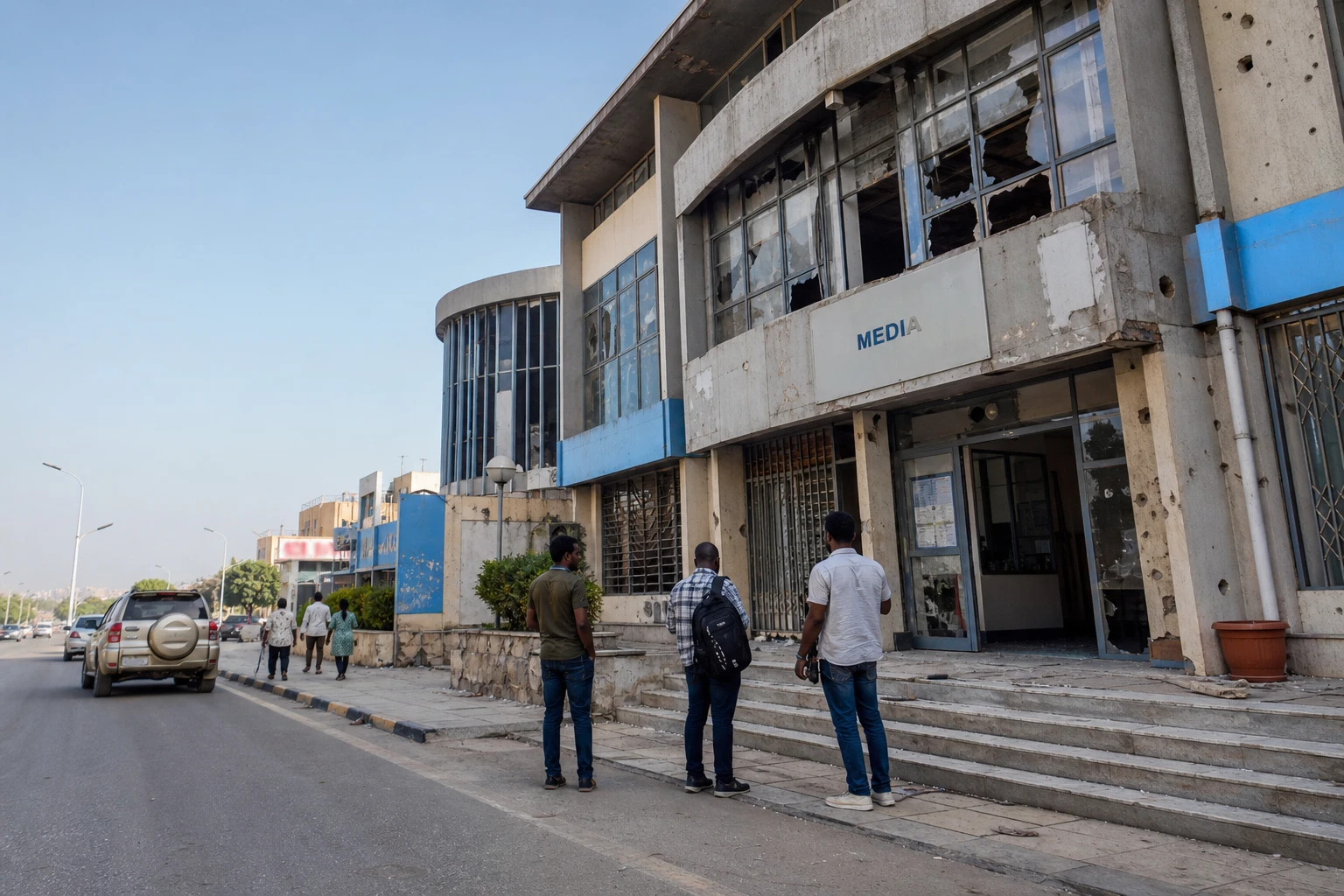
In Mekelle, a regional television station was hit by a drone strike as fighting spread again around Tigray. In the south of the region, Alamata has become one of the main flashpoints between Ethiopian federal forces and Tigrayan fighters.
A front moving closer to urban centres
The Tigrai TV building in Mekelle, the capital of Tigray, was hit on Sunday 27 September 2026 at about 9am local time. Journalists at the station told AFP that the building had been damaged and that no casualties had been reported immediately.
Tigrai TV is associated with Tigray’s regional authorities and the Tigray People’s Liberation Front, or TPLF. The station is therefore both a local media outlet and a political communications tool in a conflict where independent access to information remains very limited.
The strike follows several days of clashes on different fronts in northern Ethiopia. The fighting involves Tigray, the neighbouring Amhara region and the Afar region. This spread of fronts complicates travel, disrupts communications and makes it harder to verify casualty figures.
The conflict-monitoring project ACLED reported between 15 and 17 drone strikes in Alamata on 22 September. Schools and a health facility were among the sites reported. The exact number of casualties could not be independently confirmed.
Alamata, a strategic gateway between Tigray and Amhara
Alamata lies in southern Tigray, near the border with Amhara. The town controls an important road linking the Tigrayan highlands with the areas of North Wello. Its position gives it military, as well as commercial and administrative, value.
Federal forces say they have advanced around Kobo and Waja, two localities near Alamata. These claims could not be independently verified. Tigrayan forces, for their part, continue to claim operations in several areas of the north.
The battle for Alamata could alter the movement of troops and equipment in this part of Ethiopia. For the federal authorities, control of the town would open a route towards Tigray. For Tigrayan forces, defending it would preserve strategic depth south of Mekelle.
The consequences, however, go beyond military considerations. In urban areas, residents must contend with school closures, disrupted services and the fear of air strikes. In the countryside, population movements and restrictions on roads can limit access to markets, healthcare and farming activities.
The return of a war the Pretoria agreement was meant to contain
The renewed hostilities revive memories of the Tigray war, which began in November 2020 between the federal government and forces linked to the TPLF. The conflict had a severe impact on Tigray, Amhara and Afar, causing massive destruction and population displacement.
On 2 November 2022, the two sides signed a permanent cessation of hostilities agreement in Pretoria, mediated by the African Union. The agreement provided, among other things, for the disarmament of fighters, the resumption of essential services and the establishment of a monitoring mechanism.
The African Union again called in March 2025 for the agreement to be respected. The continental organisation stressed at the time that stability in Tigray remained linked to national reconciliation, the return of displaced people and the resolution of territorial issues.
On 23 September 2026, the Intergovernmental Authority on Development, or IGAD, also called for immediate de-escalation. The regional organisation brings together several states in the Horn of Africa. It reiterated that the Pretoria agreement remains the recognised framework for addressing disputes between the parties.
Mutual accusations and information that is difficult to verify
Ethiopian army chief Birhanu Jula accuses Eritrea of providing logistical support to groups involved in the fighting. Asmara rejects the accusations. At this stage, no public, independent evidence makes it possible to establish precisely the extent of any Eritrean support.
Information flows are also affected by telecommunications outages and the closure of several facilities. The parties’ military statements describe competing advances. Figures announced for casualties should therefore be treated with caution until they are confirmed by independent sources.
The strike on Tigrai TV adds a political dimension to the crisis. Hitting a regional media outlet reduces residents’ ability to access local information, as the authorities and armed groups each seek to impose their own account of the conflict. In this context, protecting journalists and civilian infrastructure has become a direct security concern.
The Horn of Africa under scrutiny
A renewed full-scale war in northern Ethiopia would have effects beyond Tigray. It could increase displacement towards Amhara, Afar and Sudan, which is already weakened by its own conflict. It would also put pressure on trade routes linking Ethiopia to the Red Sea.
For Addis Ababa, the stakes are also domestic. The federal government must contain several sources of tension while maintaining economic activity and public services. In affected regions, local authorities must manage security, accommodate displaced people and resume activities at the same time.
The next steps will depend on the parties’ ability to restore a political channel. IGAD and the African Union already have mediation frameworks in place. Their credibility will now depend on their ability to secure a halt to the strikes, protect civilians and restart the verification mechanisms set out in the Pretoria agreement.
In the short term, developments around Alamata, Mekelle and the border with Afar will be the main indicators of how the conflict is evolving. A widening of the fighting would confirm the failure of de-escalation. A return to dialogue, by contrast, would offer a chance to preserve the still-fragile gains of peace in Ethiopia.