
 Algeria
 Egypt
 Libya
 Morocco
 Sudan
 Tunisia
 Benin
 Burkina Faso
 Cabo Verde
 Côte d'Ivoire
 Ghana
 Guinea
 Guinea-Bissau
 Liberia
 Mali
 Mauritania
 Niger
 Nigeria
 Senegal
 Sierra Leone
 The Gambia
 Togo
 Cameroon
 Central African Republic
 Chad
 DR Congo
 Equatorial Guinea
 Gabon
 Republic of the Congo
 São Tomé and Príncipe
 Burundi
 Comoros
 Djibouti
 Eritrea
 Ethiopia
 Kenya
 Madagascar
 Malawi
 Mauritius
 Mozambique
 Rwanda
 Seychelles
 Somalia
 South Sudan
 Tanzania
 Uganda
 Angola
 Botswana
 Eswatini
 Lesotho
 Namibia
 Zambia
 Zimbabwe
In Ekurhuleni, east of Johannesburg, investigators are now working on eleven scenes linked to the discovery of women’s bodies over a period of about two months. The latest victim was found on Sunday 27 September 2026 in an open field near Rhokana Road, in Springs. Her identity and the cause of her death remain unknown.
Another discovery in an area already on edge
According to information released by the South African police, a security company vehicle spotted the body around midday while on patrol. Officers alerted the authorities, who secured the scene and opened a new investigation.
The victim has yet to be identified. Forensic examinations will establish the precise circumstances of her death. At this stage, police have not confirmed a link between this case and the ten other files recorded in the Ekurhuleni municipality.
The discovery comes after a woman was found near Mooifontein cemetery, in the Thembisa South area, on 26 September. In that case, police said the circumstances remained uncertain. An autopsy was expected to determine the exact cause of death.
Gauteng provincial police commissioner Tommy Mthombeni announced the creation of a command group bringing together police officials, criminal intelligence specialists and experienced investigators. The group is to monitor progress in the different cases and co-ordinate the resources deployed.
Authorities are nevertheless proceeding cautiously. The geographical proximity of several discoveries and certain similarities prompted an alert aimed at women in the area. But no public evidence yet supports the claim that a single perpetrator, or the same group, was responsible for all the deaths.
Separate investigations, shared concern
The first information available shows that the bodies were not all found in the same circumstances. Some were in open spaces, near main roads, railway lines or sparsely frequented areas. These locations make it harder to preserve evidence and contribute to residents’ sense of insecurity.
Several victims are believed to have been in their twenties or thirties. In some cases, police have also mentioned possible signs of sexual assault. This information is based on initial findings and will need to be confirmed by forensic analyses.
An arrest has already been made in one of the cases. Two women appeared before the Boksburg Magistrate’s Court on 21 September. Their case was postponed to 1 October, when their bail application is due to be considered. A man initially arrested in the same investigation was later released without being charged.
Investigators have not established a connection between the two suspects and the other deaths. This distinction is essential. In a series of cases provoking strong emotions, it prevents a criminal hypothesis from becoming a premature conclusion.
The South African government is also seeking to measure the impact of the crisis on victims and their relatives. Between 1 and 16 September, the national helpline for gender-based violence received 6,782 calls. The daily average reached 424 calls, up 21% from the same period in the previous month.
On 16 September, the centre recorded 589 calls, its highest figure over the period. These figures are not a tally of acts of violence. Rather, they point to an increase in requests for help, reports and needs for psychological or social support.
A crisis that demands more than a police response
In South Africa, gender-based violence is part of a longstanding crisis. It affects urban neighbourhoods, peri-urban areas and rural communities. It affects women living alone as well as those dependent on family, partners or colleagues.
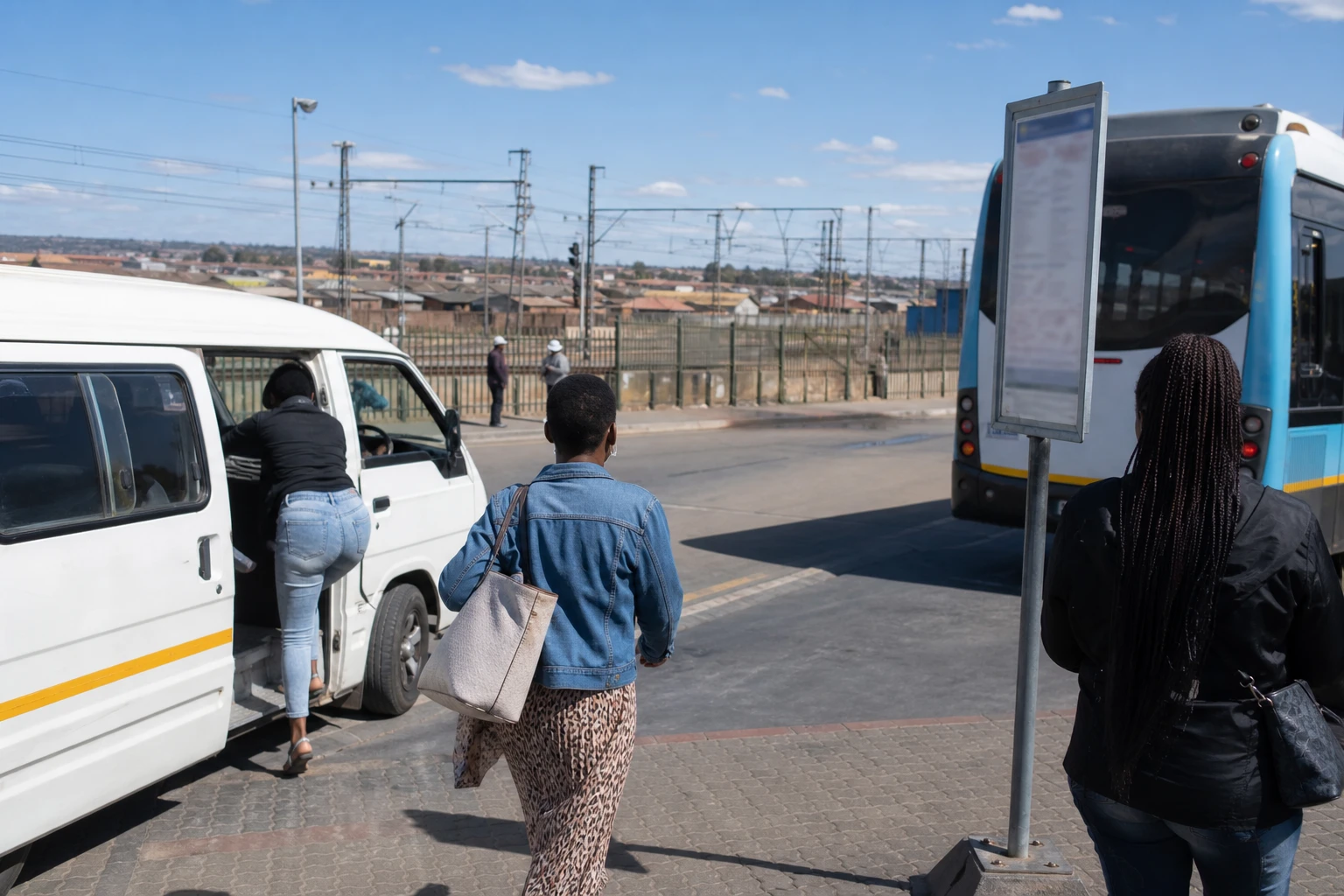
In Ekurhuleni, urban geography plays an important role. The municipality brings together industrial centres, residential neighbourhoods, densely populated areas and large undeveloped spaces. Daily journeys between home, work, shops and transport expose women to different risks depending on their hours, incomes and available means of transport.
Women living in neighbourhoods far from police stations may face greater difficulties reporting a disappearance or accessing assistance quickly. In the informal economy, irregular working hours and late journeys also complicate prevention. Better-equipped areas, by contrast, benefit more from cameras, private patrols and community networks.
Private security can help identify crime scenes, as in the latest case. It cannot, however, replace a regular public presence, properly funded investigations and a judicial system capable of taking complaints through to trial.
The national centre for combating gender-based violence can be reached on 0800 428 428. It refers callers to social workers and support services. The service does not resolve the problem of impunity, but it provides a point of contact for survivors, families and witnesses.
Gauteng under pressure, with SADC in the background
Gauteng accounts for a large share of South Africa’s economic activity. Pretoria, the national capital, and Johannesburg attract workers from several provinces and neighbouring countries. This mobility strengthens ties, but also puts pressure on police services, transport and social support systems.
The issue therefore extends beyond Ekurhuleni. Within the Southern African Development Community, or SADC, states co-operate on security, mobility and population protection. Violence against women, however, is dealt with primarily at national level, with capacities varying widely between countries and local authorities.
For South African authorities, the next steps are clear: identify the victims, establish the causes of death, compare the evidence collected at each scene and check for possible links between the cases. Public pressure will be intense, but the strength of the evidence will remain decisive.
In the short term, families are above all waiting for answers about their missing relatives. Women in Ekurhuleni are calling for a visible presence in isolated areas and regular updates. For the police and the government, the challenge will be to turn national outrage into reliable investigations, practical protection and prosecutions grounded in evidence.



