
 Algeria
 Egypt
 Libya
 Morocco
 Sudan
 Tunisia
 Benin
 Burkina Faso
 Cabo Verde
 Côte d'Ivoire
 Ghana
 Guinea
 Guinea-Bissau
 Liberia
 Mali
 Mauritania
 Niger
 Nigeria
 Senegal
 Sierra Leone
 The Gambia
 Togo
 Cameroon
 Central African Republic
 Chad
 DR Congo
 Equatorial Guinea
 Gabon
 Republic of the Congo
 São Tomé and Príncipe
 Burundi
 Comoros
 Djibouti
 Eritrea
 Kenya
 Madagascar
 Malawi
 Mauritius
 Mozambique
 Rwanda
 Seychelles
 Somalia
 South Sudan
 Tanzania
 Uganda
 Angola
 Botswana
 Eswatini
 Lesotho
 Namibia
 South Africa
 Zambia
 Zimbabwe
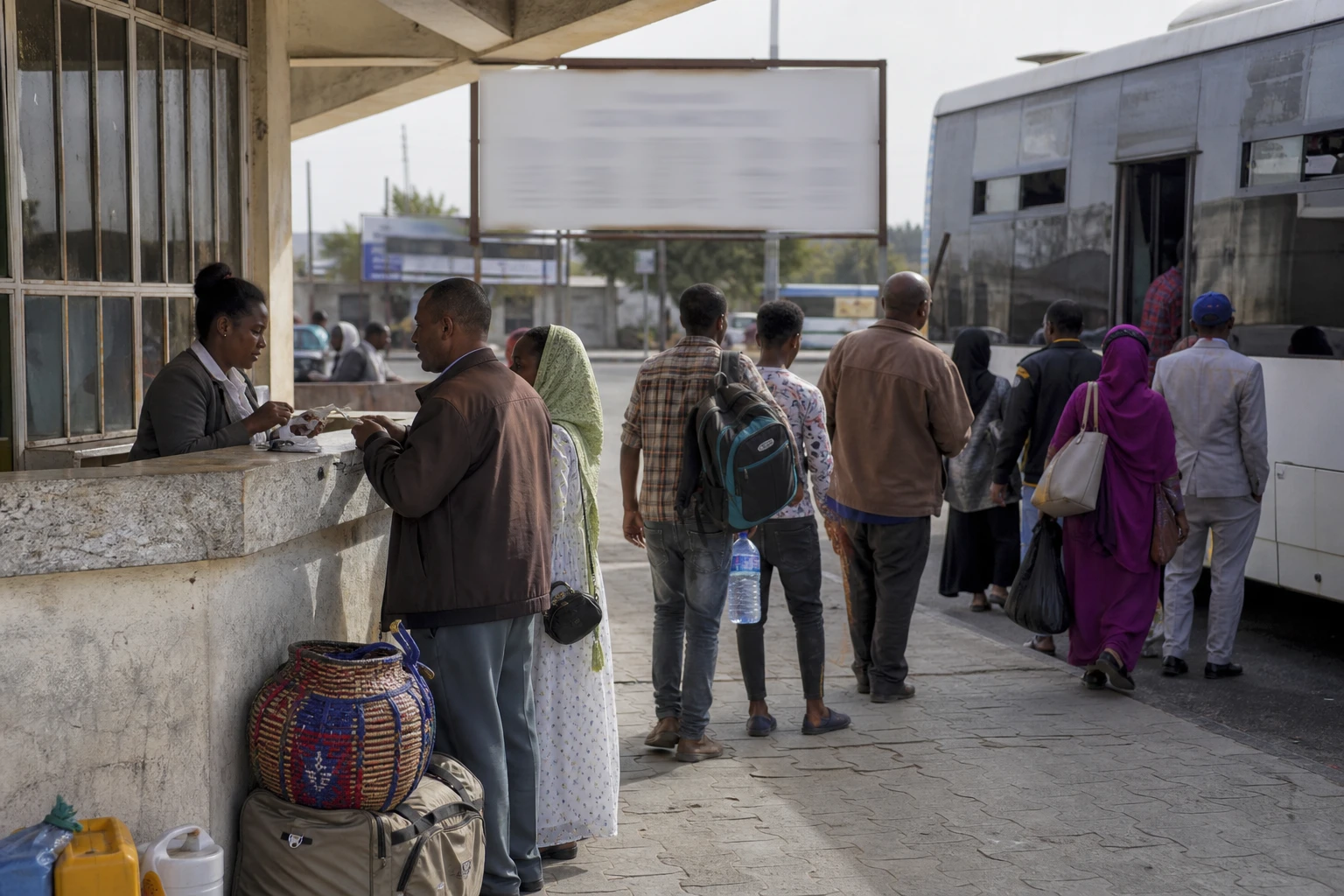
In northern Ethiopia, the shutdown of telecommunications is adding uncertainty to the fighting. In Mekele and rural areas of Tigray, residents have less and less reliable information about troop movements and access to essential services.
On Friday 25 September 2026, internet and telephone networks appeared to be disrupted in several areas of the country’s north. The NetBlocks observatory reported a localised outage corresponding to reports of a telecommunications shutdown in Tigray. Independent findings reported by Agence France-Presse also pointed to severely degraded communications.
Renewed fighting spreads beyond Tigray
The latest escalation began this week around Tigray, a region in northern Ethiopia led by the Tigray People’s Liberation Front (TPLF). The movement says it has entered a new phase of confrontation with the federal government. Authorities in Addis Ababa, for their part, describe the ongoing operations as an offensive against government positions.
The TPLF announced that it had taken control of the airports in Mekele, Axum and Shire. The African Union confirmed the seizure of the facilities and the detention of federal personnel, while warning that civilian air links had been disrupted. The airports play an important role in travel, humanitarian aid and exchanges with the rest of the country.
Clashes have also spread towards Afar and Amhara, two regions neighbouring Tigray. Fighting has been reported near Abala in Afar, as well as in areas close to Weldiya in Amhara. At this stage, several military reports remain difficult to verify because of the communications shutdown and limited access to the areas concerned.
The federal government says it has killed 272 fighters after several days of clashes. No independent assessment has confirmed this figure. The armed groups involved have not published a comparable toll. As in previous phases of the conflict, military statements by the different parties must therefore be distinguished from established facts.
The legacy of the Pretoria agreement
This latest crisis comes less than four years after the cessation of hostilities agreement was signed in Pretoria, South Africa, on 2 November 2022. The deal ended the Tigray war, which began in 2020 between federal forces, their allies and forces linked to the TPLF.
The conflict caused mass displacement, the destruction of infrastructure and a major humanitarian crisis. Estimates of the death toll have varied widely according to the methods and periods studied. The highest estimates put the number of deaths at several hundred thousand, but no complete and universally accepted count has established a definitive figure.
The Pretoria agreement remains the official framework for a political settlement. The African Union regards it as the basis for peace and reconciliation in Ethiopia. In a statement issued on 23 September, its Commission chairperson called for “the utmost restraint” and immediate de-escalation, recalling the commitments made by the parties.
Several issues nevertheless remain unresolved. The status of the disputed territories between Tigray and Amhara has not been definitively settled. The return of displaced people remains incomplete. The presence of armed forces in some border areas is also fuelling mistrust between regional actors.
Alliances complicate the balance of power
The situation is not limited to a stand-off between Addis Ababa and the TPLF. Seven armed or politico-military opposition groups have announced the formation of an alliance aimed at challenging the government of Prime Minister Abiy Ahmed. The coalition includes the TPLF, the Fano Amhara nationalist militias and the Oromo Liberation Army.
These movements have different aims. Some are calling for greater autonomy for their region. Others challenge the structure of Ethiopia’s federation or the government’s security policies. Their rapprochement could increase pressure on the federal army, but it does not necessarily mean that they have a unified command.
Transport routes give the Afar region particular importance. The area links Ethiopia to Djibouti, the main maritime outlet for much of Ethiopia’s imports. Any prolonged disruption along this route could affect supplies to Addis Ababa, the prices of essential goods and traders’ activities.
The effects nevertheless vary across territories. In cities, the digital shutdown is affecting banks, transport, businesses and families separated by the fighting. In rural areas, it is making access to information, markets and emergency services more difficult. Humanitarian organisations risk losing contact with populations already weakened by displacement.
Food stockpiling raises the alarm
In Mekele and other towns in Tigray, residents have begun buying more food, water, cash and essential goods. Accounts gathered by Reuters describe a rise in purchases and growing anxiety in markets.
This behaviour is reminiscent of the years of siege and the breakdown of public services. During the previous war, Tigray experienced long periods without telecommunications, electricity or banking services. Isolation made it particularly difficult to deliver aid and verify information.
Rising prices could quickly affect households dependent on the informal economy. Displaced families, older people and households headed by women often have less financial resilience. Disruption to roads or banks would also weigh on producers and small traders, well beyond areas directly under bombardment.
A risk to the balance of the Horn of Africa
The fighting has resumed in an already unstable regional environment. Ethiopia shares a militarised border with Eritrea to the north and neighbours Sudan, which has been at war since 2023. Any widening of the conflict could therefore alter the balance of the Horn of Africa and complicate mediation efforts.
The crisis also concerns the Intergovernmental Authority on Development (IGAD), a regional organisation bringing together several states in the Horn of Africa. Its role could become important if the fighting spreads or relations between Ethiopia, Eritrea and Sudan deteriorate further.
In the immediate term, the next signs to watch are the restoration of telecommunications, the operation of Tigray’s airports and the course of the fighting in Afar and Amhara. The ability of African mediators to preserve the Pretoria agreement will shape what happens next. Without a credible political mechanism, a localised crisis could once again take on a national dimension.
The latest reports on fighting and internet disruptions in Ethiopia have been checked against information published by the African Union and available accounts of the situation in Tigray.



