
 Algeria
 Egypt
 Libya
 Morocco
 Sudan
 Tunisia
 Benin
 Burkina Faso
 Cabo Verde
 Côte d'Ivoire
 Ghana
 Guinea
 Guinea-Bissau
 Liberia
 Mali
 Mauritania
 Niger
 Nigeria
 Senegal
 Sierra Leone
 The Gambia
 Togo
 Cameroon
 Central African Republic
 Chad
 DR Congo
 Equatorial Guinea
 Gabon
 Republic of the Congo
 São Tomé and Príncipe
 Burundi
 Comoros
 Djibouti
 Eritrea
 Ethiopia
 Kenya
 Madagascar
 Malawi
 Mauritius
 Mozambique
 Rwanda
 Seychelles
 Somalia
 South Sudan
 Tanzania
 Uganda
 Angola
 Botswana
 Eswatini
 Lesotho
 Namibia
 Zambia
 Zimbabwe
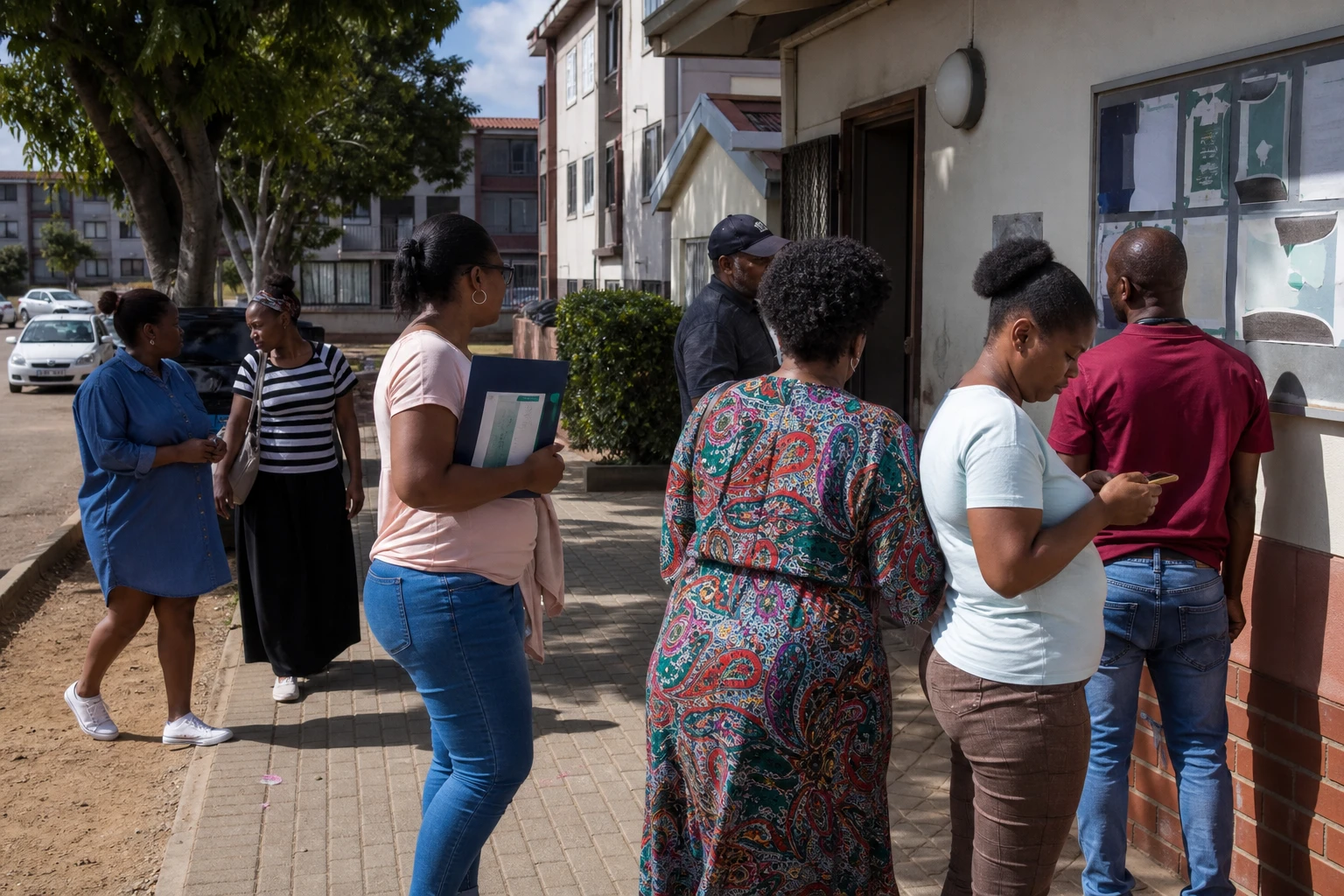
In eastern Johannesburg, the question now goes beyond identifying a possible killer. It is about the South African state’s ability to quickly detect similar crimes, link separate cases and protect women before another body is found.
Since July 2026, nine women have been found dead in the municipality of Ekurhuleni, in Gauteng province. The proximity of the locations and certain similarities between the cases have led police to examine the possibility that the crimes are linked. At this stage, however, they have declined to confirm the presence of a serial killer.
An investigation under pressure in Ekurhuleni
The ninth body was found on 17 September in the Dawn Park neighbourhood. The victims were discovered in several parts of the East Rand, a large urban area east of Johannesburg made up of residential neighbourhoods, industrial centres and densely populated townships.
Gauteng police have deployed a specialised investigative team. South Africa’s parliament has also called for investigations to be expedited and for a coordinated response to gender-based violence and femicide, meaning the killing of a woman in a context linked to her gender or to gender-based violence.
The South African Police Service (SAPS) says cases cannot be grouped together solely because they occurred close to one another. Investigators must compare forensic evidence, the victims’ profiles, the circumstances of their disappearances, the methods used and evidence collected at the crime scenes. Provincial commissioner Fred Kekana has therefore urged people to avoid premature conclusions.
This caution does not allay the concerns of local women. It also avoids publicly naming a suspect without evidence. On 23 September, Ekurhuleni police condemned the circulation in community groups of a photograph of a man falsely identified as responsible for the killings. The authorities warned that the accusations could provoke reprisals.
Calls for permanent resources
In response to the deaths, South African activist Deminkha Pillay and civic organisation Amandla.mobi have launched a petition. Their request is specific: to establish and provide sustained funding for a specialised unit dealing with rape and serial murders.
Those behind the campaign say a permanent team would make it possible to spot links earlier between cases handled by different police stations. It could centralise information, analyse crime patterns and intervene before more victims are identified.
“We need women to be able to feel safe,” Deminkha Pillay said as part of the campaign. She rejects messages that mainly tell women to change where they go or their habits. In her view, responsibility must lie first with the institutions tasked with preventing crimes and prosecuting those responsible.
Resources are central to the issue. South Africa’s policy on investigating serial rapes and murders already provides for the deployment of specialised expertise, including criminal analysis, investigative psychology and DNA analysis. But the existence of a national framework does not, by itself, guarantee the permanent availability of investigators, analysts and laboratories.
From 14 to 20 September, the SAPS announced the arrest of 17,270 people for various offences as part of Operation Shanela II. Among them were two men suspected of serial rape in KwaZulu-Natal province. The operation illustrates the scale of police activity, but it does not directly address the problem raised in Ekurhuleni: the ability to quickly link complex cases across several areas.
A national crisis, local impact
The campaign comes as gender-based violence and femicide were classified as a national disaster in November 2025. The decision requires government departments to strengthen coordination between the police, justice system, health services, social services and support services for survivors.
The classification does not automatically create a new police force. Rather, it is intended to facilitate a joint response and speed up the implementation of existing measures. The South African government has announced, in particular, the expansion of Thuthuzela Care Centres, specialised sexual offences courts and victim-support mechanisms.
On the ground, however, the effects of this policy remain uneven. In Ekurhuleni’s densely populated neighbourhoods, families often have to contend with long journeys, poorly lit areas and police stations under heavy demand. Women who work in the informal economy or return home late are particularly exposed to risks while travelling.
The consequences are not only a matter of safety. Every disappearance forces relatives to search, navigate legal procedures and sometimes incur substantial expenses. In low-income families, these costs can disrupt employment or jeopardise children’s education. The discovery of a body in a neighbourhood also undermines trust between residents and affects the use of public spaces.
The debate extends beyond Johannesburg
The Ekurhuleni case is part of a wider South African context marked by repeated warnings about violence against women. The country has a national strategy to combat gender-based violence, a national council dedicated to the issue and specialised services. The challenge now is implementation: earmarked budgets, trained staff, shared data and public monitoring of results.
A permanent unit could address a recurring weakness in criminal investigations: fragmentation. A disappearance reported in one municipality, an assault recorded in another and a body found elsewhere may all be part of the same pattern of criminal activity. Without a reliable database and coordination, these details remain isolated.
But the requested unit should not replace local police stations. It should support them, speed up analysis and relay alerts. It should also work with families, neighbourhood associations, health services and organisations that defend women’s rights.
The next steps will therefore be twofold: establish, on the basis of evidence, whether the nine deaths are linked and determine whether the mechanisms already provided for under South Africa’s policy can work in time. In Pretoria and across Gauteng’s municipalities, the challenge can now be measured: turning the classification of femicide as a national disaster into tangible investigative, prevention and protection capabilities.



