Algeria
 Egypt
 Libya
 Morocco
 Sudan
 Tunisia
 Benin
 Burkina Faso
 Cabo Verde
 Côte d'Ivoire
 Ghana
 Guinea
 Guinea-Bissau
 Liberia
 Mali
 Mauritania
 Niger
 Nigeria
 Senegal
 Sierra Leone
 The Gambia
 Togo
 Cameroon
 Central African Republic
 Chad
 DR Congo
 Equatorial Guinea
 Republic of the Congo
 São Tomé and Príncipe
 Burundi
 Comoros
 Djibouti
 Eritrea
 Ethiopia
 Kenya
 Madagascar
 Malawi
 Mauritius
 Mozambique
 Rwanda
 Seychelles
 Somalia
 South Sudan
 Tanzania
 Uganda
 Angola
 Botswana
 Eswatini
 Lesotho
 Namibia
 South Africa
 Zambia
 Zimbabwe
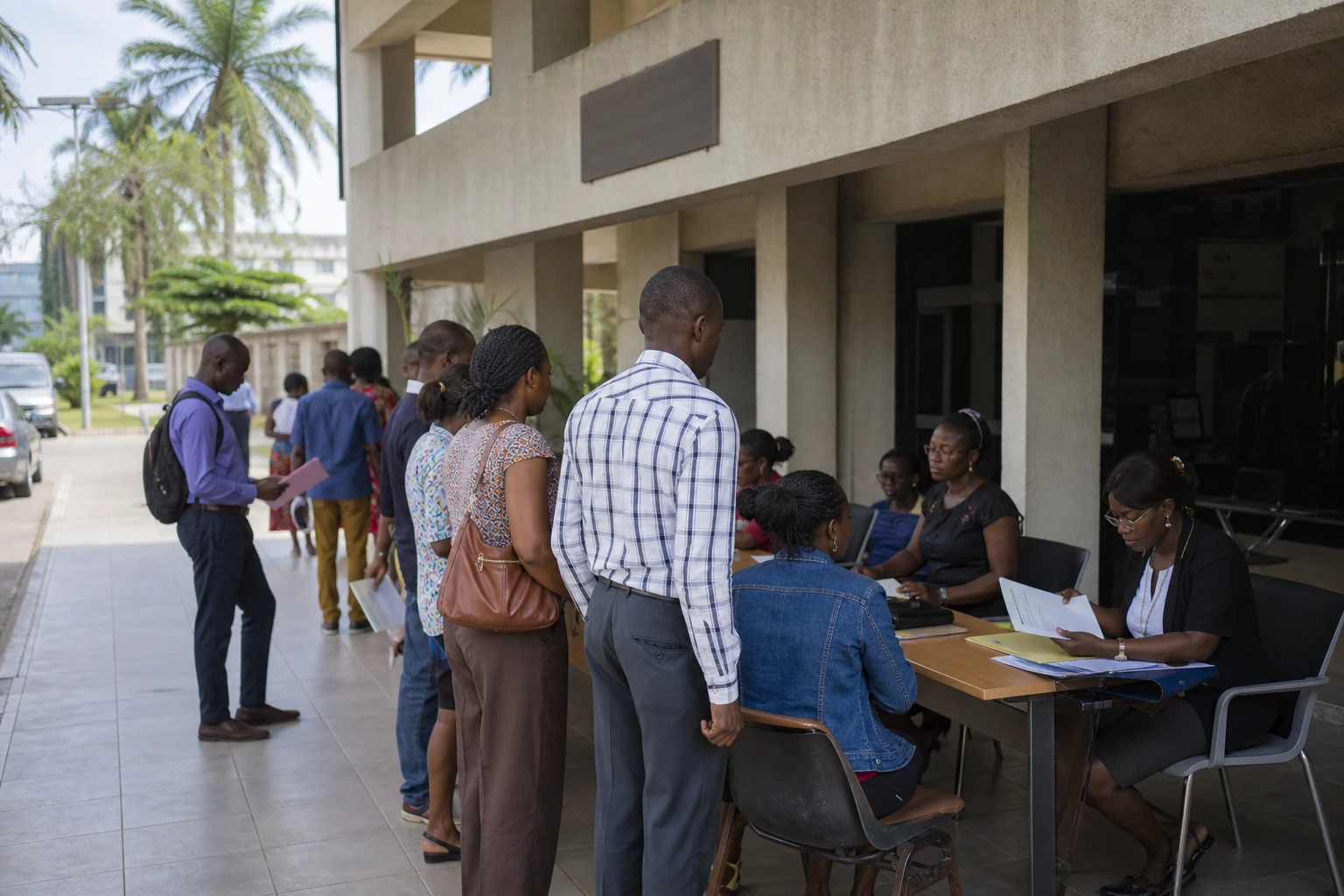
In Gabon, the clean-up of the civil service records is entering its most visible phase. In Libreville and the provinces, the stakes go beyond salaries paid to absent employees: they concern the reliability of the administration, oversight of public spending and citizens’ trust.
An operation launched after the 2024 census
The Gabonese government has announced the removal of 1,473 public employees after reviewing 1,765 files flagged as disputed. The decisions concern several administrative categories, not only people suspected of having abandoned their posts.
The process stems from the biometric and administrative census carried out in 2024. The operation was intended to verify employees’ identities, postings and actual presence in state services. It also aimed to make the payroll records more reliable — the database used to pay public-sector salaries.
Gabon’s Ministry of the Civil Service says nearly 1,756 suspected cases of job abandonment were identified at the time. According to figures released in June 2026, they represented an estimated cost to the state of more than CFA francs 680 million a month.
The files were then referred to an Exceptional Disputes Commission. Established by an order dated 23 March 2026, the commission worked from 8 June to 24 July 2026. The Council of Ministers, which met in Port-Gentil on 18 September 2026, took note of its conclusions.
Removals cover several different situations
The breakdown presented by the ministry shows that the measure is not limited to employees who have been absent for several years. Of the 1,473 decisions, 589 concern job abandonment with pension rights and 110 job abandonment without pension rights.
The tally also includes 600 cases involving non-permanent workers, a status covering people employed by the administration who are not governed by the same rules as permanent employees. In addition, there are 44 employees on the pre-salary scheme, 36 contract terminations, six compulsory retirements and 20 specific cases involving former members of ministerial cabinets.
The commission also identified 65 deaths among the files it examined. This category highlights the range of anomalies in the administrative records. It points to updates that may not have been made in time, rather than to physical absence from the workplace.
The Gabonese government estimates annual savings at nearly CFA francs 11 billion. Another estimate released by the ministry puts the operation’s financial impact at CFA francs 11.319 billion. The difference reflects the calculation method and the scope of the salaries included.
Administrative reform amid a transition
The operation comes after the change of power on 30 August 2023, which ended Ali Bongo Ondimba’s rule. Since that break, the transitional authorities and then the government that emerged from the new institutional phase have made clear their intention to overhaul state management practices.
The 2024 census is part of that effort. For the authorities, the aim is not simply to reduce the wage bill. The audit is also intended to bring paid headcounts into line with the actual needs of the administration, particularly in health, education, security and local services.
The issue is especially sensitive in a country where public employees play an important role in access to essential services. Removing a post can reduce spending when it relates to a salary paid improperly. It can also weaken a service if the post belonged to an employee properly assigned to a remote area but poorly recorded in central files.
The ministry says it has provided for an adversarial procedure. The officials concerned can challenge their removal before the Council of State. This administrative court can review whether the decision was lawful and, depending on the case, uphold it or call for it to be revised.
Administrative managers also face scrutiny
Responsibility does not rest solely with the employees removed from the payroll. The government has announced that managers who may have facilitated the continued inclusion of absent people among paid staff could face prosecution.
This is important. Payroll records do not produce irregularities on their own. They depend on approval chains, human resources departments, line managers and budgetary processes. Without checks at each of these levels, a removal operation risks addressing the consequences without correcting the mechanisms that made them possible.
The challenge, therefore, is to turn a one-off operation into a lasting system. This requires regular updates, better links between administrative databases and attendance checks suited to conditions in the provinces. Employees posted far from Libreville must not be confused with those who have genuinely abandoned their jobs.
A signal for CEMAC and Gabon’s administration
Gabon is a member of the Economic and Monetary Community of Central Africa, or CEMAC, which brings together six countries using a common currency, the Central African CFA franc. Across the bloc, managing the wage bill and ensuring the quality of public spending are recurring economic governance issues.
Neighbouring administrations may therefore watch the Gabonese case. The question goes beyond the amount saved. It concerns a state’s ability to produce reliable data, distinguish administrative errors from fraud and guarantee avenues of appeal for people who have been sanctioned.
In the short term, the next step will be to implement the decisions and examine challenges. In the medium term, the outcome will be measured in public services: posts actually filled, salaries correctly allocated and staffing better aligned with the country’s needs. For Gabonese citizens, the reform’s success will not be measured solely in budget savings. It will also be judged by the quality of the administration’s reception and response, from Libreville to the provincial territories.