Algeria
 Egypt
 Libya
 Morocco
 Sudan
 Tunisia
 Benin
 Cabo Verde
 Côte d'Ivoire
 Ghana
 Guinea
 Guinea-Bissau
 Liberia
 Mali
 Mauritania
 Niger
 Nigeria
 Senegal
 Sierra Leone
 The Gambia
 Togo
 Cameroon
 Central African Republic
 Chad
 DR Congo
 Equatorial Guinea
 Gabon
 Republic of the Congo
 São Tomé and Príncipe
 Burundi
 Comoros
 Djibouti
 Eritrea
 Ethiopia
 Kenya
 Madagascar
 Malawi
 Mauritius
 Mozambique
 Rwanda
 Seychelles
 Somalia
 South Sudan
 Tanzania
 Uganda
 Angola
 Botswana
 Eswatini
 Lesotho
 Namibia
 South Africa
 Zambia
 Zimbabwe
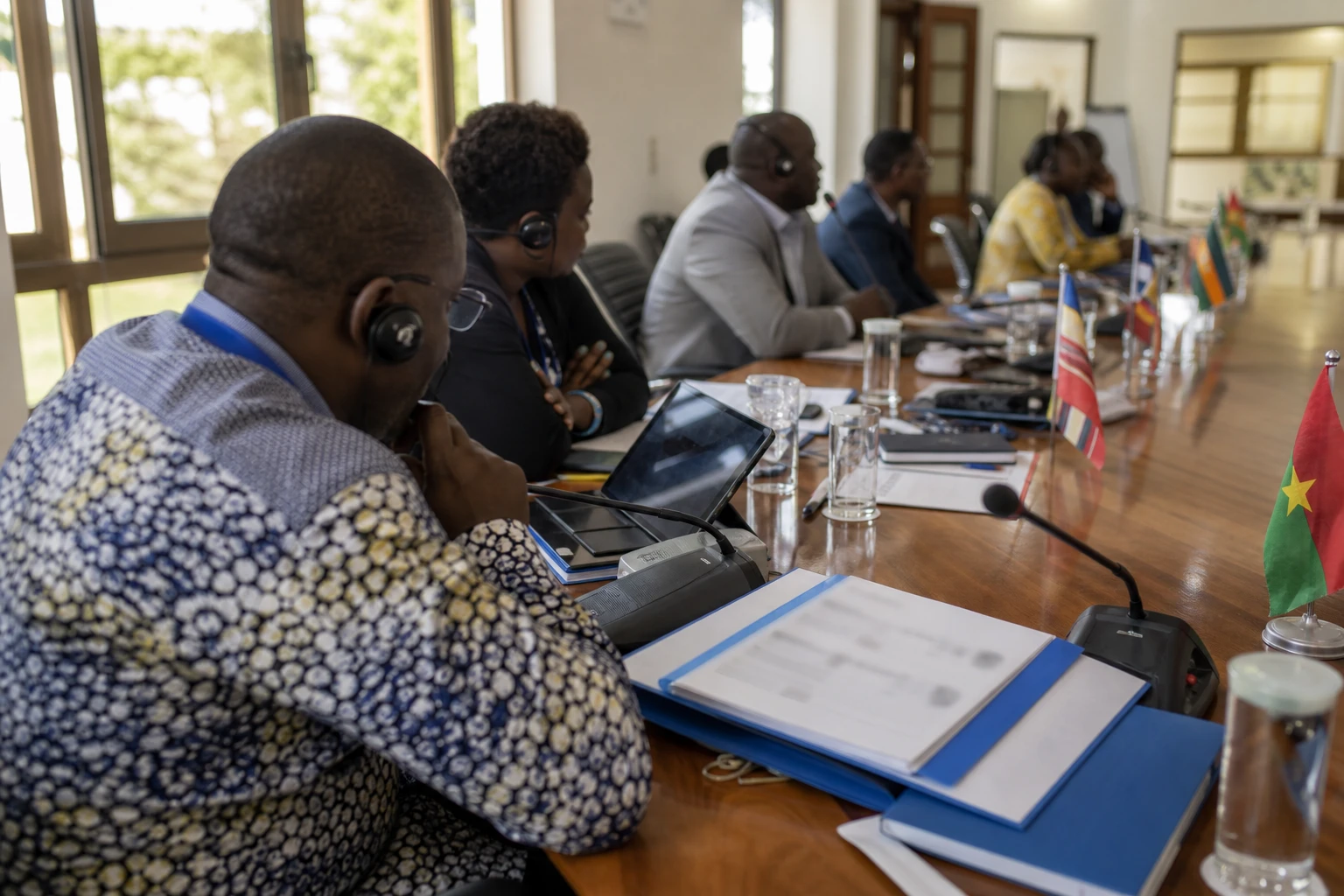
In Ouagadougou, the next battle for the health system will not be fought only in medical centres. It will also be fought on maps and databases, and through the ability to know precisely where needs are. For Burkina Faso, digitising the health map should help bring administrative decisions closer to the reality experienced in the provinces.
A tool to reveal disparities between territories
Burkina Faso’s Ministry of Health included the digitisation of the health map on the agenda of its first ministerial sector management board meeting of 2026, held on Monday 21 September in Ouagadougou, according to information released on the occasion.
The aim is to create a regularly updated, geolocated digital directory of health facilities. Such a database should specify the location of facilities, the services available, the equipment on site and, eventually, the human resources assigned to them.
This change may seem technical. Yet it addresses a very practical question: in which area should a health centre be built, a medical team strengthened or essential medicines delivered? Without localised data, it is harder to base these decisions on the actual disparities between territories.
A digital health map could also make areas far from services, poorly equipped facilities and infrastructure requiring priority maintenance more visible. It will not replace field visits. However, it can give health officials a shared view of the care network.
Digital health is part of a national strategy
The project is not starting from scratch. Burkina Faso has a 2025-2029 Strategic Plan for Digital Health, drawn up by the Ministry of Health. The document makes the availability of reliable data a key basis for decision-making at every level of the health system.
The strategy provides for a gradual transformation of the digital tools used by health services. It aims in particular to improve the quality of care, the efficiency of facilities and access to services. It also recognises several constraints: uneven connectivity, a shortage of specialised skills and limited interoperability between platforms.
Interoperability means the ability of several computer systems to exchange information without constant re-entry. In healthcare, this is crucial. A health map that does not communicate with data on staff, medicines, equipment or visits to centres risks remaining a mere inventory.
The ministry will therefore need to harmonise formats, define responsibilities for updates and secure access. Reliability will depend as much on the IT tool as on the work carried out in health districts and facilities.
More precise decisions depend on reliable data
Geolocation can improve several areas at once. It can guide the construction of new infrastructure, facilitate staff allocation and support the planning of medicine stocks. It can also help identify biomedical equipment that is broken or poorly maintained.
The effects will not be the same everywhere. In large urban centres, the challenge will often be to distribute an already concentrated range of services more effectively. In rural areas, the focus will be more on measuring distances, travel times and continuity of services. The needs of a regional hospital are not those of an isolated health centre.
The map will also need to reflect demographic changes and population movements. In Burkina Faso, security tensions have changed access to some services and increased pressure on host communities. An outdated snapshot of the health network could therefore lead to decisions that quickly become obsolete.
Data should not be used only to produce reports. It should make it possible to track decisions, their timelines and their results. For example, identifying an underserved area will have an impact only if it leads to an action that is budgeted, monitored and evaluated.
A trend extending beyond Burkina Faso
Burkina Faso is part of a broader movement in West Africa. Health systems in the region need to share information more quickly to track epidemics, organise vaccination campaigns and anticipate medicine needs.
The World Health Organization Regional Office for Africa launched a regional geographic database on 19 November 2025. The platform brings together information on administrative boundaries, populations and health facilities, among other things. It is intended to enable countries to store, verify and share geospatial data.
This approach aligns with the needs of member states of the Economic Community of West African States, ECOWAS, a regional organisation tasked with strengthening co-operation between West African countries. Data exchange can support cross-border disease surveillance and the co-ordination of health responses.
Burkina Faso will nevertheless need to retain national control over its information. Regional co-operation will be useful only if data are produced locally, verified by the relevant services and used under clear protection rules.
The next test will be keeping data up to date
The project’s success will be measured less by the existence of a platform than by its daily use. District officials will need to be able to consult up-to-date information. Staff will need training. Remote facilities will need to be able to transmit their data despite connectivity problems.
The ministry will also need to avoid the proliferation of parallel databases. A shared architecture would reduce duplication and make it easier to compare information between regions. The WHO biennial report on Burkina Faso already highlights the importance attached to digitalisation, governance and the modernisation of the health information system.
In the short term, the challenge will be to turn the map into a management tool. In the longer term, its contribution will depend on its ability to link data to budgets, staff and health outcomes. Only then can digitisation help reduce disparities between Ouagadougou, secondary cities and rural areas.