
 Algeria
 Egypt
 Libya
 Morocco
 Sudan
 Tunisia
 Benin
 Burkina Faso
 Cabo Verde
 Côte d'Ivoire
 Ghana
 Guinea
 Guinea-Bissau
 Liberia
 Mali
 Mauritania
 Niger
 Nigeria
 Sierra Leone
 The Gambia
 Togo
 Cameroon
 Central African Republic
 Chad
 DR Congo
 Equatorial Guinea
 Gabon
 Republic of the Congo
 São Tomé and Príncipe
 Burundi
 Comoros
 Djibouti
 Eritrea
 Ethiopia
 Kenya
 Madagascar
 Malawi
 Mauritius
 Mozambique
 Rwanda
 Seychelles
 Somalia
 South Sudan
 Tanzania
 Uganda
 Angola
 Botswana
 Eswatini
 Lesotho
 Namibia
 South Africa
 Zambia
 Zimbabwe
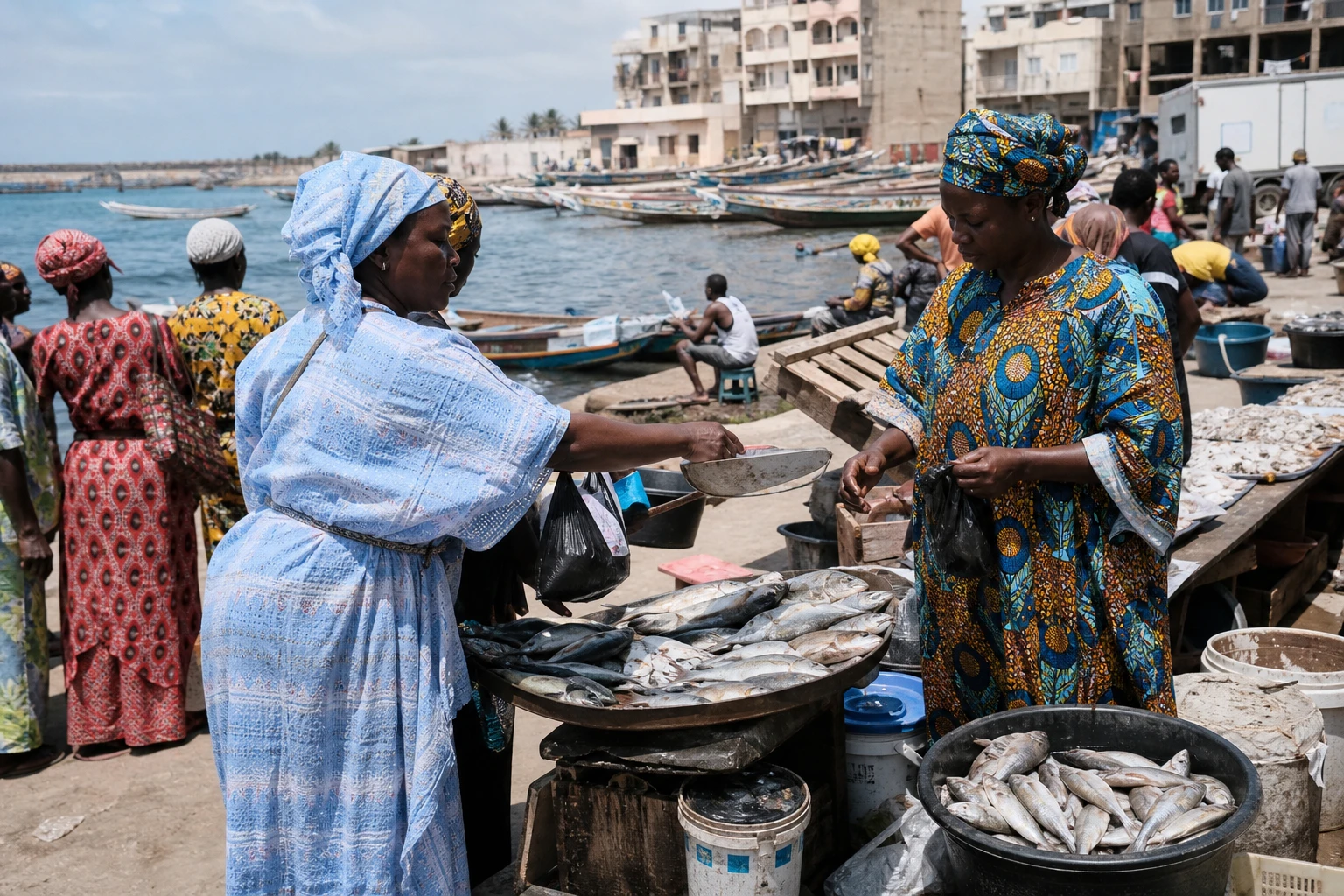
At Soumbédioune in Dakar, fish remains at the heart of the local economy. Yet it is becoming harder for many households to afford. At this iconic landing site, rising prices point to broader tensions. They affect consumers, vendors, fish wholesalers and fishermen alike.
The problem is therefore not limited to the price displayed on a stall. It reflects the quantity of fish landed, the cost of going to sea, the state of fish stocks and the markets available to an activity that supports a large part of Senegal’s coastline.
In Dakar, each landing shifts the market
On the Corniche Ouest, activity at Soumbédioune depends on the rhythm of the pirogues. When they arrive with large catches, vendors have room to negotiate. When landings fall, competition among traders intensifies and prices rise quickly.
Vendors interviewed at the market describe purchases that could cost around 2,000 CFA francs and now reach 4,000, or even 5,000 CFA francs, depending on the species, quantity and day’s catch. These figures are accounts gathered at the market and do not constitute an official national price.
For traders, higher prices do not automatically mean better earnings. They buy fish from fishermen or wholesalers, then pass on some of the costs. They must also pay for ice, transport and handling, and cover losses on unsold products.
Households, meanwhile, are adjusting their purchases. Some are buying less. Others are choosing cheaper species or putting off a purchase. This adjustment weighs more heavily on families that regularly include fish in their diet, particularly in Dakar’s poorer neighbourhoods.
A resource that costs more to reach
Fishermen describe another change. To find certain species, they sometimes have to travel farther from the coast. This lengthens trips and increases fuel consumption. It also requires more ice, equipment and working time.
Pressure on resources is not the only explanation. Artisanal fishing effort, industrial activity, illegal practices, degradation of marine habitats and commercial demand all combine. Professionals are therefore describing more than a fall in catches. They also speak of an increasingly uncertain livelihood.
A 2025 analysis published by the Environmental Justice Foundation warned about the state of several fish stocks and the role attributed to foreign vessels in putting pressure on Senegalese resources. Its conclusions draw in part on interviews and earlier research. They should be distinguished from consolidated public statistics published by the Senegalese administration.
The debate also concerns the monitoring of licences and fishing zones. Artisanal fishing, which supplies a large share of Senegal’s catches, remains essential to market supply. It nonetheless faces competition and rules whose enforcement is regularly questioned by industry organisations.
Women at the centre of a fragile supply chain
At Soumbédioune, rising prices are also reflected in women’s work. They sell at retail, negotiate with wholesalers and maintain links with consumers. When supplies contract, they have to pay more while trying not to lose their customers.
The supply chain does not end at the landing site. Once the pirogues arrive, the fish is sorted, weighed and negotiated over, then transported and distributed to other neighbourhoods. Each stage adds costs. The final price therefore reflects several accumulated expenses, not just the cost of catching the fish.
This system also shows Soumbédioune’s economic importance. The site is not merely a market. It is a place where maritime, commercial and food-related activities converge. A fall in landings therefore affects several trades at once.
When the fishing crisis fuels the desire to leave
In Senegal’s coastal communities, the sector’s difficulties are often linked to departures for the Canary Islands. This relationship should not be presented as automatic. Not all fishermen migrate, and departures have several drivers, including jobs, income, family networks and social expectations.
Fishing nevertheless remains an important point of reference. Young people who have known the sea since childhood have skills they can put to use directly. When this activity can no longer cover household expenses, some may view the crossing as an economic option, despite the risks.
Data from the International Organization for Migration show that the Atlantic route to the Canary Islands continues to be monitored specifically in Senegal. Senegalese Press Agency, for its part, reported a fall in the number of Senegalese arriving in the archipelago in 2025, citing an official from the Interministerial Committee for the Fight against Irregular Migration. A decline in arrivals does not, however, mean that departures or dangers at sea have disappeared.
For fishing villages and neighbourhoods, every departure also means a loss of labour. A pirogue needs several people to prepare the nets, go to sea, land, sort and transport the catch. The departure of one fisherman can therefore weaken a family activity that depends on collective organisation.
An issue for Senegal and West Africa
The situation at Soumbédioune is part of a shared maritime space. Senegalese fishermen have historically travelled along the West African coast. Fish species, fishing grounds and trade routes cross national borders. Managing resources therefore requires co-operation with neighbouring countries and with regional bodies such as ECOWAS, the Economic Community of West African States.
Senegal must also balance several priorities. It needs to preserve fish stocks, guarantee artisanal fishermen access to reserved zones, ensure household supplies and sustain incomes from processing and trade. These goals can conflict when monitoring, licensing or infrastructure fails to keep pace with changes in the sector.
The Directorate of Maritime Fisheries oversees, among other things, permits for artisanal fishing. But the response cannot be limited to administrative authorisations. It also involves surveillance at sea, transparency in licensing, protection of breeding grounds, funding for equipment and recognition of women’s work.
In the short term, Soumbédioune’s traders will be watching the next landings and changes in purchasing power. In the longer term, the question is whether resource governance can reduce pressure on ecosystems while keeping the sector viable. For Dakar residents and coastal communities alike, access to fish will depend as much on the sea as on decisions made on land.



