Algeria
 Egypt
 Libya
 Morocco
 Tunisia
 Benin
 Burkina Faso
 Cabo Verde
 Côte d'Ivoire
 Ghana
 Guinea
 Guinea-Bissau
 Liberia
 Mali
 Mauritania
 Niger
 Nigeria
 Senegal
 Sierra Leone
 The Gambia
 Togo
 Cameroon
 Central African Republic
 Chad
 DR Congo
 Equatorial Guinea
 Gabon
 Republic of the Congo
 São Tomé and Príncipe
 Burundi
 Comoros
 Djibouti
 Eritrea
 Ethiopia
 Kenya
 Madagascar
 Malawi
 Mauritius
 Mozambique
 Rwanda
 Seychelles
 Somalia
 South Sudan
 Tanzania
 Uganda
 Angola
 Botswana
 Eswatini
 Lesotho
 Namibia
 South Africa
 Zambia
 Zimbabwe
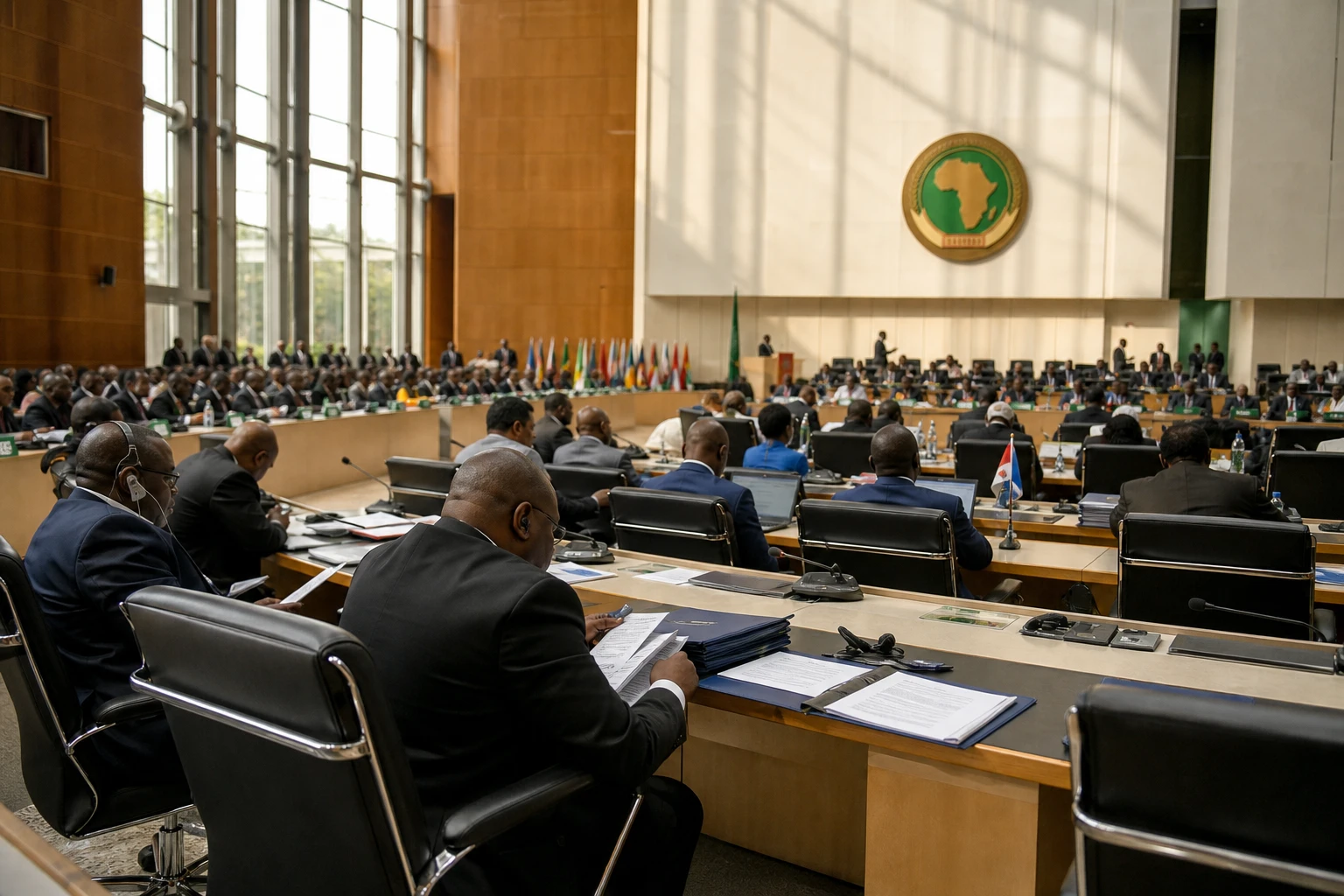
Days before an expected address in New York, the Sudan dossier has shifted from the military arena to diplomatic representation. General Abdel Fattah al-Burhan, president of the Transitional Sovereignty Council and head of the army, had still not obtained a US visa as of 22 September 2026.
This comes as the war continues to tear Sudan apart. It also confronts the United Nations with a sensitive question: how far can a host country use access to the General Assembly as leverage in ceasefire negotiations?
A war now extending beyond the battlefield
Since 15 April 2023, the conflict in Sudan has pitted the Sudanese Armed Forces, led by Abdel Fattah al-Burhan, against the Rapid Support Forces, or RSF, commanded by General Mohamed Hamdan Dagalo, known as “Hemedti”. The two men had shared power after the fall of Omar al-Bashir in 2019.
Their rivalry subsequently paralysed the political transition. In October 2021, the military overthrew the civilian transitional government. Eighteen months later, disagreement over integrating the RSF into the regular army led to open war.
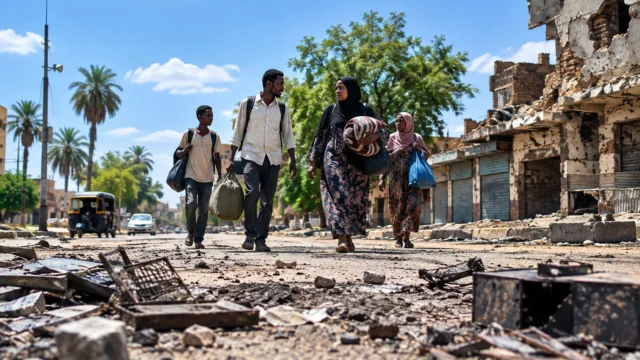
Fighting has affected Khartoum, Darfur, Kordofan and several areas in the centre of the country. Urban populations face bombardments, service cuts and displacement. In rural regions, access to healthcare, markets and livelihoods remains particularly fragile.
Sudan is part of the Intergovernmental Authority on Development (IGAD), a regional organisation bringing together several countries in the Horn of Africa. This forum, like the African Union, is trying to coordinate mediation efforts, but initiatives remain in competition with national agendas and external support for the warring parties.
Washington links visa to ceasefire proposal
According to information reported by Reuters on 22 September, the US administration had not yet issued the visa that would allow Abdel Fattah al-Burhan to travel to the United States for the UN General Assembly.
Issuing the document is reportedly contingent on acceptance of a 90-day ceasefire proposal put forward by Massad Boulos, the US president’s senior adviser on Arab and African affairs. The proposal aims, in particular, to create space for humanitarian aid and the conditions for broader negotiations.
This information is based on a Sudanese diplomatic source and an analyst close to US and Sudanese officials. It was not presented as a decision formally detailed by Washington. Caution is therefore warranted over the exact terms of the condition and the legal form it might take.
Sudan’s government has asked António Guterres to intervene. In a letter dated 21 September, Sudan’s ambassador to the United Nations, Al-Harith Idriss Al-Harith, said the absence of a visa risked preventing the head of the Sovereignty Council from taking part in the General Assembly’s proceedings in person.
UN spokesman Stéphane Dujarric said the secretary-general was “deeply concerned” by the situation and was in contact with US authorities. The UN has not, however, announced any measure to compel the United States to issue the visa.
Diplomatic pressure also targets political legitimacy
The dispute is not solely about an official visit. It touches on how Washington views Sudan’s two camps. According to remarks attributed to State Department spokesman Tommy Pigott, neither the Sudanese Armed Forces nor the RSF represents constitutional and legitimate governance for Sudan.
This wording distances Washington from presenting the conflict as a simple confrontation between a regular army and a paramilitary force. It places both armed bodies before the same demand: not to turn military control of territory into a permanent political mandate.
For Abdel Fattah al-Burhan, accepting a truce designed abroad could nevertheless carry strategic risks. The Sudanese army says it is defending state institutions and calls for the dismantling of the RSF. It therefore fears that a military pause could freeze the paramilitary force’s positions in the areas it controls.
The RSF, for its part, has already backed the principle of a three-month humanitarian truce, while being accused of serious abuses against civilians. Allegations of violations of international law also concern the armed forces and allied groups. A truce would therefore resolve neither the question of justice nor that of rebuilding the state.
Recent history shows how difficult this is. In 2025, Abdel Fattah al-Burhan rejected a proposal backed by mediation involving the United States, Saudi Arabia, Egypt and the United Arab Emirates, among others. He called it unbalanced, arguing that it risked preserving the RSF’s military structures.
For Sudanese people, the stakes go beyond UN protocol
A 90-day truce would first have practical implications for civilians. It could facilitate the delivery of food, medicine and fuel. It could also restore some links between towns and rural areas, as front lines fragment markets and public services.
Its effectiveness would, however, depend on precise mechanisms. The areas covered would need to be defined, fighters’ movements monitored, humanitarian corridors secured and a procedure established for violations. Without a monitoring system accepted by the parties, a pause could remain theoretical or be used to rearm.
The population would not feel the effects in the same way everywhere. In Khartoum, halting air strikes and reopening roads would be priorities. In Darfur and Kordofan, civilian protection, access to displacement camps and preventing communal violence would carry greater weight.
The informal sector, which enables many families to feed themselves despite the collapse of institutions, would also depend on the movement of goods. Traders, transporters and farmers would benefit from a truce only if roads, markets and crossing points were effectively secured.
An episode watched across East Africa
The visa controversy comes as regional mediation efforts continue to seek a role. IGAD, the African Union, Egypt, Saudi Arabia and the United States are pursuing approaches that do not always align. Sudan thus remains at the centre of a power struggle that extends beyond its borders.
What happens next will depend on three factors: the US decision on the visa, Khartoum’s response to the ceasefire proposal and the mediators’ ability to secure simultaneous commitments from both camps. Abdel Fattah al-Burhan’s absence from the General Assembly would not end the conflict. It could, however, confirm the intensification of international pressure on Sudan’s military authorities.
For the African Union and the countries of the Horn of Africa, the issue raises a broader question. An end to the war cannot rest solely on a balance between two armed forces. It must also organise the return of civilian authority, protect the population and prevent Sudan’s resources from remaining in the grip of military networks.