
 Algeria
 Egypt
 Libya
 Morocco
 Sudan
 Tunisia
 Benin
 Burkina Faso
 Cabo Verde
 Côte d'Ivoire
 Ghana
 Guinea
 Guinea-Bissau
 Liberia
 Mali
 Mauritania
 Niger
 Senegal
 Sierra Leone
 The Gambia
 Togo
 Cameroon
 Central African Republic
 Chad
 DR Congo
 Equatorial Guinea
 Gabon
 Republic of the Congo
 São Tomé and Príncipe
 Burundi
 Comoros
 Djibouti
 Eritrea
 Ethiopia
 Kenya
 Madagascar
 Malawi
 Mauritius
 Mozambique
 Rwanda
 Seychelles
 Somalia
 South Sudan
 Tanzania
 Uganda
 Angola
 Botswana
 Eswatini
 Lesotho
 Namibia
 South Africa
 Zambia
 Zimbabwe
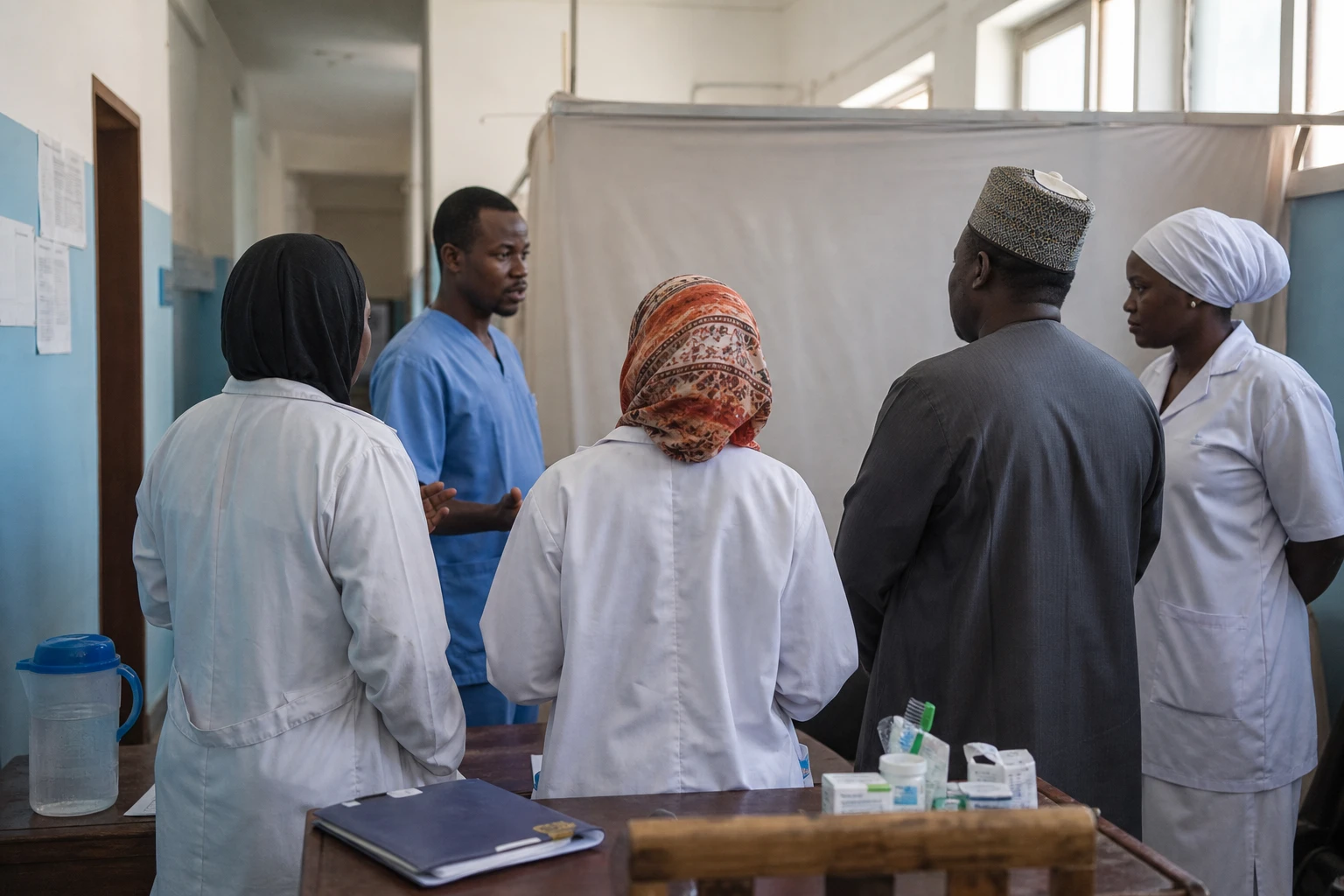
In northern Nigeria, a disease familiar to healthcare workers remains largely invisible to families. Noma can begin with inflammation of the gums, then rapidly destroy facial tissue. Yet, if detected early, it can be halted with antibiotics, local care and nutritional support.
A medical emergency concentrated in northern Nigeria
Noma mainly affects children aged 2 to 6. It generally occurs in children weakened by malnutrition, repeated infections and limited access to water, hygiene and dental care.
The disease is not considered contagious. Rather, it results from a combination of medical and social factors. Without treatment, the infection develops into gangrene of the mouth and face. It can then reach the bones, cause severe dehydration and lead to death.
The World Health Organization classifies noma as a neglected tropical disease. This category covers conditions that mainly affect vulnerable populations and still receive too few resources for prevention, surveillance and research.
In Nigeria, the problem is concentrated mainly in several northern states. The region faces long distances to specialist facilities, economic hardship, fragile health services and the effects of armed violence, which has displaced people and disrupted access to care.
Figures reveal a reality long underestimated
A study published in 2026 in The Lancet Global Health estimated that 50,782 new cases occurred between 1999 and 2024 in 296 local government areas across 12 states in northern Nigeria. This figure is not an exhaustive count. It is an estimate based on data from the Noma Children’s Hospital in Sokoto, the region’s main specialist centre.
The researchers examined the records of 911 patients treated for acute forms of the disease. Their analysis also indicates an increase in estimated incidence between 2020 and 2024. It rose from 6.6 cases per 100,000 people in 2020 to 16.6 cases per 100,000 people in 2024 in the study area.
These findings should be interpreted with caution. Noma progresses rapidly. Many children are never diagnosed, particularly when they live far from a specialist centre. Others die before reaching a hospital. Available data may therefore underestimate the true scale of the problem.
The WHO’s latest published global estimates date from 1998. At the time, they cited 140,000 new cases a year and a case fatality rate of up to 90%. The organisation notes, however, that these figures are based on an outdated methodology. It also stresses that early treatment greatly reduces the risk of death.
In Sokoto, surgery often comes after years of waiting
The Noma Children’s Hospital in Sokoto treats children from several northern states. According to data provided for the period 2023-2025, more than 500 children with noma received care there.
Since 2014, Médecins Sans Frontières has supported the Sokoto hospital. Its teams contribute to medical care, nutrition, reconstructive surgery and support for survivors. Operations are offered free of charge to children whose condition allows them to undergo surgery.
Surgery does not treat the initial infection. It is mainly carried out after the acute phase, to reconstruct part of the face or restore essential functions. Some survivors have difficulty eating, speaking or breathing. They may also face lasting stigma and need psychological support.
The medical journey is long. Several operations may be needed. In some cases, children wait until they are older or their nutritional condition has stabilised before surgery can take place. This wait weighs heavily on families, who may have to travel for hours or days from rural areas.
Delays in diagnosis are one of the main obstacles. Early lesions can be mistaken for a fever, chickenpox, a dental infection or another skin condition. Some families first consult a pharmacist or local health worker. Yet it can take only a few days for tissue to be severely destroyed.
Prevention depends on the health system as well as families
Early signs should prompt a rapid consultation: gum inflammation, pain in the mouth, persistent bad breath, a sore, facial swelling or a fever associated with an oral lesion.
Early treatment relies on antibiotics, wound cleaning, hydration and improved nutrition. It does not always require major surgery. Yet this possibility remains poorly understood in many communities.
Awareness campaigns should therefore target parents, but also community health workers, pharmacies, primary health centres and local leaders. In rural areas, these people are often the first to see sick children.
Nigeria has only two hospitals specialising in noma, including a facility built in Abuja in 2023. This capacity remains limited given the country’s size and the concentration of cases in the North. Strengthening local screening would help direct children to care sooner.
A national, regional and continental challenge
The response cannot rely solely on a handful of hospitals and occasional surgery programmes. It must integrate child nutrition, oral health, water, sanitation and epidemiological surveillance into public services.
This approach has a direct bearing on Nigeria’s health trajectory. The country also plays a central role in ECOWAS, the Economic Community of West African States. Better detection in Nigeria could support regional exchanges on healthcare training, treatment protocols and survivor follow-up.
The WHO’s recognition of noma as a neglected tropical disease in 2023 raised its international profile. It has not, however, resolved the lack of data or difficulties in accessing care. The next step will be to turn this recognition into sustainable funding, regular data collection and services accessible beyond regional capitals.
For families in northern Nigeria, the issue is immediate. It is not only a matter of repairing the effects of a devastating disease. Above all, the early signs must be recognised, treatment started before tissue is destroyed and children spared years of waiting for an operation.



