Algeria
 Egypt
 Libya
 Morocco
 Sudan
 Tunisia
 Benin
 Burkina Faso
 Cabo Verde
 Côte d'Ivoire
 Ghana
 Guinea
 Guinea-Bissau
 Liberia
 Mali
 Mauritania
 Niger
 Nigeria
 Senegal
 Sierra Leone
 The Gambia
 Togo
 Cameroon
 Central African Republic
 Chad
 DR Congo
 Equatorial Guinea
 Gabon
 Republic of the Congo
 São Tomé and Príncipe
 Burundi
 Comoros
 Djibouti
 Eritrea
 Ethiopia
 Kenya
 Madagascar
 Malawi
 Mauritius
 Mozambique
 Rwanda
 Seychelles
 Somalia
 South Sudan
 Tanzania
 Angola
 Botswana
 Eswatini
 Lesotho
 Namibia
 South Africa
 Zambia
 Zimbabwe
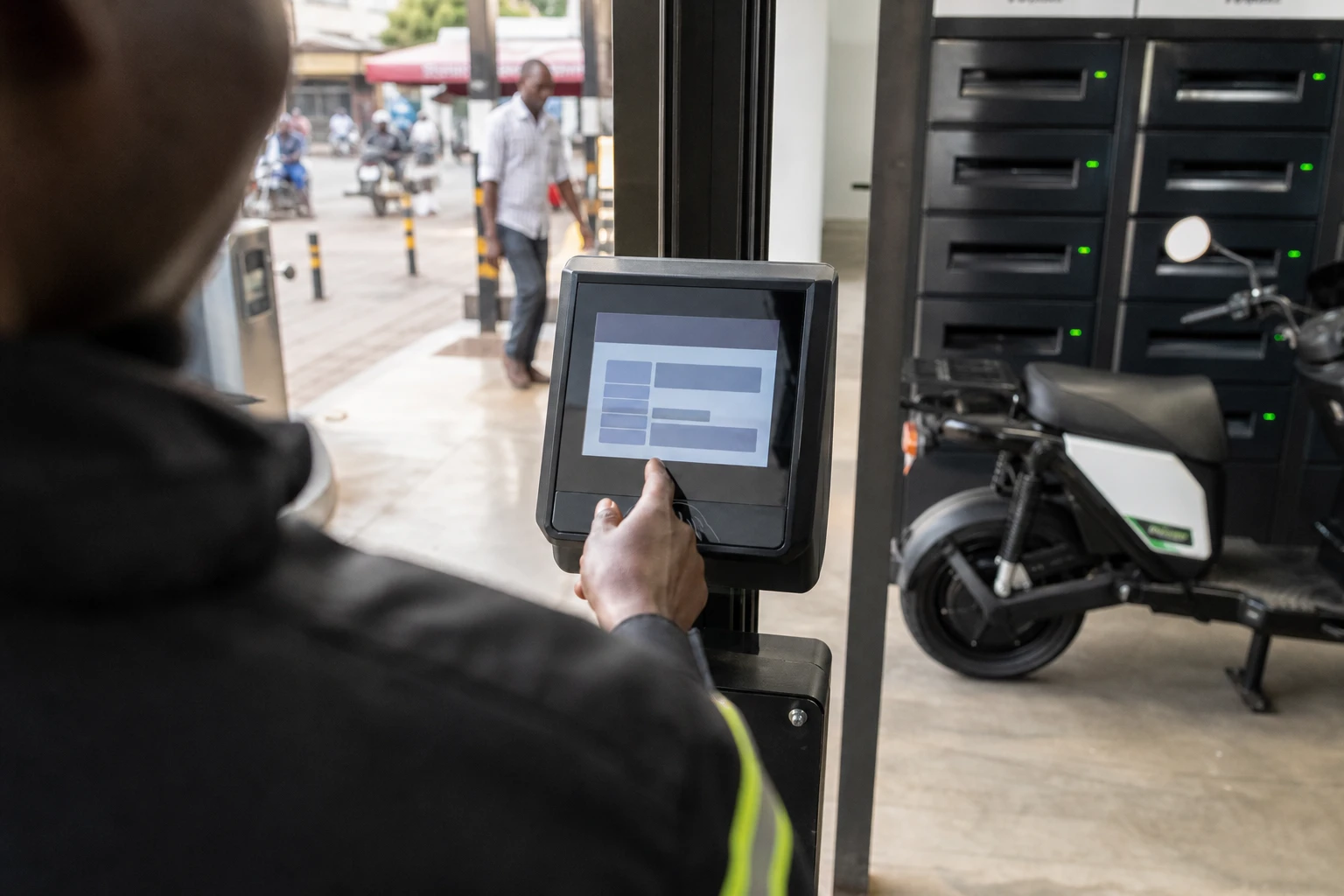
In Kampala and Kigali, electric two-wheelers are no longer just an urban experiment. They are becoming a financed asset, used every day and supported by networks that can replace a battery in minutes. It is this infrastructure, even more than the sale of motorbikes alone, that is now at the heart of the battle for clean mobility in East Africa.
Funding targeted at Uganda and Rwanda
On 21 September 2026, Africa Go Green Fund announced an additional $18 million for Spiro. The debt fund, dedicated to emissions-reduction projects, is managed by Cygnum Capital. With this new tranche, its total commitment to the company reaches $36 million.
The funds are intended to finance the deployment of electric motorbikes and the expansion of battery-swapping stations in Uganda and Rwanda. The partners have not detailed how the amount will be divided between the two countries. Nor have they specified the exact number of vehicles and stations involved.
The deal extends a debt facility agreed in December 2025. Africa Go Green Fund committed $18 million, while Nithio contributed $7 million. The new financing therefore comes less than a year after the fund’s first commitment.
According to figures provided by Cygnum Capital, Spiro had deployed more than 135,000 electric motorbikes by September 2026. The company also says it has carried out more than 50 million battery swaps across its seven active markets. These figures come from the company, but they illustrate the scale-up sought by its lenders.
Cygnum Capital’s statement on Spiro’s financing says the capital is intended to increase the number of motorbikes on the road and improve the use of infrastructure already in place.
The interchangeable battery model
For professional riders, the main obstacle remains downtime. Conventional charging can interrupt a working day. Standardised swapping, by contrast, allows a depleted battery to be replaced with a charged one at a dedicated station.
The system also changes the economics of buying a motorbike. Riders do not necessarily have to finance the entire vehicle and its battery themselves. Under some commercial models, the operator retains control of the batteries and charges for their use. This arrangement can reduce the upfront cost while creating a recurring expense linked to energy.
Profitability nevertheless depends on the density of the network. An isolated station offers little value if riders have to travel a long way to reach it. Conversely, a network near transport routes, markets and delivery areas can increase the number of trips made by each motorbike.
Spiro has already announced the launch of high-capacity stations in Kenya and Rwanda. The new funding is intended to extend this approach in Uganda and Rwanda, with equipment capable of serving more riders in high-activity areas.
Two different national trajectories
In Uganda, motorcycle taxis, often called boda-bodas, play a central role in urban travel and delivery. They connect outlying neighbourhoods to economic centres and provide a source of income for many independent riders.
The shift to electric therefore depends not simply on replacing one technology with another, but on offering a model compatible with drivers’ daily earnings. The price of the motorbike, the cost of the battery, access to finance and the availability of stations will all directly affect adoption.
Available data on the exact volume of Ugandan sales should be treated with caution. Some industry estimates point to strong growth in 2025, but counting methods differ depending on whether they include imports, registrations or vehicles actually in use. It is therefore preferable to note a clear trend rather than present a single figure as definitive.
In Rwanda, momentum relies more heavily on regulatory action. Since January 2025, new petrol motorbikes intended for commercial transport have been unable to obtain operating permits in Kigali, according to public policy documents and Rwandan parliamentary communications. The measure is gradually steering new entrants towards electric models.
A document on Rwanda’s motorcycle transition describes this policy and the goal of accelerating the decarbonisation of road transport. The measure initially applies to the capital, but affects the entire national industry, from assemblers to riders.
An industrial as well as environmental challenge
Spiro’s financing comes in a sector where the stakes go beyond reducing petrol consumption. Electric motorbikes can also support local assembly, maintenance, battery management and the creation of energy services.
Spiro says it has assembly operations in several African countries, including Kenya, Rwanda and Uganda. This presence can shorten supply chains and develop industrial skills. It does not, however, guarantee fully local production. A significant share of components, particularly cells and some electronic parts, is still imported.
The economic benefits will also depend on riders’ circumstances. Lower daily fuel costs can increase their disposable income. But this advantage must be weighed against vehicle repayments, swapping fees and any maintenance costs. Switching to electric does not automatically benefit every user.
For cities, the overall impact will ultimately depend on the source of electricity and the management of batteries at the end of their life. Electrification reduces local emissions from combustion engines. However, it shifts some of the challenges to electricity generation, recycling and materials traceability.
East Africa as a regional testing ground
Uganda and Rwanda are not isolated markets. They are part of the East African Community, which is seeking to strengthen regional trade and cross-border value chains. Standards, customs duties, the movement of parts and battery compatibility can therefore affect how quickly the sector expands.
The financing for Spiro also confirms growing interest among African and international investors in clean-mobility infrastructure. In February 2026, the company had already announced a $50 million debt facility involving Afreximbank, Nithio and Africa Go Green Fund, among others. In June 2026, it also announced a $215 million equity raise.
The Spiro financing announced with Afreximbank shows that electric mobility is now being presented as a sector linked to industrialisation, energy and transport. The next step will be to see whether the committed capital translates into sufficiently dense networks, affordable costs and reliable services.
For Kampala, the challenge will be to integrate electric motorbikes into a vast informal economy without undermining riders’ incomes. For Kigali, it will be to complement regulatory requirements with suitable financing and charging solutions. In both countries, success will depend less on the number of announcements than on the actual use of vehicles on the roads.