Algeria
 Egypt
 Libya
 Morocco
 Sudan
 Tunisia
 Benin
 Burkina Faso
 Cabo Verde
 Côte d'Ivoire
 Ghana
 Guinea
 Guinea-Bissau
 Liberia
 Mali
 Mauritania
 Niger
 Nigeria
 Senegal
 Sierra Leone
 The Gambia
 Togo
 Cameroon
 Central African Republic
 Chad
 DR Congo
 Equatorial Guinea
 Gabon
 Republic of the Congo
 São Tomé and Príncipe
 Burundi
 Djibouti
 Eritrea
 Ethiopia
 Kenya
 Madagascar
 Malawi
 Mauritius
 Mozambique
 Rwanda
 Seychelles
 Somalia
 South Sudan
 Tanzania
 Uganda
 Angola
 Botswana
 Eswatini
 Lesotho
 Namibia
 South Africa
 Zambia
 Zimbabwe
A beach is clean in the morning, but dirty again a few days later
In Iconi, on the coast of Grande Comore, waste collection says something about more than a community clean-up. It reveals a fragile system in which the efforts of residents, fishers and associations run up against a simple question: what happens to waste once it has been removed from the sand?
In Comoros, this bottleneck is nothing new. The country has already addressed waste in its framework law on the environment, which assigns rubbish collection to local authorities and requires landfill sites to be authorised by the ministry responsible for the environment. In 2017, the Union of the Comoros also banned the production, import, sale and distribution of non-biodegradable plastic bags and packaging. The framework therefore exists on paper. In practice, collection, sorting, storage and disposal remain highly uneven from one municipality to another.
In Iconi, cleaning the coast immediately raises the question of storage
On Sunday 20 September, to mark World Cleanup Day, local groups mobilised on Ikoju Ibambouba beach, near Moroni, the Comorian capital. This type of mobilisation takes place on a date now set by World Cleanup Day for 20 September each year, an international observance recognised by the United Nations.
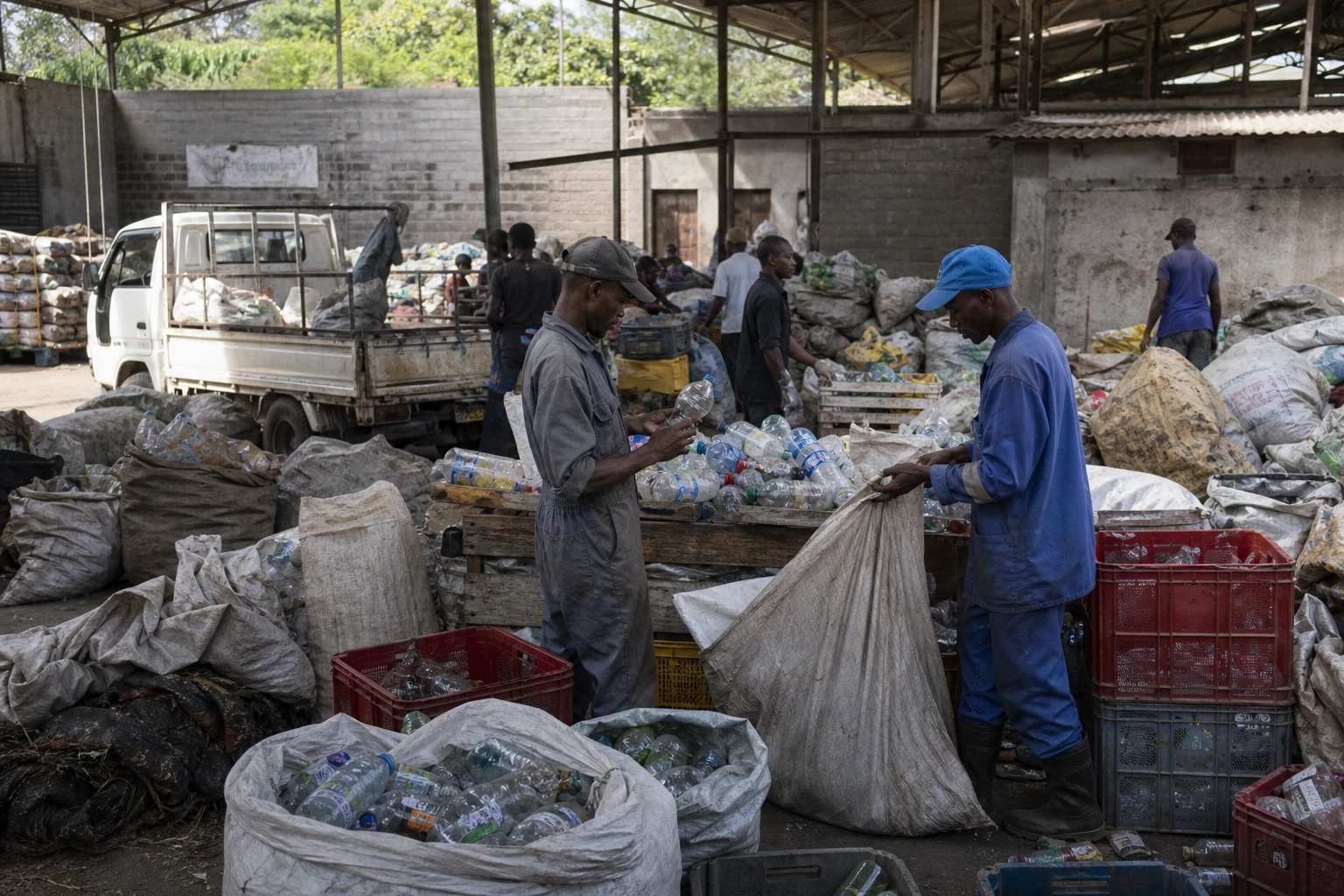
The waste collected there was tangible: plastic bottles, fabric, scrap metal and fragments mixed together by the tides and coastal activity. But the problem became clear as soon as the clean-up ended: there was no clearly designated place to deposit the waste immediately. Local civil society groups raised this difficulty, while environmental officials interviewed called for measures and dedicated sites.
The finding echoes that of United Nations agencies working in the country. The United Nations Development Programme says that plastic pollution in Comoros is accumulating in streets, rivers, on beaches and even on the seabed, for want of suitable collection and treatment systems. The same organisation has confirmed that a joint alliance between UNDP and the United Nations Environment Programme is working with municipalities and communities on integrated waste management.
An incomplete chain, from collection to treatment
The weak point is not just cleaning. It lies in the entire chain. Collect without storing, store without sorting, sort without a treatment system: at every break, waste returns to the shore or to vacant land. This is what field workers involved in environmental management and adaptation projects point out. UNDP also says that basic infrastructure, sufficient institutional capacity and a sufficiently organised private sector to take over on a large scale are still lacking.
This structural weakness directly affects coastal municipalities such as Iconi. The town lies south of Moroni, on Grande Comore, in a continuous urban area where residential activity, fishing, commercial traffic and informal dumping intersect. The coastline is therefore exposed to both human pressure and waste arriving from elsewhere. One-off clean-ups improve the landscape for a few days, but they cannot replace a stable public service for primary collection, transport and treatment.
The Ministry of Finance itself included the development of the Union of the Comoros’ three capitals — Grand Moroni, Mutsamudu and Fomboni — among its recent budget priorities, with improvements to roads and waste management. This is significant because it shows that the issue is not solely environmental. It also concerns urban planning, public health and the attractiveness of cities.
Why this issue goes beyond Iconi’s beach
In Comoros, waste is also an issue for an island archipelago. When waste is left in public spaces, it ends up in waterways and then in the sea. For a country whose economy depends in part on fishing, the coast and a still modest but strategically important tourism sector, plastic pollution is not an abstract nuisance. It undermines incomes, damages ecosystems and drives up costs that are already burdensome for municipalities. UNDP puts it plainly: poor waste management threatens health, biodiversity and livelihoods linked to the sea.
This reality is connected to national climate priorities. In its climate update, the country emphasises more integrated goals, particularly for water, coastal areas, marine ecosystems and resilient infrastructure. In other words, waste management is not an isolated issue. It is part of a broader effort to protect coastlines, secure urban services and reduce the vulnerability of a small island state to climate shocks.
The Comorian case also resonates with other island and coastal countries in Africa. Across the region, small maritime economies face the same pressures from urban growth, tourism, a lack of equipment and dependence on imported plastic waste. That is why regional Indian Ocean programmes such as ISLANDS are seeking to build integrated systems for managing hazardous and solid waste in Comoros, Mauritius, Seychelles and Maldives. The struggle on the Comorian coast is therefore part of a wider trajectory: a continent seeking to move from clean-up campaigns to sustainable, locally run and funded waste systems.
For Comorians, what happens next will depend less on the visibility of a clean-up operation than on the ability of municipalities, the state and private-sector waste operators to organise what follows: drop-off points, transport, sorting, recycling and regulated landfill sites. Without that, the beaches will keep being cleaned twice: first by volunteers, then by the sea.