
 Algeria
 Egypt
 Libya
 Morocco
 Sudan
 Tunisia
 Benin
 Burkina Faso
 Cabo Verde
 Côte d'Ivoire
 Ghana
 Guinea
 Guinea-Bissau
 Liberia
 Mali
 Mauritania
 Niger
 Nigeria
 Senegal
 Sierra Leone
 The Gambia
 Togo
 Central African Republic
 Chad
 DR Congo
 Equatorial Guinea
 Gabon
 Republic of the Congo
 São Tomé and Príncipe
 Burundi
 Comoros
 Djibouti
 Eritrea
 Ethiopia
 Kenya
 Madagascar
 Malawi
 Mauritius
 Mozambique
 Rwanda
 Seychelles
 Somalia
 South Sudan
 Tanzania
 Uganda
 Angola
 Botswana
 Eswatini
 Lesotho
 Namibia
 South Africa
 Zambia
 Zimbabwe
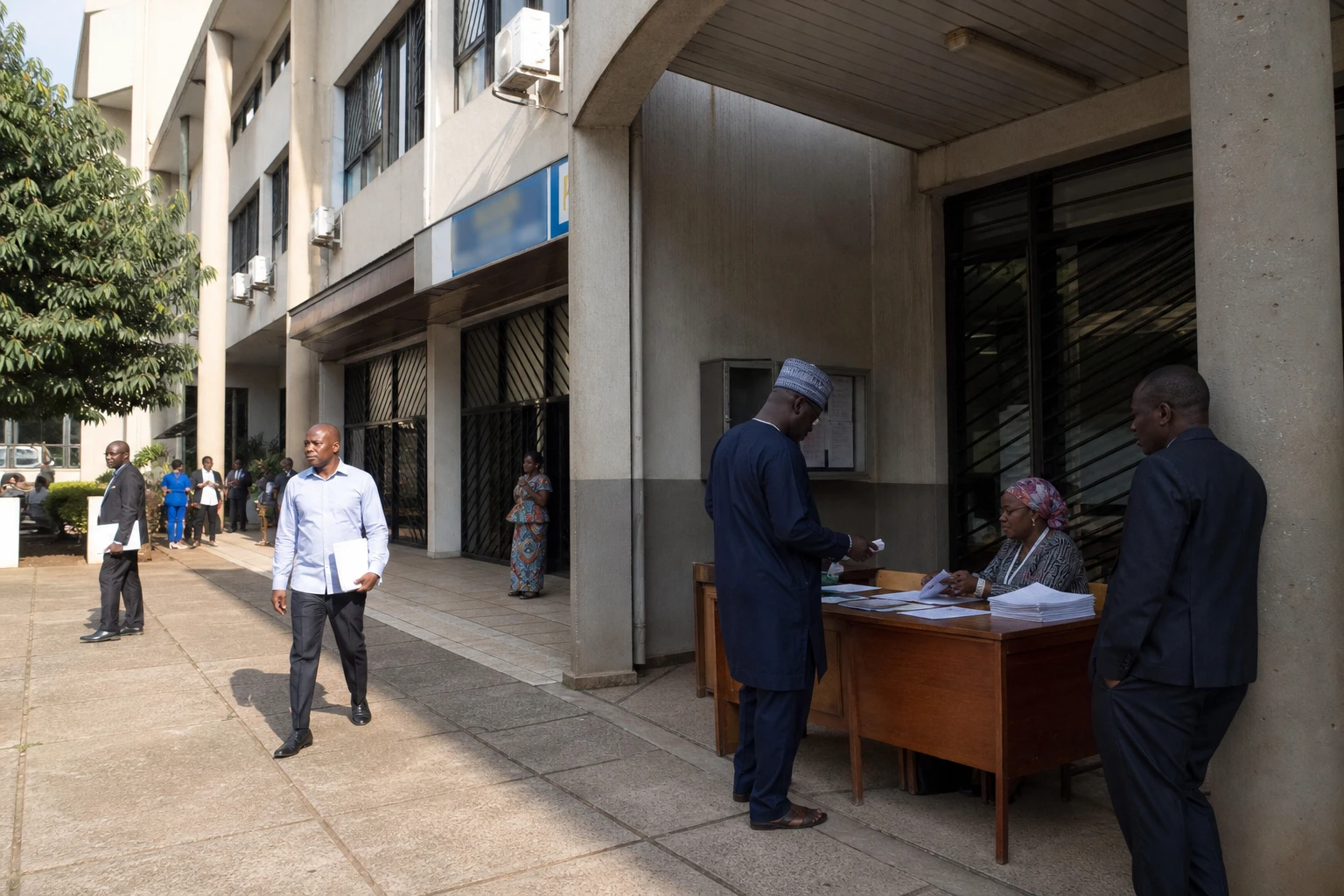
In Yaoundé, women deported from the US seek legal status, not a makeshift refuge
In the Cameroonian capital, the issue is not simply having a roof over their heads. It concerns legal security, freedom of movement and a state’s ability to protect people who arrive without support networks, sometimes without papers, after being sent away from a country far from their country of origin. Cameroon, a Central African country and member of CEMAC, is thus at the heart of a sensitive case involving diplomacy, immigration law and protection against refoulement.
The case comes as Yaoundé is already working with the UN refugee agency on documentation, registration and durable solutions, with a gradual transfer of some responsibilities to national institutions announced for the end of 2026. At the same time, the Cameroonian authorities are pursuing a policy of security and economic cooperation with Washington, at a time when the country’s 2026 budget is set at CFAF 8,816.4 billion, or 8.8 trillion, amid budgetary pressures and a search for external financing.
Deportations to a “third country” upend legal protections and lives
The facts are now documented by several sources. Non-Cameroonian nationals were transferred from the United States to Cameroon in 2026 under an arrangement for deportations to a third country, following diplomatic agreements kept out of the public debate. A diplomatic note published by Washington in June 2026 refers to an arrangement to transfer “certain third-country nationals” to Cameroon. This wording suggests that Cameroon agreed to receive people who are not its citizens.
Several sources also agree on one central point: migrants had obtained protection from a US judge against being deported to their countries of origin, on the grounds that they faced persecution or torture there. Yet they were still sent to Cameroon. Reports published in early 2026 had already detailed these transfers, and lawyers working with those affected cited around ten cases before the situation expanded.
The legal issue is clear. International law prohibits sending a person to a place where they risk persecution, torture or inhuman treatment. Cameroon, for its part, has a legal framework governing refugees and foreign nationals, including a 2005 law on refugee status and legislation from 2022 and 2023 on the entry, residence and departure of foreigners. On paper, the country also recognises identity documents for refugees and has committed to African and international protection instruments.
The real problem is the impact on women deported to Yaoundé
For those affected, the issue is not limited to deportation. It lies in the lack of bearings, material dependence and fear. Without access to passports, family networks or money, they find themselves in a grey area where leaving the accommodation centre does not necessarily mean genuine freedom. In a country where the movement of foreign nationals is regulated and residence permits matter, a lack of documents becomes a daily obstacle.
The case of women who fled persecution linked to their sexual orientation is particularly sensitive. In Cameroon, same-sex relations remain criminalised under the penal code, which provides for a prison sentence of between six months and five years and a fine. This reality makes the idea of a “safe country” even more tenuous for people already threatened elsewhere. In this context, protection cannot be reduced to temporary accommodation. It requires individual assessment, effective access to a lawyer and the possibility of obtaining clear legal status.
The Cameroon case also highlights the tension between discreet diplomacy and protection obligations. On the one hand, Yaoundé may see this as a way to strengthen its relations with Washington, particularly on economic and security issues. On the other, humanitarian organisations stress that aid to displaced people must not be used to legitimise opaque deportations. UNHCR has also reiterated that its funding must be used in accordance with its mandate, while its work in Cameroon is primarily aimed at protecting refugees already in the country.
A precedent that goes beyond Cameroon and concerns the whole region
Regionally, this case is part of a wider trend. Several African states were linked in 2026 to similar arrangements for transfers to third countries, amid a lack of transparency that has fuelled criticism from lawyers and human rights advocates. Cameroon is therefore not an isolated case. It is becoming one of the testing grounds for an outsourced migration policy that moves people far from the jurisdiction where they sought protection.
For Central Africa, the issue is strategic. CEMAC, which structures the sub-region’s economic space, also depends on mobility, cooperation and institutional credibility. When a state accepts deportees whose country of origin or transit it is not, it must be able to guarantee a transparent framework, documentation, clear information and genuine judicial oversight. Otherwise, a diplomatic decision ultimately affects the reputation of the entire sub-region.
Finally, this case says something about the current political moment in Africa. States are seeking financing, partnerships and room for manoeuvre. But international cooperation is only worthwhile if it respects the law. In Yaoundé, as elsewhere on the continent, the next test will be simple: whether transferred people are treated as diplomatic cases or as individuals with rights.



