Algeria
 Egypt
 Libya
 Morocco
 Sudan
 Tunisia
 Benin
 Burkina Faso
 Cabo Verde
 Côte d'Ivoire
 Ghana
 Guinea
 Guinea-Bissau
 Liberia
 Mali
 Mauritania
 Niger
 Nigeria
 Senegal
 Sierra Leone
 The Gambia
 Togo
 Cameroon
 Central African Republic
 Chad
 DR Congo
 Equatorial Guinea
 Gabon
 Republic of the Congo
 São Tomé and Príncipe
 Burundi
 Comoros
 Djibouti
 Eritrea
 Ethiopia
 Kenya
 Madagascar
 Malawi
 Mauritius
 Rwanda
 Seychelles
 Somalia
 South Sudan
 Tanzania
 Uganda
 Angola
 Botswana
 Eswatini
 Lesotho
 Namibia
 South Africa
 Zambia
 Zimbabwe
In Mozambique, power is returning through dams, but the underlying question remains
In Maputo, electricity does not depend on power stations alone. It also depends on rain falling upstream in the Zambezi basin. When dams fill, the country can breathe. When water is scarce, the entire energy chain comes under strain, from urban consumption to regional exports.
That is what makes the first half of 2026 instructive. Mozambique’s electricity generation reached 8.06 million MWh, up 8.8% year on year, according to half-year budgetary and sectoral execution data cited in the Mozambican press. The annual target set by the authorities is 16.17 million MWh. At this point, the country has therefore achieved 49.9% of its target.
The Zambezi basin changed the picture, but not the whole story
The recovery has come primarily from hydropower. In the first six months of 2026, output from this source rose by 12.2% to reach 6.55 million MWh. The return of rain after two very difficult years improved water inflows, particularly in the Zambezi basin. The Cahora Bassa reservoir, one of the continent’s major facilities, rose from about 20% of capacity in January to 56% in June, according to data published by operator Hidroeléctrica de Cahora Bassa.
This improvement matters all the more because the 2024-2025 drought weighed heavily on the system. Public government documents have already shown that water constraints had undermined the sector’s performance, and in 2026 the authorities launched drought preparedness plans for the following hydrological year. In other words, the current recovery remains fragile. It still depends on the rainfall cycle, a factor beyond the state’s control.
HCB, for its part, announced output of 6,399 GWh in the first half of the year, about 13% more than in the same period in 2025 and above its internal forecasts by about 10%. The state-owned company operates a strategic asset for Mozambique, but also for Southern Africa’s electricity system.
Exports, the regional market and the promise of an energy hub
The increase in generation was also reflected in external sales. Mozambican electricity exports rose by 5.1% in the first half of 2026 to reach 1.77 million MWh. This is in keeping with the Southern African Power Pool, the SADC’s interconnected electricity market, which enables members to trade electricity surpluses and shortfalls. Mozambique is part of it, as are state-owned EDM and HCB within the regional ecosystem.
For Maputo, the stakes go beyond the rainy season alone. The country wants to strengthen its role as a regional energy hub. The Mphanda Nkuwa project, planned on the Zambezi with an announced capacity of 1,500 MW and commercial operation targeted for 2032, is central to this strategy. The authorities present it as a means of stabilising the system, exporting electricity and supporting industrialisation.
This positioning has a clear regional logic. The Southern African Power Pool was established under the auspices of SADC to organise electricity trading across the region. Mozambique can sell energy there, but it can also buy it when its own capacity falters. This flexibility is an asset. It also becomes a dependency when the weather or infrastructure fails.
Structural weaknesses remain visible behind the rebound
The Mozambican government makes no secret of the sector’s weaknesses. In its half-year report, it cites challenges linked to the availability of some thermal power stations, limitations in natural gas transmission and increased competition in the regional energy market. This matters because the hydropower recovery does little to conceal delays in the system’s other components.
The Temane gas-fired power station, described as the country’s largest at 450 MW, does not appear in the first-half 2026 generation data. That alone is not enough to conclude that it has suffered a technical or commercial failure. However, the absence of this unit from the available figures confirms that diversification of the energy mix is not yet fully on track. This is a cautious but well-founded reading.
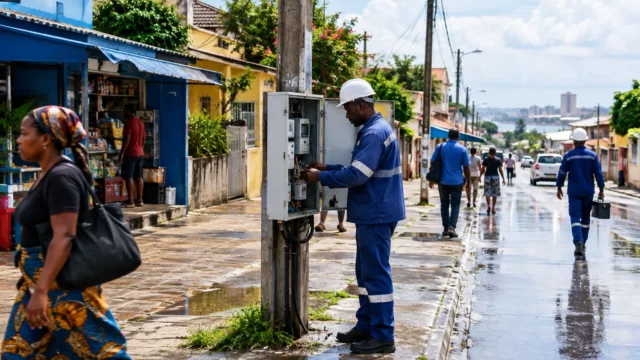
For households, this translates into a diffuse but real strain: greater stability when hydropower recovers, but persistent vulnerability whenever one link breaks. For industry and investors, the signal is broader. Mozambique has real energy potential, with water, gas and regional interconnections. But it still needs to secure generation, transmission networks and the reliability of new units.
The country also has an interest in maintaining confidence in its major projects. Across Southern Africa, Mozambican electricity is not merely a national issue. Through SAPP trading, it affects the energy security of neighbouring countries such as South Africa, Zimbabwe and Eswatini. The next test is therefore not only hydrological. It is industrial, financial and diplomatic. It will depend on Mozambique’s ability to turn a rain-driven rebound into lasting power, serving both Maputo and the wider region.