Algeria
 Egypt
 Libya
 Morocco
 Sudan
 Tunisia
 Benin
 Burkina Faso
 Cabo Verde
 Côte d'Ivoire
 Ghana
 Guinea
 Guinea-Bissau
 Liberia
 Mali
 Mauritania
 Niger
 Nigeria
 Sierra Leone
 The Gambia
 Togo
 Cameroon
 Central African Republic
 Chad
 DR Congo
 Equatorial Guinea
 Gabon
 Republic of the Congo
 São Tomé and Príncipe
 Burundi
 Comoros
 Djibouti
 Eritrea
 Ethiopia
 Kenya
 Madagascar
 Malawi
 Mauritius
 Mozambique
 Rwanda
 Seychelles
 Somalia
 South Sudan
 Tanzania
 Uganda
 Angola
 Botswana
 Eswatini
 Lesotho
 Namibia
 South Africa
 Zambia
 Zimbabwe
When mangoes become an industrial choice
In southern Senegal, mangoes are more than a seasonal fruit. They represent income and jobs, but also losses when orchards produce faster than markets can be organised. In Bambali, in the Sedhiou region, a new agro-industrial park aims to break this pattern. The SM10 Agro project, backed by Sadio Mané, has a simple ambition: to process a local resource on site, rather than let it lose value along the way.
The initiative is part of a course Dakar is now more openly championing: industrialising agricultural value chains, bringing processing closer to production areas and addressing the concentration of factories around the capital. Senegal’s Ministry of Industry and Trade says it wants to extend this approach to several regions while developing agro-industrial hubs outside Dakar. In that context, Bambali is not an isolated case. It is a test.
What SM10 Agro plans in Bambali
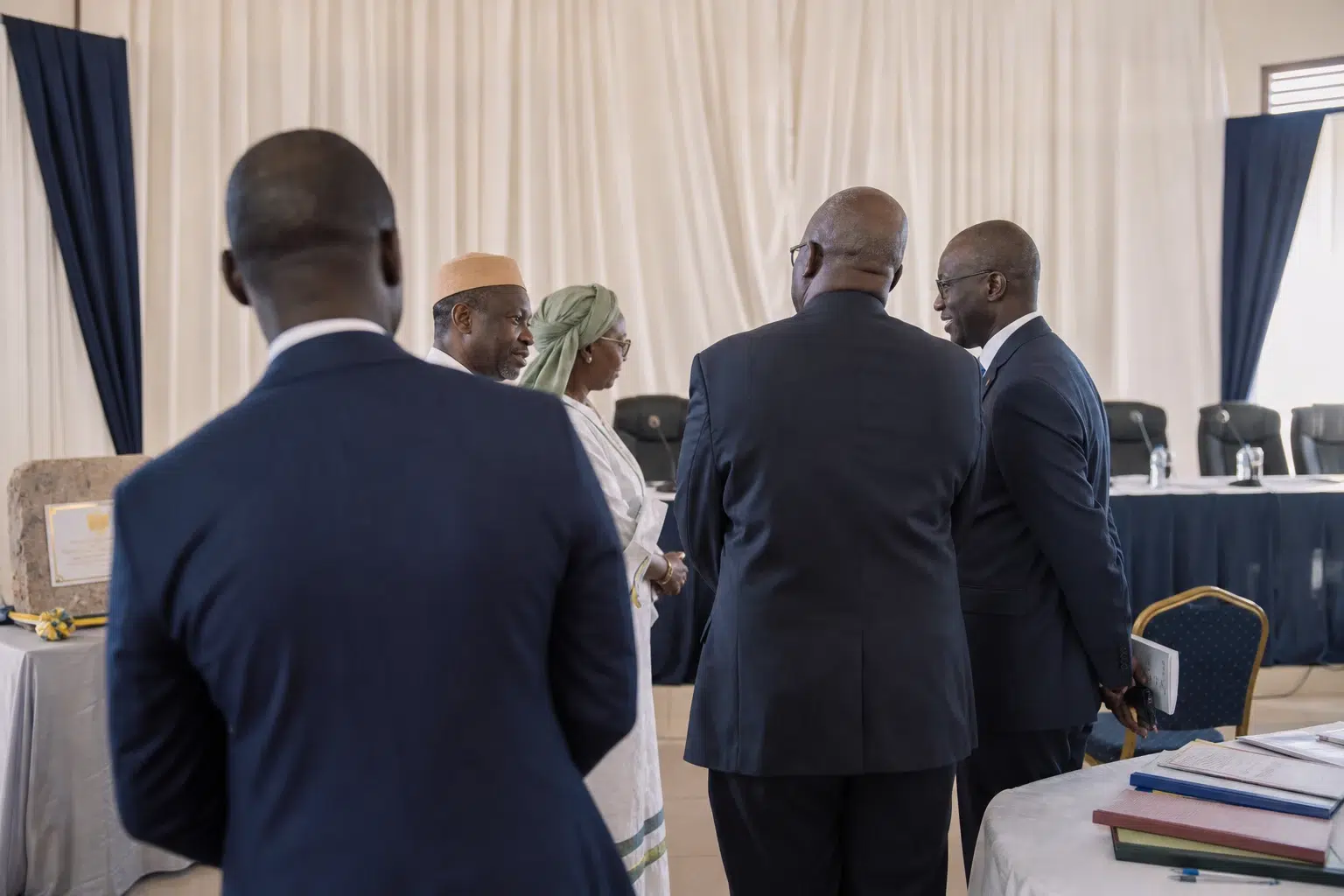
On 19 September 2026, the foundation stone for the project was laid in Bambali, Sadio Mané’s home village, in the presence of national and local authorities. According to the group’s presentation, the agro-industrial park entails an estimated investment of 11.7 billion CFA francs, a target capacity to process 8,500 tonnes of mangoes a year, around 500 hectares of plantations to be developed progressively, and more than 1,000 direct jobs in the longer term. The site is due to house facilities for pulp and purée, dried mango and mango butter, as well as training for agro-industrial occupations.
Another presentation of the same project, published in August 2026, cited a cost of 14 billion CFA francs and an industrial complex covering 10 hectares, linked to 500 hectares of plantations. The difference in the figures shows that the project has been publicly updated several times. The common thread remains the same: to create an integrated facility in Bambali capable of harvesting, sorting, processing and shipping mangoes in several forms.
On the ground, the stakes are tangible. Casamance produces a large quantity of mangoes, but the value chain still loses a significant share of its harvest for lack of storage, preservation and processing infrastructure. A study by IPAR on Senegal’s mango sector notes that pest attacks can destroy 40 to 50% of the harvest in the Niayes and more than 80% in Casamance. The same document highlights a shortage of cold rooms and inadequate processing equipment. SM10 Agro is therefore presented as an industrial response to a longstanding agricultural problem.
What the project could change for Casamance
Sadio Mané’s message is rooted in this regional perspective. The footballer says he wants to create jobs and show that a young person from Casamance can build a future on their own land. The statement matters because it touches on a sensitive issue in Senegal: the relationship between centre and periphery, between Dakar and the southern regions, and between the formal economy and small-scale producers who often depend on the season and transport. The project also aims to capture more value locally, instead of seeing the fruit leave the area unprocessed.
The potential benefit is twofold. First, for producers, who could sell more of their harvest and limit losses. Second, for women and young people, who are widely involved in sorting, drying and packaging. IPAR notes that the mango value chain can generate jobs and additional income in rural areas, provided it receives better support. In this context, SM10 Agro’s promise goes beyond symbolism. It concerns the development of a more stable local economy.
The project also comes as Senegal seeks to link its industrial policies more closely with its agricultural value chains. The Ministry of Industry and Trade is promoting zones and agro-industrial hubs inland, while the national strategy emphasises local processing and employment. Bambali thus becomes a foothold for a broader question: how can Casamance move from being a production area to becoming a processing hub?
A project with reach beyond the home village
The project’s reach extends beyond Bambali. In West Africa, adding value to agricultural production remains a central concern for ECOWAS, because it is key to job creation, reducing post-harvest losses and moving exports upmarket. For Senegal, the question is more specific: how to retain more value in the southern regions while opening up access to regional and international markets. SM10 Agro’s website also embraces this market-oriented approach, with ambitions for local processing serving several destinations.
One decisive issue remains: transport. Bambali is in an area where logistics remain a major constraint, particularly during the rainy season and in the most remote parts of Casamance. This is where the project will be judged, more than on its announcements. If it can collect the raw material, process it and ship its products at a competitive cost, it could serve as a model for other African agricultural value chains. If it runs into difficulties with roads, refrigeration, energy or market access, it will join the long list of promising projects held back by realities on the ground.
In a Senegal seeking to diversify its productive base and distribute wealth more evenly between Dakar and the regions, the Bambali project sends a political as well as an economic signal. It is a reminder that an agricultural value chain is not won in the fields alone. It is also won in factories, warehouses and on roads, and through the ability to retain added value where the resource originates.