Algeria
 Egypt
 Libya
 Morocco
 Sudan
 Tunisia
 Benin
 Burkina Faso
 Cabo Verde
 Ghana
 Guinea
 Guinea-Bissau
 Liberia
 Mali
 Mauritania
 Niger
 Nigeria
 Senegal
 Sierra Leone
 The Gambia
 Togo
 Cameroon
 Central African Republic
 Chad
 DR Congo
 Equatorial Guinea
 Gabon
 Republic of the Congo
 São Tomé and Príncipe
 Burundi
 Comoros
 Djibouti
 Eritrea
 Ethiopia
 Kenya
 Madagascar
 Malawi
 Mauritius
 Mozambique
 Rwanda
 Seychelles
 Somalia
 South Sudan
 Tanzania
 Uganda
 Angola
 Botswana
 Eswatini
 Lesotho
 Namibia
 South Africa
 Zambia
 Zimbabwe
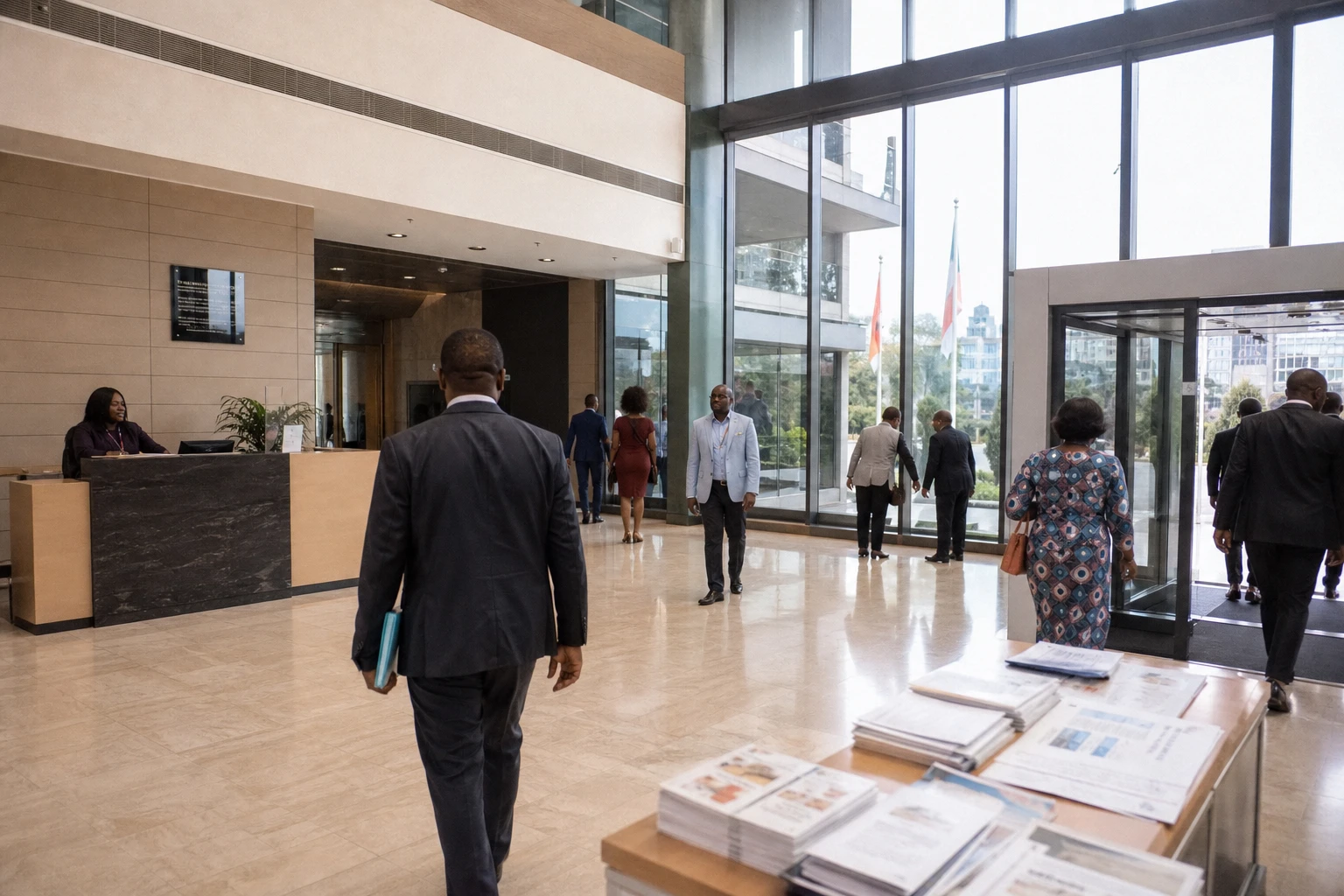
In Abidjan, an Italian financial office gives the Mattei Plan greater reach
In the corridors of development finance, offices sometimes matter as much as announcements. In Côte d’Ivoire, the arrival of a permanent representation of Cassa Depositi e Prestiti in Abidjan gives the partnership with Italy a more concrete form, closer to the ground and potentially faster in developing projects.
The timing is no coincidence. Côte d’Ivoire remains one of ECOWAS’s economic hubs, and Abidjan concentrates a large share of the country’s financial, industrial and diplomatic negotiations. Against this backdrop, the establishment of an Italian financial arm in Abidjan is part of a broader strategy: bringing decision-making tools closer to projects as the Mattei Plan seeks to turn announcements into visible operations.
What Italy is actually putting on the table
Cassa Depositi e Prestiti, a public development finance institution, confirmed in its 2025-2027 strategic plan that it would open an office in Abidjan, in addition to its offices in Cairo and Rabat. The document also provides for expansion into Nairobi. Its presence in Côte d’Ivoire is therefore not an isolated gesture. It is part of a broader Italian push into Africa, underpinned by the Mattei Plan.
On the Ivorian side, the Ministry of Planning and Development has presented the move as a new stage in economic cooperation with Rome. The official statement refers to priorities already under discussion: the private sector, food security, infrastructure and climate-related initiatives. In other words, the relationship is no longer limited to diplomatic intentions. It is entering a phase in which the aim is to identify projects that are financeable, bankable and aligned with the National Development Plan 2026-2030.
The Italian context helps explain the move. Launched by the Italian government in 2024, the Mattei Plan aims to reshape relations with the African continent around economic partnerships and co-financing. At the second Italy-Africa summit, held in Addis Ababa on 13 February 2026, Rome announced a commitment of €639 million to implement the strategy. Italy also noted on that occasion that Côte d’Ivoire is among the countries prioritised under the scheme.
This amount should not be read as a single pot of money paid out in one lump sum. Rather, it is a political and financial envelope supporting several funding windows, agencies and financing arrangements. That is precisely where the Abidjan office can make a difference: speeding up decisions, facilitating dialogue with Ivorian government departments and bringing Italian public finance closer to private investors.
Agriculture, health, infrastructure: projects show the real direction
Agriculture is the first test. On 21 April 2026, IFAD and the Ivorian government launched the North-East agro-industrial hub project, known as 2PAI-NE, with a budget of $344.5 million. The project targets the Zanzan region and includes the modernisation of farming systems, improved market access and climate resilience. It is also expected to enable the development of around 2,200 hectares of irrigated land. CDP is among the co-financiers, alongside IFAD and the African Development Bank.
This matters for rural areas. In the North-East, where the economy relies heavily on family farming and local marketing chains, the challenge is not simply to produce more. Products also need to be stored, processed and transported. This transition from production to market determines household incomes, young people’s ability to remain in rural areas and women’s role in value-added activities. The 2PAI-NE project therefore goes beyond agronomy. It concerns the economic organisation of a region.
Health is the other visible area of work. In March 2026, a €55 million financing package was being prepared to build and equip the Songon general hospital and strengthen the branch of the National Institute for the Training of Health Workers in Abengourou. The package comprises €30 million in concessional loans and €25 million from CDP’s own resources. Here too, the political message is clear: Italian finance aims to show that it can support tangible social services, not just roads or major projects.
The Ivorian government faces a twofold challenge. On the one hand, it must attract financing that is compatible with its national priorities. On the other, it must prevent projects from getting stuck at the stages of studies, conditions or interminable decision-making. A permanent presence by a financial institution can help. But it cannot replace the technical preparation of proposals, coordination between ministries or the implementation capacity of public agencies.
Italy’s bet is different. Rome wants to show that the Mattei Plan is more than rhetoric about Africa. By opening an office in Abidjan, it is placing its main development institution in direct contact with a stable economy, open to the Gulf of Guinea and equipped with a dense banking and regional ecosystem. This is a way of linking economic diplomacy, a presence on the ground and co-financing with established development partners such as the AfDB, whose headquarters are in Abidjan.
A signal for Côte d’Ivoire, and for West Africa
The significance extends beyond bilateral relations. Across ECOWAS, several states are now looking for partners capable of financing useful infrastructure, agricultural value chains and basic services without promising sums disconnected from local realities. Italy is seeking to position itself in this space. In Côte d’Ivoire, it is working with a country that touts its institutional stability, long-term planning and role as a regional hub.
The next test will be practical rather than diplomatic. It will be important to track how quickly the first proposals move from dialogue to decision, and then from decision to disbursement. It will also be worth watching whether Italian financing remains concentrated on a few flagship projects or flows sustainably into the Ivorian private sector, agricultural value chains and social infrastructure. It is at this level that CDP’s presence in Abidjan will show whether the Mattei Plan becomes a tool for transformation or merely an elegant institutional structure.