Algeria
 Egypt
 Libya
 Morocco
 Sudan
 Tunisia
 Benin
 Burkina Faso
 Cabo Verde
 Côte d'Ivoire
 Ghana
 Guinea
 Guinea-Bissau
 Liberia
 Mali
 Mauritania
 Niger
 Senegal
 Sierra Leone
 The Gambia
 Togo
 Cameroon
 Central African Republic
 Chad
 DR Congo
 Equatorial Guinea
 Gabon
 Republic of the Congo
 São Tomé and Príncipe
 Burundi
 Comoros
 Djibouti
 Eritrea
 Ethiopia
 Kenya
 Madagascar
 Malawi
 Mauritius
 Mozambique
 Rwanda
 Seychelles
 Somalia
 South Sudan
 Tanzania
 Uganda
 Angola
 Botswana
 Eswatini
 Lesotho
 Namibia
 South Africa
 Zambia
 Zimbabwe
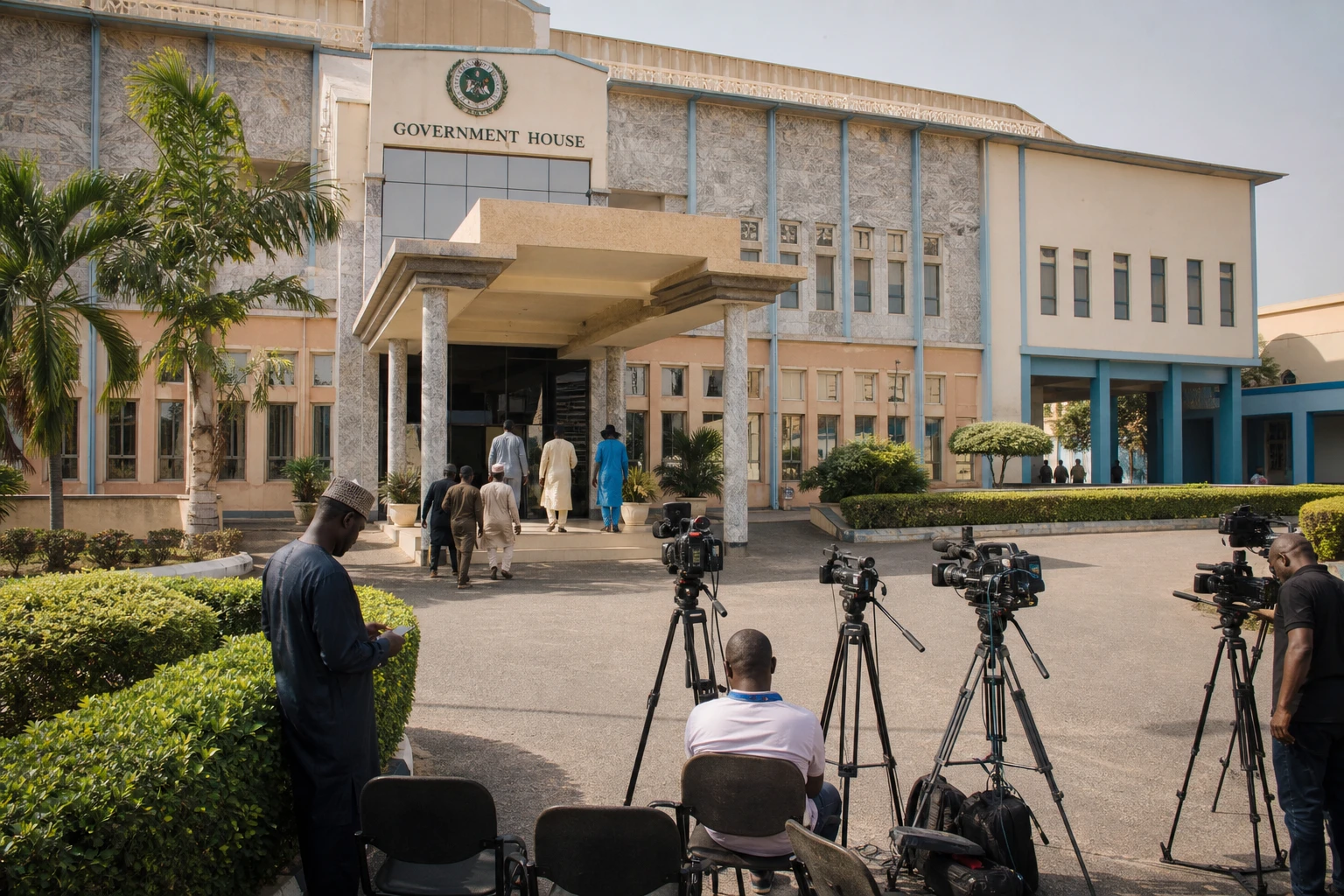
In Minna, a mining crisis has become a crisis of confidence
In central Nigeria, a security case has turned into a local political crisis. In Minna, the capital of Niger State, the deaths of 37 people detained after an operation against illegal mining sparked protests and then a 24-hour curfew. The message is stark: when an arrest linked to gold ends in street anger, the entire state control chain is called into question.
Niger State is a pivotal part of Nigeria: vast, mineral-rich and crossed by often informal artisanal activities. In the country, artisanal mining is nevertheless subject to a specific legal framework, overseen by the Ministry of Solid Minerals Development and its department for small-scale mining, which is tasked with formalising, regulating and securing the sector. On paper, the model exists; in practice, the gap between regulation and conditions on the ground remains wide.
What is known about the deaths and the authorities’ response
According to Nigerian authorities, those who died had been arrested during operations on 15 and 16 September 2026 around the Wushishi site in Niger State. Governor Mohammed Umaru Bago confirmed the deaths of 37 detainees and said about 67 people were in the cells of the Nigeria Security and Civil Defence Corps (NSCDC) at the time. He also cited several possible explanations, including suffocation linked to overcrowding or exposure to hazardous substances associated with the mining site.
The presidency ordered a “full and transparent” investigation and stressed that no suspect loses the right to life or humane treatment in detention. The Ministry of Interior, for its part, suspended the NSCDC commandant in Niger State, while the governor also announced a local investigation, the suspension of mining activities and the closure of the site in question. The police called on the public not to take the law into their own hands.
Initial reports from Minna describe a rapid sequence of events: news of the deaths, gatherings outside NSCDC premises, then urban violence. Protesters blocked a major thoroughfare and attacked a transport depot, a bank, political offices and private businesses. The governor responded with a 24-hour curfew to contain the unrest and prevent it from spreading.
A mining problem, but also a governance problem
The issue extends beyond Minna. For years, Nigeria has faced tension between the wealth beneath its soil and weak regulation on the ground. The federal government has created tools to formalise artisanal mining, organise operators into cooperatives and improve safety, health and traceability. But mining areas are often still marked by informality, criminal networks, irregular inspections and a limited institutional presence in remote areas.
In Niger State, the issue is all the more sensitive because the area is known for its gold and other mineral resources. This wealth attracts workers, some of them very young, as well as intermediaries, armed groups and smuggling networks. When the state intervenes without sufficient safeguards, the risk is not only judicial. It becomes a health, social and political risk. Here, mass detention weighed as heavily as the clandestine mining itself.
For the detainees’ families, the immediate priorities are to identify the dead, understand the circumstances, obtain credible autopsies and, if necessary, secure prosecutions. For local residents and small-scale miners, the question is different: will the suspension of activities dry up an already fragile source of income, or finally lead to effective regulation? For the authorities, the test is one of evidence. If the investigation confirms serious negligence, the response will have to go beyond disciplinary announcements.
The security context also matters. In several Nigerian states, artisanal mining is intertwined with local tensions, land disputes and illegal taxation networks. The federal government has been tackling this mix for several years, but its strategy alternates between crackdowns, formalisation and targeted operations. The Minna tragedy shows the limits of a purely coercive approach when cells, procedures and detention conditions fall short.
A Nigerian case, but a West African issue
The case resonates beyond Minna and Abuja. Across West Africa, artisanal gold mining provides a livelihood for thousands of people, but it also fuels disputes over control, health risks and tax losses. Nigeria, a member of ECOWAS, faces a dilemma shared across the sub-region: how to secure mining sites without criminalising everyone who works there, and how to turn a widely dispersed resource into more equitably shared wealth.
What happens next will depend on several concrete milestones: the autopsy results, the findings of administrative and police investigations, and decisions on whether mining activities will resume in Niger State. If the authorities want to prevent a local tragedy from becoming a national precedent, they will have to provide a public response that is documented and verifiable. In a country where mining affects employment, security and public finances, the state’s credibility is also measured by how it treats the people it arrests.