Algeria
 Egypt
 Libya
 Morocco
 Sudan
 Tunisia
 Benin
 Burkina Faso
 Cabo Verde
 Côte d'Ivoire
 Ghana
 Guinea
 Guinea-Bissau
 Liberia
 Mali
 Mauritania
 Niger
 Nigeria
 Senegal
 Sierra Leone
 The Gambia
 Togo
 Cameroon
 Central African Republic
 Chad
 DR Congo
 Equatorial Guinea
 Gabon
 Republic of the Congo
 São Tomé and Príncipe
 Burundi
 Comoros
 Djibouti
 Eritrea
 Ethiopia
 Kenya
 Madagascar
 Malawi
 Mauritius
 Mozambique
 Rwanda
 Seychelles
 Somalia
 South Sudan
 Tanzania
 Uganda
 Botswana
 Eswatini
 Lesotho
 Namibia
 South Africa
 Zambia
 Zimbabwe
As prices ease, the central bank can breathe
In Luanda, falling inflation is giving the real economy a little breathing space. Households hope to see it in their shopping baskets. Businesses, meanwhile, are watching the cost of credit, which remains high despite the easing launched by the National Bank of Angola.
The signal matters in Angola, where monetary policy remains closely tied to oil price swings and currency pressures. The country belongs to the Southern African Development Community, where several economies are keeping a close eye on imported shocks, energy costs and central banks’ ability to loosen or maintain monetary restraint without reigniting price pressures.
Third rate cut in a matter of months
On 15 September 2026, the National Bank of Angola cut its key rate by 100 basis points, from 15.75% to 14.75%. This was its third consecutive cut, following a 50-basis-point reduction in May and a 125-basis-point cut in July. The monetary authority has therefore confirmed a more accommodative turn, while keeping an eye on external risks.
The move responds to a key indicator: disinflation. According to the National Institute of Statistics, annual inflation slowed to 8.78% in August 2026, from 9.33% in July. The pace remains significant, but marks a sharp fall from the previous year, when prices were still rising by 18.88% over 12 months. Inflation has also returned to single digits, a level not seen since 2015, according to figures reported by Reuters.
The National Bank of Angola has paired this move with an upward revision to its growth forecast for 2026, raising it to 6.15% from 3.6%. It has, however, kept its year-end inflation target at 8.6%. The message is clear: the central bank wants to support activity, but is not ignoring the vulnerabilities that remain.
Figures that change the outlook for banks and businesses
A cut in the key rate is not merely technical. It affects the cost of money for commercial banks and, more gradually, the financing terms offered to businesses and households. In a country where private-sector credit remains limited and financial intermediation is weak, the expected impact is mainly through cheaper loans, more investment and some breathing space for non-oil activities.
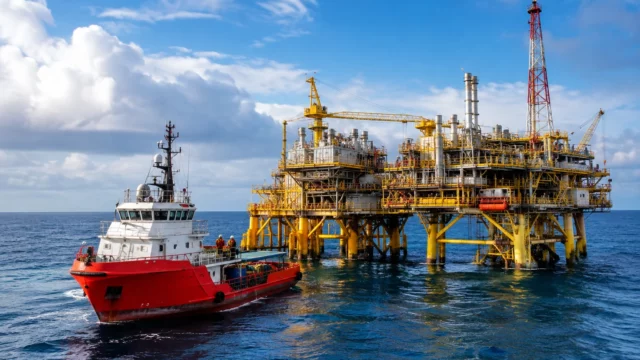
But Angola remains an economy heavily exposed to oil. The International Monetary Fund says oil activity still accounts for a decisive share of the economy, exports and government revenue. This brings the country income when crude prices rise, but also exposes it to market volatility and the difficulties of diversification. In other words, a favourable external environment can ease pressures, but not eliminate them.
This dependence explains the caution of Governor Manuel Tiago Dias. In July, he had already said that prices were expected to continue falling in the short term, while pointing to uncertainty linked to tensions in the Middle East. In September, Reuters reported that the National Bank of Angola had also highlighted risks associated with energy prices: a sustained rise can boost export earnings, but may also reignite imported inflation through transport and inputs.
What Luanda is watching, and what southern Africa is watching too
Angola’s situation extends beyond the national context. The country is at a point when several African central banks are adjusting course in response to easing price pressures. When disinflation takes hold, the question quickly becomes one of finding the right balance: easing early enough to revive the economy, but not so quickly as to risk a renewed rise in prices. This equation is particularly delicate in economies dependent on commodities and imports.
In Luanda, the next test has two parts. First, whether the fall in prices is confirmed in the August and then September statistics. Second, whether the non-oil sector can turn slightly cheaper credit into real economic activity. The IMF notes that the recent improvement in the external environment has supported activity outside the oil sector, while slowing momentum behind the reforms needed to reduce dependence on crude.
The significance for the continent is clear. If Angola can keep inflation under control while supporting growth outside the oil sector, it will offer a case study for other African economies facing the same dilemma: stabilising prices without holding back production over the long term. For now, the National Bank of Angola is choosing to move in stages, retaining control over the pace of easing.