Algeria
 Egypt
 Libya
 Morocco
 Sudan
 Tunisia
 Benin
 Burkina Faso
 Cabo Verde
 Côte d'Ivoire
 Ghana
 Guinea
 Guinea-Bissau
 Liberia
 Mali
 Mauritania
 Niger
 Nigeria
 Senegal
 Sierra Leone
 The Gambia
 Togo
 Cameroon
 Central African Republic
 Chad
 DR Congo
 Equatorial Guinea
 Gabon
 Republic of the Congo
 São Tomé and Príncipe
 Burundi
 Comoros
 Djibouti
 Eritrea
 Ethiopia
 Kenya
 Malawi
 Mauritius
 Mozambique
 Rwanda
 Seychelles
 Somalia
 South Sudan
 Tanzania
 Uganda
 Angola
 Botswana
 Eswatini
 Lesotho
 Namibia
 South Africa
 Zambia
 Zimbabwe
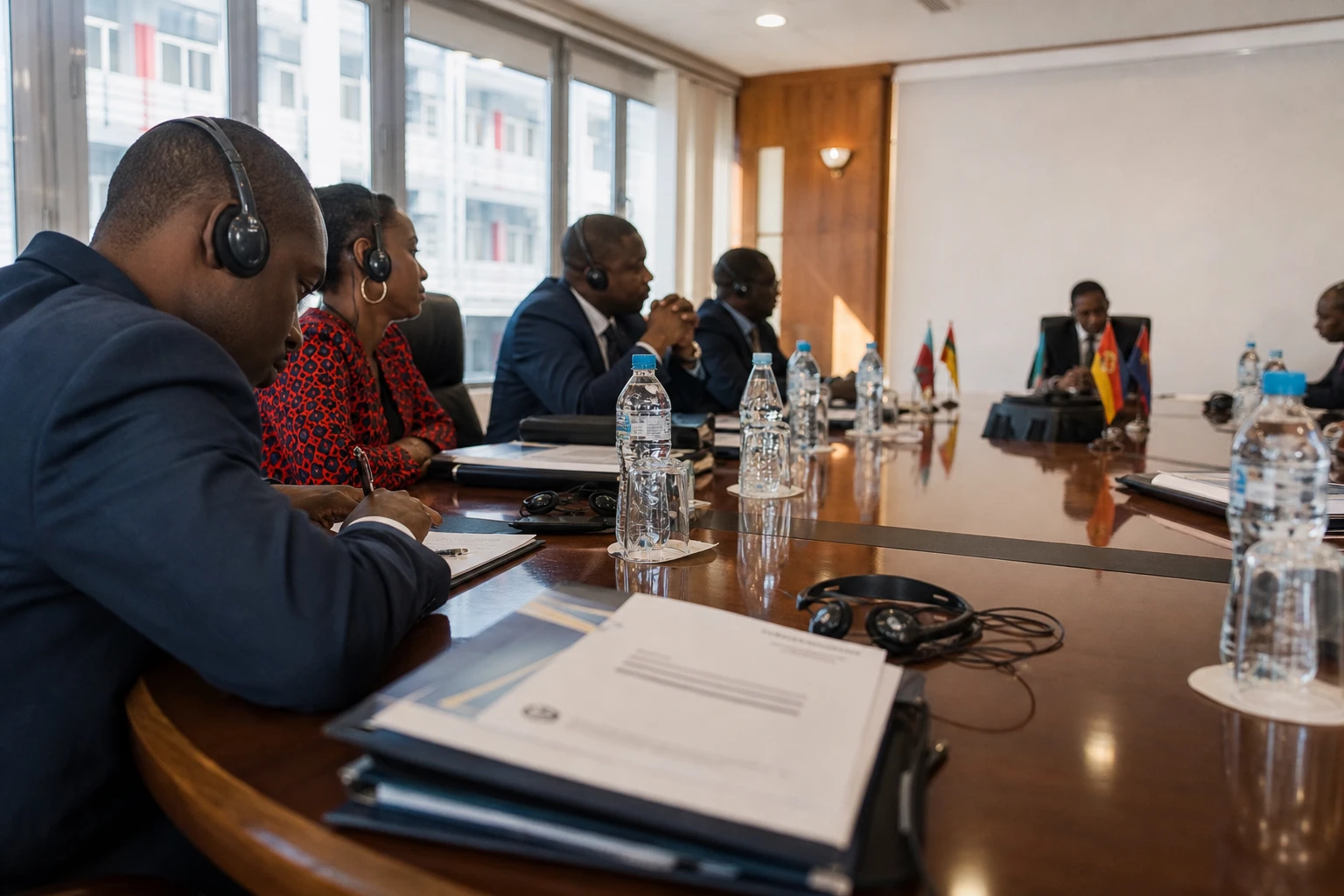
At Ivato, the question is no longer just about gold. It is also about who controls departures from the country.
At Ivato International Airport, near Antananarivo, the debate is no longer just about the gold bars seized in luggage. It now touches the heart of air-traffic authority: who can take off in a private jet, and under what level of supervision. In a country where illicit networks often exploit administrative gaps, the state’s response is aimed as much at security as at the credibility of its controls.
This tougher stance comes in a particular political context. Madagascar is a member of the African Union and SADC, the Southern African Development Community, which brings together 16 states and lists good governance, regional integration and security among its priorities.
An administrative lock-down after a series of warnings
In recent days, the Malagasy authorities have tightened procedures for private flights. From now on, every flight will need personal approval signed by the president of the Refoundation or the prime minister, according to the authorities’ account. The measure is part of an effort to reassert control after several sensitive incidents linked to Ivato airport and suspicions of internal complicity.
The latest trigger was a gold seizure. Between 13 and 15 September 2026, Malagasy media reported that around 5.75kg to 5.678kg of gold had been intercepted at Ivato, hidden in a female passenger’s belongings. Reports also agree that the consignment was due to leave Madagascar on an international flight, and that an investigation has been opened into several customs officers.
The exact weight varies slightly between local sources, which calls for caution. But the political signal is clear: the presidency believes a network may be operating regularly, with gold leaving several times a week, and has also referred to other past shipments that may have evaded checks. This claim remains attributed to the head of state and has not been independently confirmed in the sources consulted.
The authorities have also highlighted suspicions of airport officials’ involvement. These, too, are allegations under investigation. However, the investigations opened in Antananarivo and the questioning of several officers show that the possibility of internal involvement is being taken seriously.
The Cessna 5R-HMR case left a lasting mark
This clampdown on private jets did not come out of nowhere. It comes a few months after the case of the Cessna Citation registered as 5R-HMR, which left Madagascar for Mauritius in October 2025 carrying former prime minister Christian Ntsay and businessman Mamy Ravatomanga, according to Mauritian parliamentary documents and several press reports. The incident fuelled debate about the facilities granted to private flights amid a political crisis.
In Mauritius, the issue has continued to have repercussions. Questions have been raised in parliament about the circumstances of the landing, the number of passengers and the reasons for their arrest by the Financial Crimes Commission. The Mauritian authorities have also said that an administrative and judicial investigation is under way, with interviews already conducted.
In Madagascar, the case also brought the Civil Aviation Authority under scrutiny. Air law already requires prior authorisation for certain flights, including non-commercial stopovers. The new political decision therefore does not fill a vacuum: it tightens an existing framework by adding a higher level of decision-making at the top of the executive.
This is an important point. In an island nation, air transport is not a peripheral luxury. It connects business elites, investors and official missions, as well as sensitive networks involved in trading high-value goods. When controls on private jets are tightened, the entire verification chain is put to the test: flight plans, passenger identities, airport security, customs and administrative authorisations.
What the decision changes in practice
For the Malagasy state, the message is twofold. On the one hand, it must reassure people that institutions can prevent the illicit export of gold, protected species or other resources. On the other, it must show that channels reserved for private flights can no longer serve as a grey area. This approach is consistent with the anti-corruption drive championed by BIANCO, the Independent Anti-Corruption Bureau, and the CSI, the Committee for the Safeguarding of Integrity.
For airport authorities, the challenge is even more tangible. Approval signed at the highest level may slow some departures, but it could also reduce opportunities to circumvent the rules if the filter is genuinely applied. There is, however, a risk that a highly centralised rule will create new pressure points, especially if procedures remain unclear or exemptions quietly multiply.
For legitimate business operators, the measure may be seen as a sign that control of the airspace is being reasserted. For private-flight passengers, however, it introduces an additional level of political oversight that did not previously exist to the same extent. Those affected include businesspeople, public officials, mining operators and intermediaries whose livelihoods depend on links between Antananarivo, the Indian Ocean and major regional centres.
The regional dimension is not secondary. Madagascar shares a highly interconnected airspace and trading area with Mauritius, Seychelles, Comoros and the states of the East African coast. As soon as a private jet becomes the subject of suspicion, the issue goes beyond the island. It concerns the movement of capital, border controls and judicial co-operation in the Indian Ocean and within SADC.
A local case, but a continental test
On a continental scale, this episode says something broader. Many African states are strengthening their systems to combat natural-resource trafficking, customs corruption and the circumvention of rules through business aviation. Madagascar is part of this trend. But the country faces an additional challenge: restoring trust after a recent political crisis and repeated suspicions of parallel networks.
The significance of the case is therefore measured less by the presidential move itself than by what it reveals: the continuing vulnerability of the country’s points of entry and exit, and the need for documented, traceable controls shared among institutions. If the new rule is sustained, it could set a precedent in other sensitive cases. If it gives way to exemptions, it will merely add another layer to a system already under strain.