Algeria
 Egypt
 Libya
 Morocco
 Sudan
 Tunisia
 Benin
 Burkina Faso
 Cabo Verde
 Côte d'Ivoire
 Ghana
 Guinea
 Guinea-Bissau
 Liberia
 Mali
 Mauritania
 Niger
 Nigeria
 Senegal
 Sierra Leone
 The Gambia
 Togo
 Cameroon
 Central African Republic
 Chad
 DR Congo
 Equatorial Guinea
 Gabon
 Republic of the Congo
 São Tomé and Príncipe
 Burundi
 Comoros
 Djibouti
 Eritrea
 Ethiopia
 Kenya
 Malawi
 Mauritius
 Mozambique
 Rwanda
 Seychelles
 Somalia
 South Sudan
 Tanzania
 Uganda
 Angola
 Botswana
 Eswatini
 Lesotho
 Namibia
 South Africa
 Zambia
 Zimbabwe
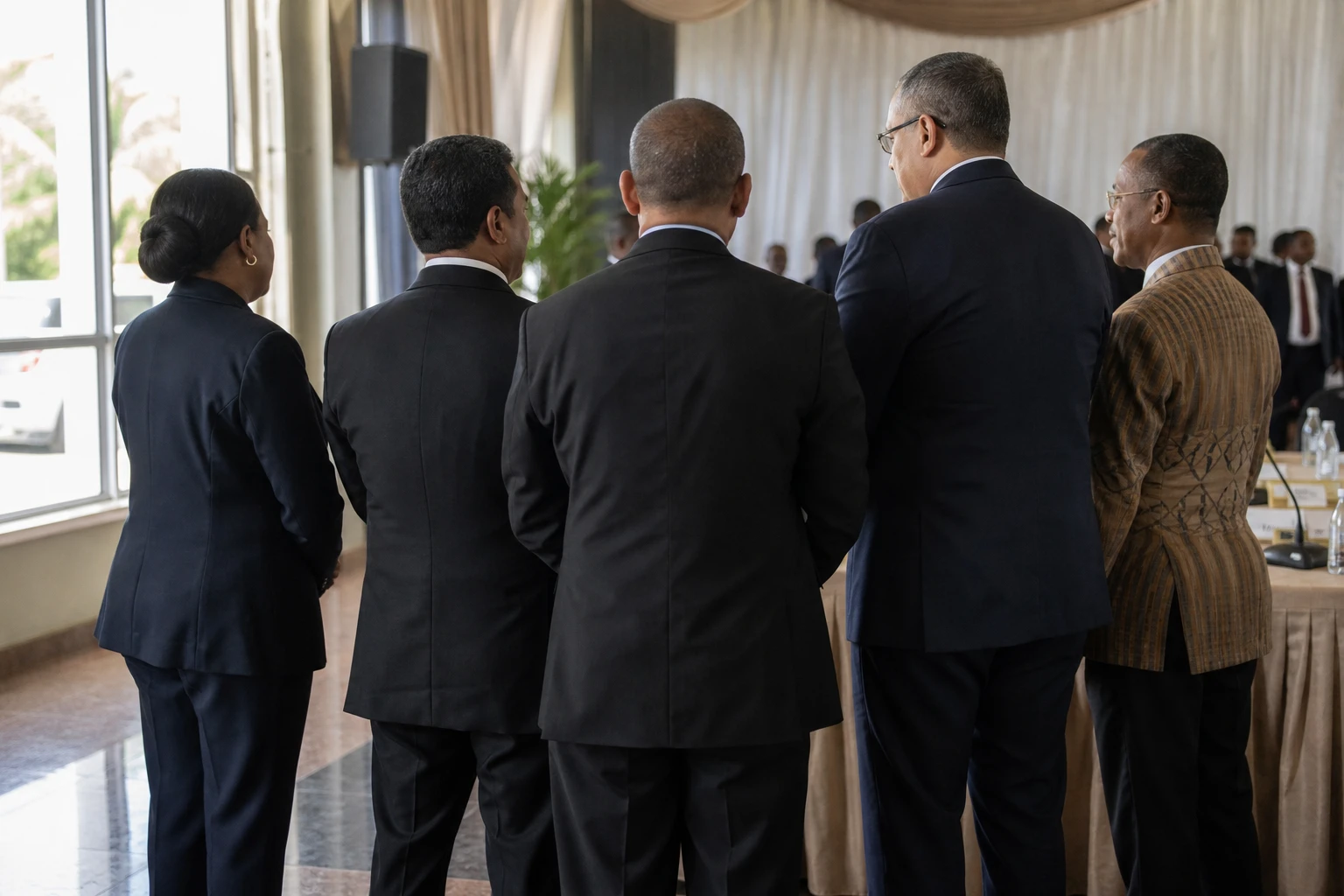
In Antananarivo, the transition is also a test of credibility
In several African capitals, the question is no longer simply who governs. It has become more nuanced: who listens, who makes amends and who gets the state back on its feet without losing touch with the ground. It was in this context that a French parliamentary official, returning from Madagascar, said relations with African partners had changed, arguing for support for transition authorities considered sincere.
His comments did not come out of the blue. Madagascar remains in a sensitive institutional phase, following the 2025 transfer of power, the suspension imposed by the African Union and the implementation of a refoundation timetable announced by the Malagasy authorities. At regional level, SADC, the Southern African Development Community, is also monitoring the situation and has called for calm and for dialogue to take precedence.
A country in transition, between domestic refoundation and external scrutiny
Madagascar has officially begun a 24-month transition period, with the aim of adopting a new constitution and then holding elections by 2027, according to updated information from French diplomacy and documents from the presidency of the refoundation. The institutional framework has already been reorganised: a prime minister was appointed in March 2026, then a new government was formed in autumn 2025 around the principle of “refoundation”.
This framework explains the caution shown by regional and international partners. The African Union condemned the change of power, which it described as unconstitutional, and suspended Madagascar from its activities until constitutional order is restored. The United Nations, for its part, expressed concern and said it wanted to work with the AU and SADC to restore stability.
The situation is not only institutional. It also responds to specific social grievances, regularly highlighted by international and local sources: shortages of water and electricity, limited access to public services, the challenge of youth employment and weariness with governance perceived as distant. In this context, the transition authorities’ room for manoeuvre will be measured as much by tangible improvements to daily life as by adherence to the political timetable.
What the argument for a “clean bill of health” really means
The French parliamentarian’s remark reveals a change of approach. He argues that a transitional government should be judged by its genuine intentions and actions, and then supported if it appears to be acting in the public interest. In his interview, he said that a sincere leader should be “given a clean bill of health”, otherwise other actors would step in. The wording is strong. In practice, it means that a partner no longer necessarily waits for an immediate return to conventional political forms before engaging in dialogue.
This reading does not remove the fundamental requirements. Rather, it reflects a diplomatic calculation: remain present during the transition, avoid leaving the field open to other powers, and preserve a working relationship with the new authorities. In Madagascar, the stakes are tangible. External partners can influence funding, infrastructure projects, access to markets and international legitimacy. But the population, for its part, is above all waiting for visible results: electricity, water, schools, jobs, justice.
France’s position is also part of a broader trend. For several years, Paris has been adjusting its discourse on Africa, particularly after the crises in the Sahel and in several states undergoing transition. In institutional exchanges, France now speaks more often of co-production, sovereignty and rebalancing partnerships. The Malagasy case illustrates this shift: neither an abrupt break nor an automatic blank cheque, but a diplomacy seeking to remain useful without appearing to impose its own timetable.
Implications beyond Madagascar
For southern Africa, Madagascar is a test. SADC has held a series of consultations and, at its August 2026 summit, welcomed progress in the refoundation process while calling for dialogue and a return to constitutional normality. This approach shows that a regional organisation can favour political oversight over simple punishment, provided the roadmap remains credible and inclusive.
For the African Union, the situation also highlights a familiar tightrope across the continent: condemning changes of power outside the constitutional framework while keeping the door open to mediation and gradual reintegration if the transition makes progress. This balancing act places the transition authorities under dual pressure. They must convince their citizens while also reassuring partners who fear a prolonged impasse.
The continental significance is clear. Madagascar does not sum up African politics, but it encapsulates several trends: rising public expectations, fragile institutional compromises, the renewed role of regional organisations and quiet competition among external partners. The next stage will be decisive: keeping to the announced refoundation timetable, keeping consultations open and turning a moment of rupture into a lasting period of political reconstruction.