Algeria
 Egypt
 Libya
 Morocco
 Sudan
 Tunisia
 Benin
 Burkina Faso
 Cabo Verde
 Côte d'Ivoire
 Ghana
 Guinea
 Guinea-Bissau
 Liberia
 Mali
 Mauritania
 Niger
 Nigeria
 Senegal
 Sierra Leone
 The Gambia
 Togo
 Cameroon
 Central African Republic
 Chad
 DR Congo
 Equatorial Guinea
 Gabon
 São Tomé and Príncipe
 Burundi
 Comoros
 Djibouti
 Eritrea
 Ethiopia
 Kenya
 Madagascar
 Malawi
 Mauritius
 Mozambique
 Rwanda
 Seychelles
 Somalia
 South Sudan
 Tanzania
 Uganda
 Angola
 Botswana
 Eswatini
 Lesotho
 Namibia
 South Africa
 Zambia
 Zimbabwe
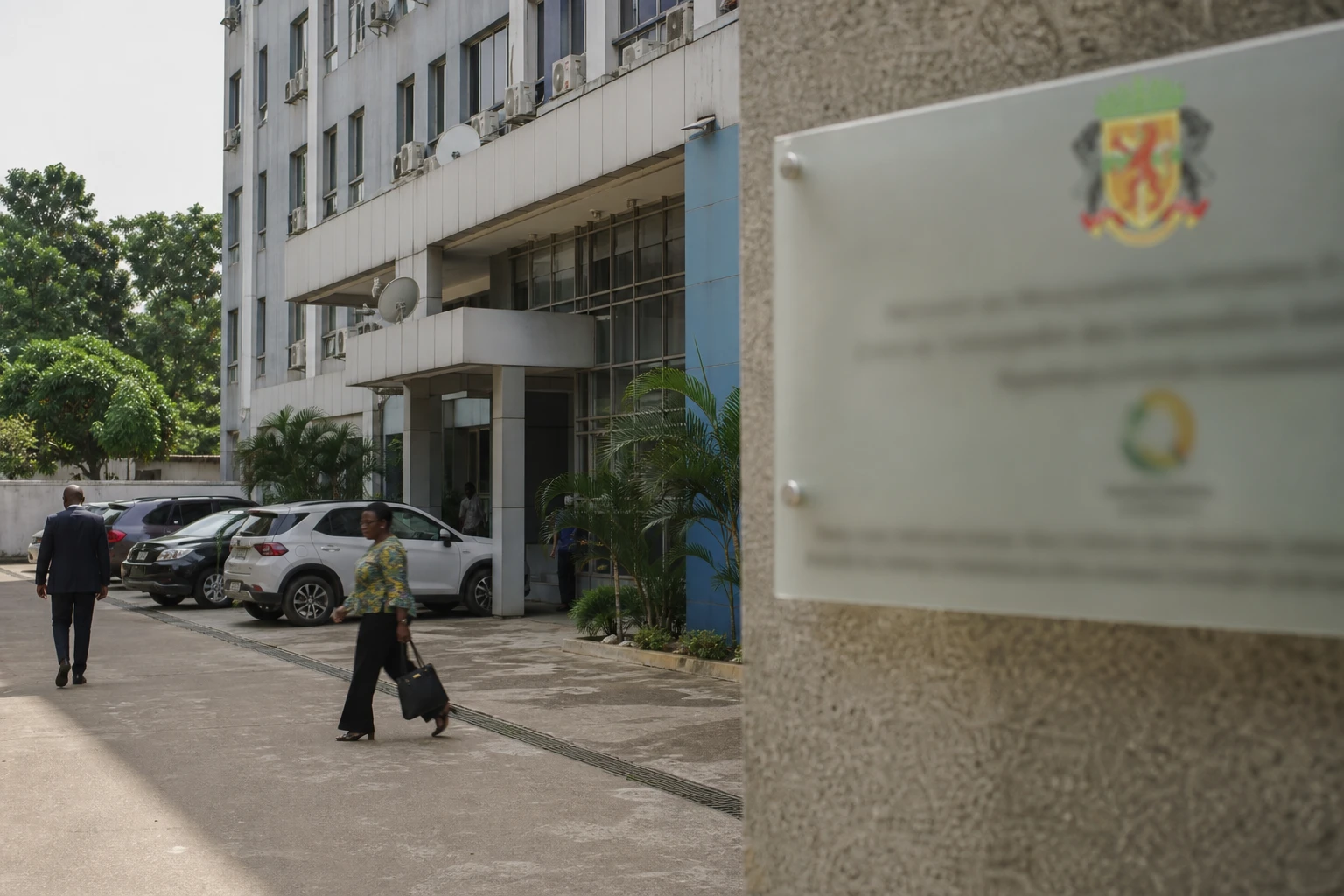
In Kouilou, oil is no longer measured only in barrels
In villages in the south-west of the Republic of the Congo, the question is no longer only how much revenue can be drawn from underground resources. It has become very concrete: what do families eat when cassava yields fall, what happens to orchards when fruit dries on the tree, and who pays the bill when the land is depleted? In the department of Kouilou, near the oil-producing areas of Bondi and Tchiamba-Nzassi, residents say they are seeing their environment deteriorate in step with the gas flares.
The issue goes beyond a local grievance. The Republic of the Congo is heavily dependent on hydrocarbons, and this dependence is reflected in the economy, formal employment, public revenue and energy policy. But it also exposes the country to a paradox: producing oil while allowing some of the associated gas to be burned, even though that same gas could be recovered, put to use or fed into the national energy supply chain.
An oil-producing region, with agriculture under strain
Kouilou is not simply an industrial backdrop. It is an area where extractive industries, villages, food crops and fruit trees coexist. According to information gathered on the ground by civil society groups and Congolese institutes, the first warnings date back around a decade. Farmers had noticed declining cassava yields in their fields. Then other symptoms appeared: mango, safou and banana trees affected by disease, fruit falling before it ripened, leaves turning yellow and trees that seemed to be “mummified”. These observations led to samples being taken in eleven villages around the oil sites.
Analyses carried out with support from the Loudima Institute for Agronomic Research and the Pointe-Noire Institute for Forestry Research point to soil, water and air contamination by hydrocarbons above health reference thresholds. This kind of contamination is not abstract: it affects harvests, rural household incomes and the food security of families who depend on small plots, far removed from oil dividends.
The Congo nevertheless has a legal framework prohibiting gas flaring—that is, the open-air combustion of gas during oil production—except in specific circumstances. A 2007 decree established this principle, and a further regulatory framework was strengthened in 2022, with permits subject to conditions and financial penalties. But several World Bank documents note that the rules and penalties remain insufficient to reduce the practice in a lasting way.
Why gas flaring remains at the heart of the issue
Gas flaring is often presented as a technical constraint. In reality, it also reflects investment and regulatory choices. When associated gas is not captured, reinjected or processed, it is burned. The country then loses an energy resource while adding greenhouse gas emissions and local pollutants. Globally, the World Bank notes that routine flaring remains a major issue for producer countries, and that volumes even increased in 2023.
For the Republic of the Congo, the stakes are even higher. World Bank estimates indicate that about 1.5 billion cubic metres of associated gas may have been flared in the country in 2021, producing nearly 3.8 million tonnes of CO2. The country ranks among producers where flaring intensity remains high relative to the volume of oil extracted. In other words, this is not a technical detail, but a problem of industrial performance, environmental health and regulatory credibility.
This situation explains the firm stance of the organisations that conducted the investigation. They are calling for a compensation fund for local residents, strict enforcement of existing legislation and an end to routine flaring. Their reasoning is simple: if the gas is there, it should be put to use. It can be recovered to supply power plants, support liquefied natural gas, strengthen electricity supply or reduce losses. The Congolese president has himself repeatedly announced plans to develop the country’s gas potential and bring liquefied natural gas facilities into operation in Pointe-Noire.
What this means for the state, companies and local residents
The issue brings three realities into conflict. First, those of the national and foreign oil companies operating in the south-western basins. Next, those of the state, which must balance revenue, sector stability and compliance with standards. Finally, those of the communities living nearby, who bear the nuisance without always benefiting from the economic returns. In this triangle, the balance of power remains tilted against isolated villages, especially when legal recourse is slow and costly.
The presence of the National Petroleum Company of the Congo, TotalEnergies, ENI and Wing Wa in the oil sector also broadens the significance of the issue. This is not just a national matter. It is about how a producer country in Central Africa and a member of CEMAC reshapes its extractive model at a time when international markets are demanding greater carbon traceability and compliance with environmental standards.
In this context, a compensation fund would have an immediate practical impact. It could address agricultural losses, provided it is backed by independent expert assessments, clear criteria and a credible monitoring mechanism. Without that, local people will continue to bear alone the cost of an activity that fuels national revenue. Companies, for their part, have an incentive to reduce these technical losses. Recovered gas can become a source of value, not merely waste burned continuously.
A signal for Central Africa
The Congo is not an isolated case. Across the Central African oil basin, the question of associated gas recurs with the same tension: producing, while also limiting damage, finding markets, investing in infrastructure and enforcing the rules. The country has in fact launched gas projects and regulatory reforms that show an end to routine flaring is possible, provided political will, investment and public oversight advance together.
The continent-wide significance is clear. In the African Union and regional forums, the issue is no longer only about producing hydrocarbons. It is about proving that a state can still earn revenue from oil while protecting its land, water, air and people. Congo-Brazzaville, with Brazzaville as its political centre and Pointe-Noire as its oil hub, is at the heart of this equation. The Kouilou issue is a reminder that in Central Africa, the energy transition also begins by ending routine practices that damage the daily lives of local residents.