Algeria
 Egypt
 Libya
 Morocco
 Sudan
 Tunisia
 Benin
 Burkina Faso
 Cabo Verde
 Côte d'Ivoire
 Ghana
 Guinea
 Guinea-Bissau
 Liberia
 Mali
 Mauritania
 Niger
 Senegal
 Sierra Leone
 The Gambia
 Togo
 Cameroon
 Central African Republic
 Chad
 DR Congo
 Equatorial Guinea
 Gabon
 Republic of the Congo
 São Tomé and Príncipe
 Burundi
 Comoros
 Djibouti
 Eritrea
 Ethiopia
 Kenya
 Madagascar
 Malawi
 Mauritius
 Mozambique
 Rwanda
 Seychelles
 Somalia
 South Sudan
 Tanzania
 Uganda
 Angola
 Botswana
 Eswatini
 Lesotho
 Namibia
 South Africa
 Zambia
 Zimbabwe
An offering reaching beyond big investors
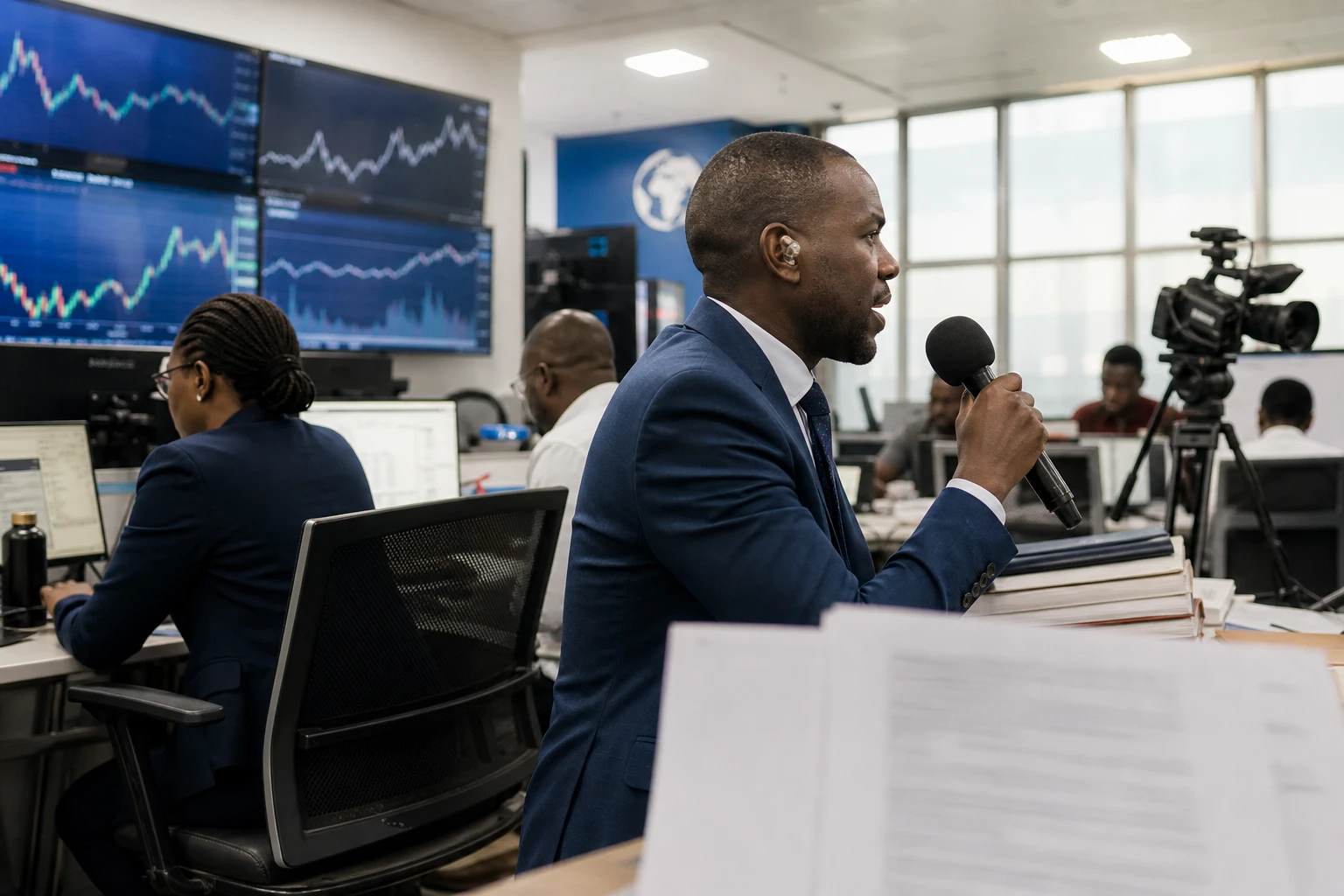
In Nigeria, a major company is more than an industrial machine. It can also become a market story, a source of national pride and a topic of public debate. That is what the public offering of a stake in the Dangote refinery in Lagos demonstrates, in a country where the stock market is still often seen as a preserve of insiders. The message is simple: allow ordinary savers to participate in a major industrial asset at a time when Nigeria’s economy is still seeking to reduce its dependence on fuel imports.
The stakes go beyond a single group. Nigeria, West Africa’s largest economy, is a member of ECOWAS, the Economic Community of West African States, and is closely monitoring the signals sent by its financial markets. When strategic infrastructure such as a refinery enters the market, it speaks to industry, local savings and economic sovereignty all at once. In the region, where several states still import a large share of their refined petroleum products, the Dangote offering is also a test of African capital’s ability to finance African projects.
What the offering entails
On 14 September 2026, Dangote Petroleum Refinery & Petrochemicals officially launched its initial public offering on the Nigerian Exchange in Lagos. According to documents published by the group and reported by the press, the offer comprises 4.1 billion new shares at 525 naira each, with a minimum subscription of 10 shares, or 5,250 naira. The target amount is about 2.15 trillion naira, or nearly $1.6 billion. The offer is open to retail and institutional investors, as well as eligible African investors.
Aliko Dangote will retain 87% of the share capital for now, confirming that the transaction is not a major sell-off but a gradual opening. In its presentation of the offer, the group also describes the move as a founding moment for Nigeria’s market and a step towards wider ownership of major industrial assets. The IPO was prepared several months in advance, with the offer documents signed on 7 September 2026 and prior approval granted by Nigeria’s Securities and Exchange Commission.
The project attracted strong interest even before the offer opened. In August 2026, the group announced a $1 billion support programme, presented as a step intended to strengthen the transaction’s financial base. At the same time, a dedicated platform for the offer was launched to organise subscriptions and the dissemination of market information. This carefully managed presentation reflects a clear aim: reassure investors, raise the asset’s profile and establish the refinery as a market investment rather than merely private property.
Why retail investors are interested
The rush for shares is explained first and foremost by the project’s scale. The Dangote refinery is presented as the largest in Africa and one of the world’s biggest integrated refining and petrochemical facilities. In a country where supply disruptions, foreign-exchange pressures and naira volatility weigh on households, many savers are looking for investments linked to tangible assets. A refinery of this size is therefore seen as a bet on the real economy, not merely on short-term stock market movements.
The international context has also played a part. At the time of the launch, global oil prices had been supported by tensions in the Middle East, reinforcing the idea that a refining asset could generate attractive cash flows. It is precisely this combination of expected returns, industrial symbolism and the promise of popular participation that appeals to a range of people, from private-sector executives to urban workers looking to invest a small amount of savings. Accounts reported in Lagos reveal a common rationale: investing to diversify income, but also to be associated with infrastructure regarded as strategic for Nigeria.
However, it is important to remain clear-headed. An IPO guarantees neither automatic profit nor lasting stability. Returns will depend on demand, refining margins, financing costs, oil prices, operational management and regulatory decisions. For Nigerian households, access to this offer may represent both a symbolic and a financial opportunity. But for them, as for institutions, the real test will come after the subscription period: whether the company can deliver on its promises regarding production, transparency and the distribution of value.
A signal for Abuja, Lagos and the wider region
This IPO says something about the balance of economic power in Nigeria. Bola Ahmed Tinubu’s government has for several months been promoting a more active role for the capital market as a tool for financing growth. In August 2026, the presidency also raised the possibility of a listing for NNPC Limited, the national oil company, signalling that the authorities want to expand the stock market’s role in mobilising domestic savings. In this context, the Dangote refinery becomes more than a private asset: it is a showcase for a financial architecture that the authorities want to make deeper and more liquid.
The offering also has an African dimension. Discussions held in Lagos in spring 2026 among officials from the continent’s stock exchanges presented the forthcoming Dangote listing as a test for cross-border listings and the integration of African markets. In other words, the transaction is being watched well beyond Nigeria because it raises the question of whether African investors can support large-scale industrial projects without relying exclusively on capital from outside the continent. For ECOWAS and, more broadly, the African Union, the issue is not just a refinery: it is the movement of African capital into African assets.
The next steps will need to be watched closely: the pace of subscriptions up to the planned closing date of 13 October 2026, the secondary market’s response and how the refinery turns this opening of its share capital into industrial results. If the project succeeds, it could set a precedent for other strategic assets in Nigeria and elsewhere on the continent. If it disappoints, it will be a reminder that an ambitious industrial promise is no substitute for governance or financial discipline.