Algeria
 Egypt
 Libya
 Morocco
 Sudan
 Tunisia
 Benin
 Burkina Faso
 Cabo Verde
 Côte d'Ivoire
 Ghana
 Guinea
 Guinea-Bissau
 Liberia
 Mali
 Mauritania
 Niger
 Nigeria
 Senegal
 Sierra Leone
 The Gambia
 Togo
 Cameroon
 Central African Republic
 Chad
 DR Congo
 Equatorial Guinea
 Gabon
 Republic of the Congo
 São Tomé and Príncipe
 Burundi
 Comoros
 Djibouti
 Eritrea
 Ethiopia
 Madagascar
 Malawi
 Mauritius
 Mozambique
 Rwanda
 Seychelles
 Somalia
 South Sudan
 Tanzania
 Uganda
 Angola
 Botswana
 Eswatini
 Lesotho
 Namibia
 South Africa
 Zambia
 Zimbabwe
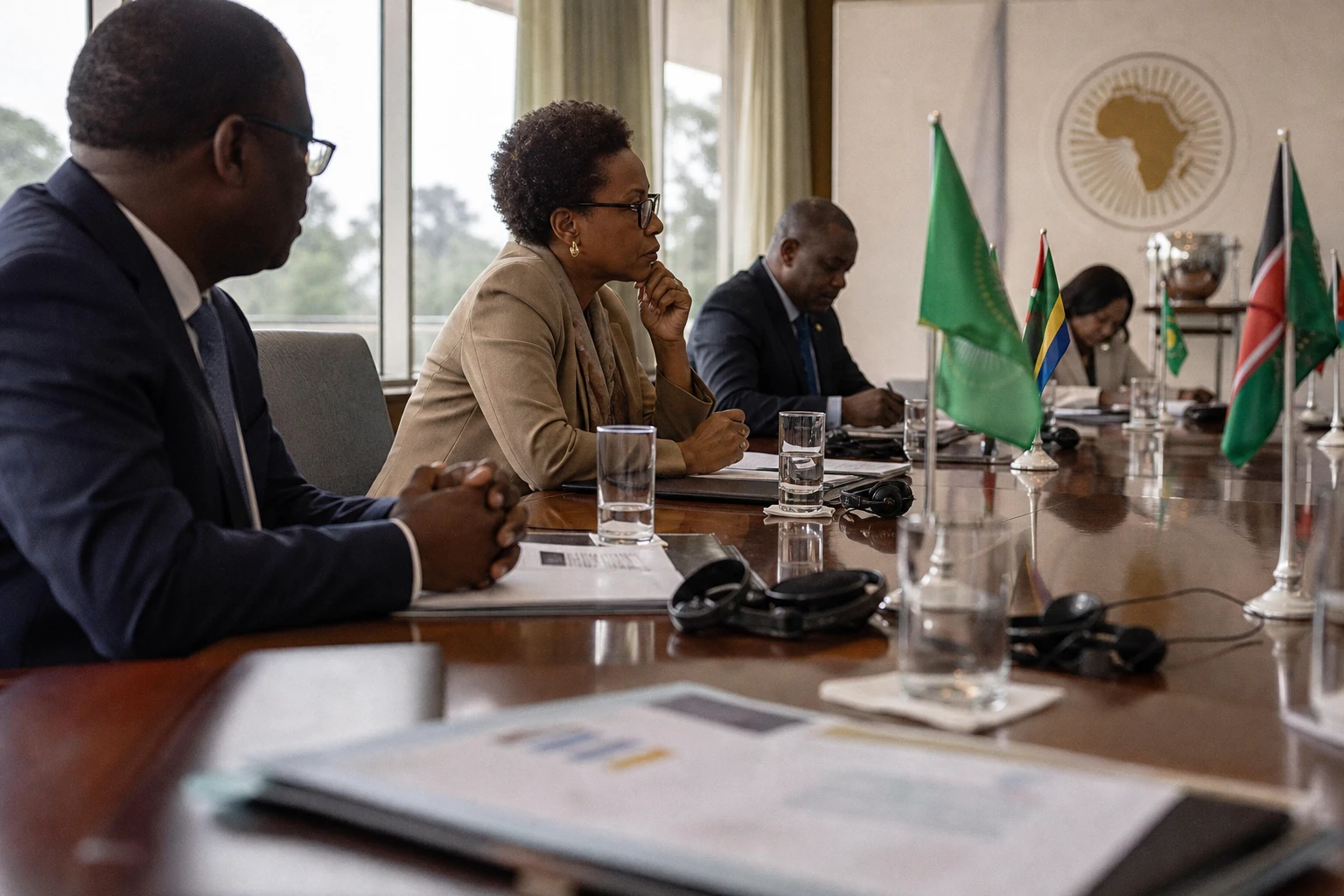
Kenya wants to keep more value at home
In Kenya’s mining areas, the debate is no longer just about what lies beneath the ground. It is now about what the country retains, processes and actually earns from. In Nairobi, a straightforward idea is taking shape: export fewer raw minerals and do more processing locally.
The issue goes beyond mining technology. For the Kenyan authorities, it is also about industrial jobs, tax revenues, control of informal channels and a place in regional value chains. Kenya no longer wants to remain at the end of the chain.
A strategy embedded in Nairobi’s mining reforms
The Kenyan government has already put forward a broader reform of the sector. A draft mining and beneficiation policy, presented in 2026, aims to increase mining’s contribution from around 1% of gross domestic product to 10% by 2030, by focusing on local processing and formalising the sector. This approach also aligns with the East African Community’s efforts to encourage its member states to process minerals locally rather than export raw materials.
This direction did not emerge from nowhere. As early as 2023, Kenya’s Ministry of Mining issued a tender for the establishment of an internationally accredited gold refinery. The Kakamega refinery project, valued at 5.8 billion Kenyan shillings, is described by public media as infrastructure intended to capture more value close to production areas.
Artisanal gold, lost tax revenue and the drive to formalise
On the ground, gold mining remains dominated by artisanal and informal activity. In its 2025 sector report, Kenya’s Ministry of Mining estimates that around 250,000 artisanal miners operate largely outside regulated channels. It also estimates that about 300 kg of gold are produced each month, worth around 3 billion shillings, with potential royalty losses of 100 million shillings a month, or 1.2 billion a year. These are official estimates, but they give an indication of the revenue the state is missing out on.
The same report highlights the heart of the problem: a lack of organised points of sale, reliable tracking of volumes and sufficiently robust collection mechanisms. In other words, Kenya does not simply lack minerals. It still lacks institutions capable of turning a scattered activity into a transparent, taxable and secure supply chain.
This logic also explains the government’s emphasis on domestic refineries and the Kenya Central Bank’s priority purchase of gold. For Nairobi, centralising some purchases would make it possible to track the metal more effectively, support foreign-exchange reserves and reduce the outflow of value. It is a conventional approach to capturing mining rents, but it requires a strong administration and regular volumes.
The battle over mineral resources is not limited to gold
President William Ruto’s position extends beyond the yellow metal. The head of state says he wants major mining projects to be conditional on local processing, whether they involve soda ash, oil, lithium, cobalt or other rare metals. This stance has been reinforced by the dispute with Tata Chemicals’ Kenyan subsidiary over soda ash, a case that has become emblematic of the question of value added locally.
In the same vein, the Mrima Hill project in Kwale County has strategic importance. In 2026, the Ministry published terms of reference for a project involving niobium and rare earths. The official document describes these resources as strategic and opens up their commercialisation through a call for expressions of interest. In a global economy hungry for critical minerals, Kenya wants to avoid a scenario in which extraction takes place elsewhere—and processing does too.
The country thus finds itself at the intersection of several pressures. On one side, foreign investors, particularly American and Chinese, are eyeing deposits with high future value. On the other, local communities are demanding greater benefits, transparency and clear permits. Between them, the state is seeking to regain control over negotiations, royalties and the establishment of processing plants.
A Kenyan shift with continent-wide resonance
Kenya’s choice is part of a broader trend across the continent. Through the Africa Mining Vision, the African Union has for years championed mining that is “transparent, equitable” and, above all, creates local value. The framework emphasises local processing, links with industry and moving Africa beyond the role of a mere exporter of raw materials.
In East Africa, this approach carries particular weight. Kenya is seeking to combine regional integration, industrialisation and better tax collection, while several neighbouring states are also pursuing policies to retain or process value locally. The message is clear: the practice of minerals leaving the continent with little added value is increasingly being challenged.
The decisive question remains: will Kenya be able to turn political ambition into a credible supply chain? The answer will depend on permits, infrastructure, local acceptance and the ability to produce reliable data. Without these, the ban on raw exports will remain an announced goal. With them, Nairobi could begin to redefine the country’s place in the regional and continental mining economy.