Algeria
 Egypt
 Libya
 Morocco
 Sudan
 Tunisia
 Benin
 Burkina Faso
 Cabo Verde
 Côte d'Ivoire
 Ghana
 Guinea
 Guinea-Bissau
 Liberia
 Mali
 Mauritania
 Niger
 Nigeria
 Senegal
 Sierra Leone
 The Gambia
 Togo
 Cameroon
 Central African Republic
 Chad
 DR Congo
 Equatorial Guinea
 Gabon
 Republic of the Congo
 São Tomé and Príncipe
 Burundi
 Comoros
 Djibouti
 Eritrea
 Ethiopia
 Kenya
 Malawi
 Mauritius
 Mozambique
 Rwanda
 Seychelles
 Somalia
 South Sudan
 Tanzania
 Uganda
 Angola
 Botswana
 Eswatini
 Lesotho
 Namibia
 South Africa
 Zambia
 Zimbabwe
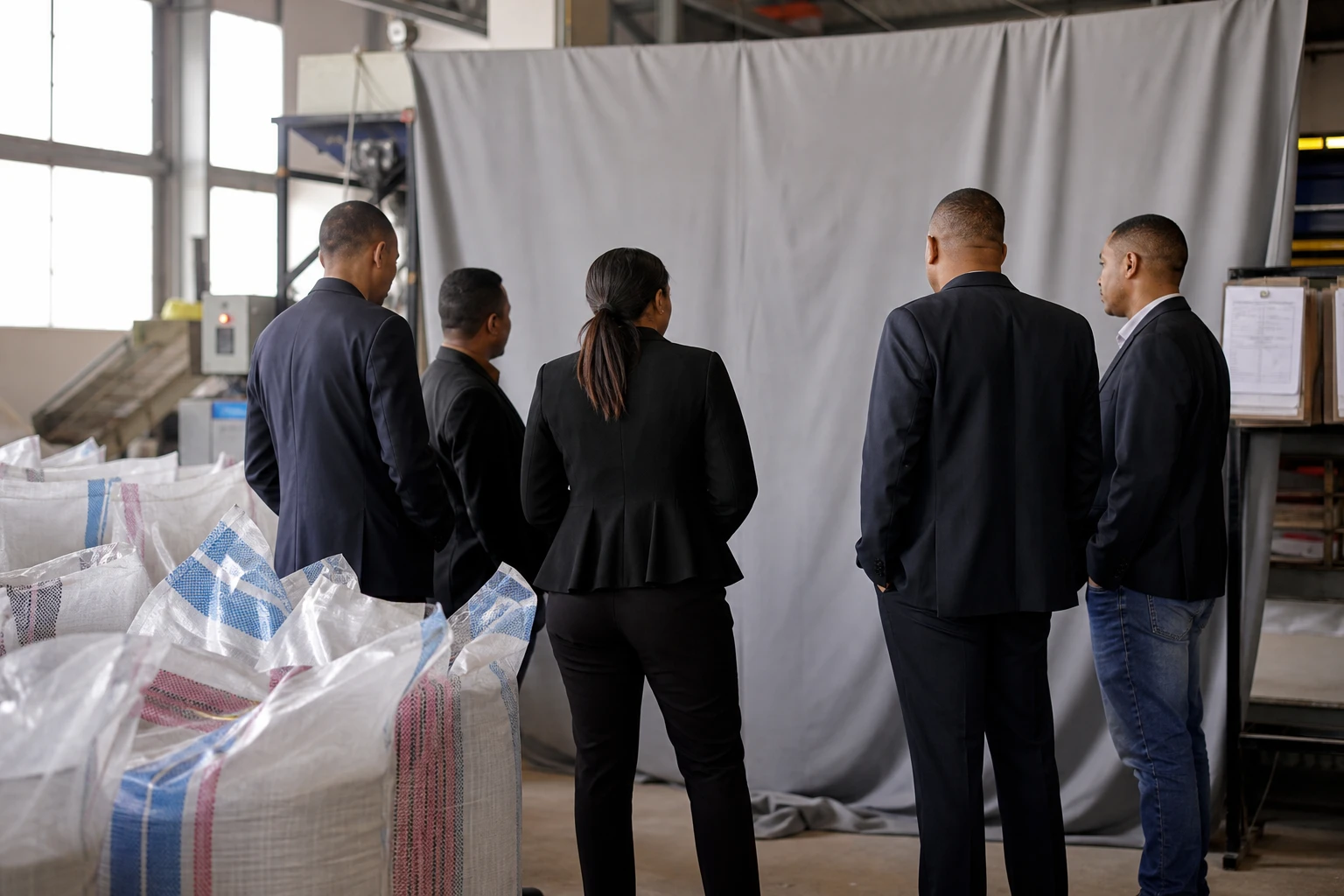
An everyday object becomes an industrial link
In Madagascar’s countryside, a sturdy sack is used for more than just packaging. It accompanies the harvest, protects goods and then moves on to markets, warehouses and ports. In Madagascar, this apparent ordinariness reflects a broader reality: agriculture remains at the heart of economic life, while the businesses that supply it must contend with power cuts, import competition and highly irregular production seasons.
The polypropylene gony sack illustrates this link between industry and the countryside. Widely used in the supply chains for rice, paddy, vegetables, salt and industrial raw materials, this woven sack has become a strategic tool. It tells the story not only of a packaging sector, but also of how Madagascar is seeking to process locally what it produces, rather than letting all the added value go abroad.
Antananarivo, the centre of gravity for a sector established nearly half a century ago
The story centres on Antananarivo, specifically the Tanjombato area, where a specialist factory has built its reputation on weaving polypropylene sacks for agriculture and industry. Enduma says it began operations in 1976, before diversifying into woven sacks to meet demand in the Malagasy market and the Indian Ocean region. It now describes itself as a leading player in technical polypropylene weaving in the region.
This location is no coincidence. Madagascar remains a highly agricultural economy: about 80% of the population lives outside cities, and agriculture accounts for around a third of gross domestic product, according to World Bank estimates. The sector also supplies inputs to part of the industrial base and remains one of the main sources of export earnings. In this context, a sack is never just packaging. It is a tool for economic circulation.
The company is focusing in particular on an iconic product, used for harvests and identifiable by its design featuring a zebu-drawn cart. This local symbol has taken on an almost cultural significance because it accompanies Madagascar’s agricultural calendar and is associated with the collection periods for rice, dry grains and other cash crops. The market therefore remains closely tied to the health of the countryside.
What sacks reveal about rice, vanilla and other sectors
In Madagascar, agricultural seasons still set the pace for many businesses. Rice generally starts the cycle, followed by vanilla, dry grains, Cape peas and salt. Madagascar’s agriculture ministry itself stresses rice’s role in food sovereignty, while recent public programmes seek to modernise production and reduce post-harvest losses.
This dependence on harvests creates an opportunity, but also a vulnerability. When the harvest is good, demand for sacks rises. When rainfall patterns shift, cyclones hit or yields fall, the entire chain slows down. For the beginning of 2026, the FAO is still reporting heavy pressure on food security, with millions of people exposed to acute food insecurity in the country. Such pressures affect producers, collectors and transporters, and downstream, the businesses that package food.
Enduma also says it works for industries beyond agriculture, including food processing, mining, lime, flour, cement and salt. This matters because it shows that local sack production does not depend on a single segment. It is part of a broader economy, where value chains remain fragmented but real. In other words, the gony sits at the intersection of family farming, processing industries and modern distribution.
Foreign competition, costly energy and recycling production waste
The sector faces significant constraints. In Madagascar, power cuts remain a major obstacle for businesses, and the World Bank has stressed that a reliable energy supply is crucial for private investment. At a woven-sack factory, each interruption stops the looms, disrupts production schedules and increases waste.
There is also competition from Asia. Local producers denounced an influx of imported woven sacks in 2024, often cheaper but considered inferior in quality and lacking some of the certificates required in the Malagasy market. The Trade Ministry then raised the prospect of trade defence measures, a sign that the import issue is not just about prices, but also standards, traceability and protecting local industry.
In response to this pressure, the company is focusing on diversification. It recovers production waste, particularly material generated by power cuts or changes in weave patterns, and reprocesses it into pellets that can be reused in other plastic products. This approach to recycling reflects a very practical form of industrial adaptation: reducing losses, protecting margins and extending the life of raw materials in an unstable energy environment.
The Malagasy market itself is driving this reinvention. The authorities have recently stepped up their emphasis on food sovereignty, local processing and protecting value chains. The goal is clear: to export fewer raw materials and produce, package and market more goods locally. For a company such as Enduma, this means an opportunity to increase volumes, but also a need for continuous innovation.
Significance beyond Madagascar
The Malagasy gony is about more than Tanjombato. It is part of a regional moment in which SADC, the Southern African Development Community, is promoting industrialisation, agricultural processing and the energy transition. Madagascar is a member, and Antananarivo even hosted the regional industrialisation week in 2025, focused on these same priorities.
In this context, a locally made sack is a case study. It shows how a low-profile but essential midstream industry can connect villages, wholesale markets, processing plants and regional trade. It also shows that competitiveness depends not only on ports or major projects, but on thousands of technical goods that protect merchandise and reduce losses.
For Madagascar, the challenge is therefore twofold. On the one hand, it must consolidate local production capable of meeting the country’s agricultural needs. On the other, it must turn this expertise into a regional asset in the Indian Ocean and, beyond that, across the African market. The gony sack, long seen as a simple means of carrying a harvest, has become a telling indicator: of an economy seeking to make at home the tools it needs to keep goods moving.