Algeria
 Egypt
 Libya
 Morocco
 Sudan
 Tunisia
 Benin
 Burkina Faso
 Cabo Verde
 Côte d'Ivoire
 Ghana
 Guinea
 Guinea-Bissau
 Liberia
 Mali
 Mauritania
 Niger
 Nigeria
 Senegal
 Sierra Leone
 The Gambia
 Togo
 Cameroon
 Central African Republic
 Chad
 DR Congo
 Equatorial Guinea
 Gabon
 Republic of the Congo
 São Tomé and Príncipe
 Burundi
 Comoros
 Djibouti
 Eritrea
 Ethiopia
 Kenya
 Malawi
 Mauritius
 Mozambique
 Rwanda
 Seychelles
 Somalia
 South Sudan
 Tanzania
 Uganda
 Angola
 Botswana
 Eswatini
 Lesotho
 Namibia
 South Africa
 Zambia
 Zimbabwe
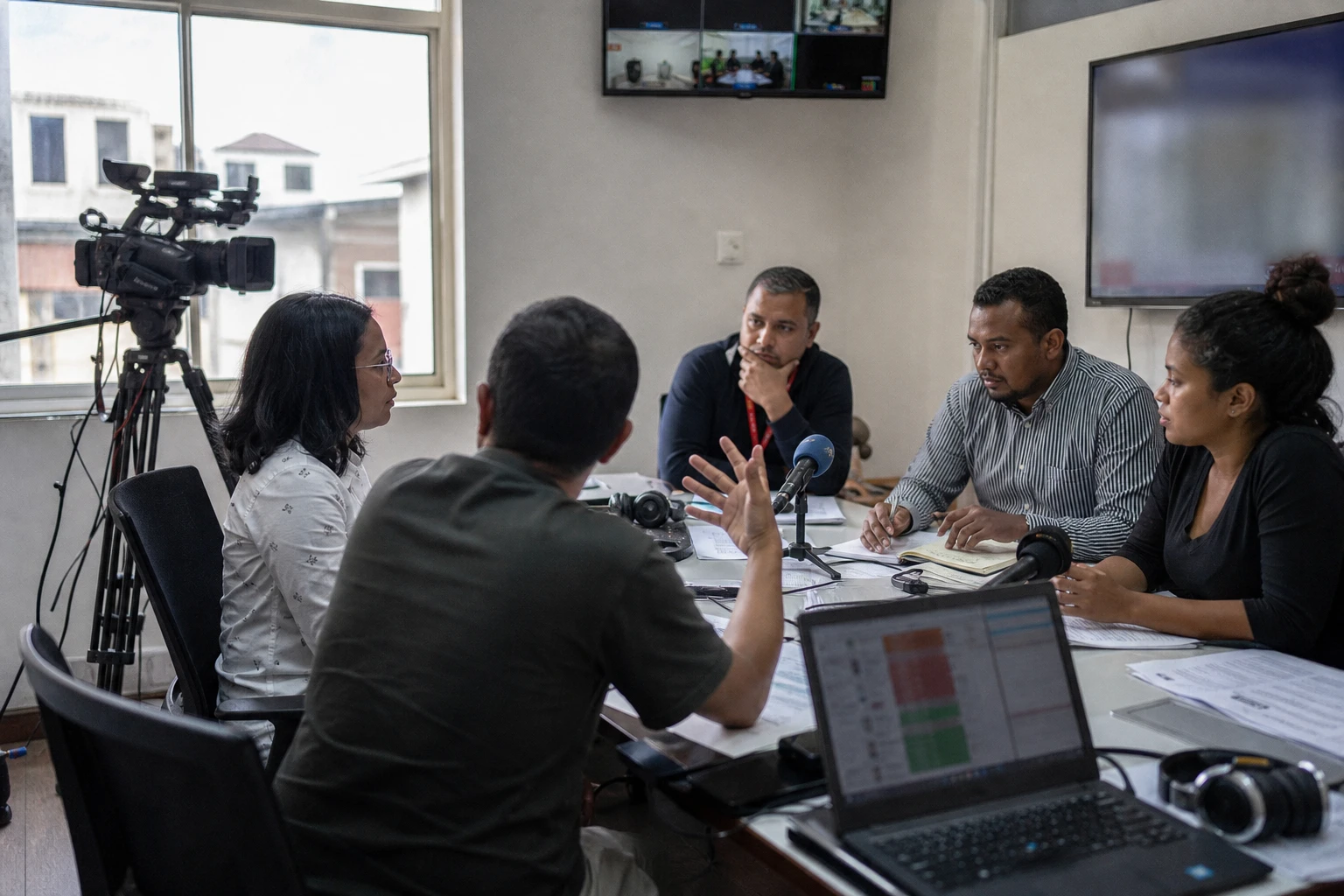
In Antananarivo, young people put the promise of renewal to the test
A year after the major mobilisations of September 2025, the question is no longer just who speaks in the name of change. It is more concrete: who can still challenge those in power without fearing that speaking out will become a risk? In Antananarivo, young people from Gen Z, civil society representatives and two government officials agreed to meet to discuss a subject that has become central to public life in Madagascar: democracy, and what it permits, protects and corrects.
This kind of exchange matters more than a simple meeting. It shows whether a transition accepts dissent or merely tolerates it. In Madagascar, an Indian Ocean country that is part of SADC, the process that began in October 2025 remains under regional scrutiny. The African Union has reiterated the need to respect constitutional order, while SADC has called for an inclusive national dialogue and a clear roadmap for a return to elected government.
A rare public discussion in a country still in transition
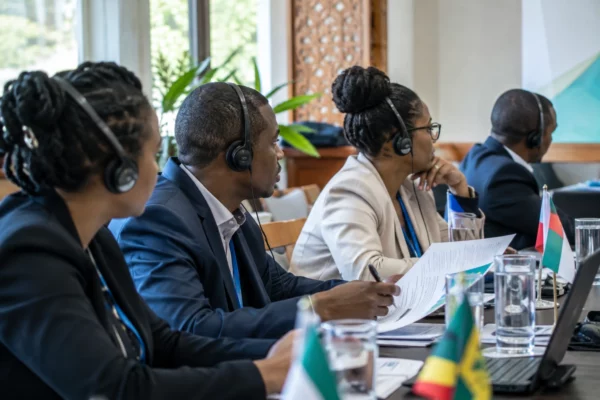
On 15 September in Antananarivo, Gen Z representatives and members of civil society spoke with two officials from the Ministry of Justice and the Presidency. Around a hundred citizens took the floor. The debate focused on the state of democracy, the separation of powers and freedom of expression, nearly a year after the political shift of 2025. The initiative is part of a broader series of consultations, also held in neighbourhoods, amid a climate in which the authorities say they want to structure the country’s renewal.
The context remains sensitive. In October 2025, the African Union described the military’s seizure of power as an unconstitutional change of government, following popular demonstrations in Antananarivo. The African Commission on Human and Peoples’ Rights later reiterated the importance of fundamental rights, the Constitution and a peaceful transition. SADC, for its part, urged Madagascar to conduct an inclusive national dialogue and submit a transition roadmap.
Against this backdrop, the 15 September meeting took on particular significance. It will not resolve anything on its own. But it shows that some in Malagasy society refuse to leave public debate solely to state institutions. Madagascar’s capital, Antananarivo, has long been a focal point for political tensions, as well as major efforts to emerge from crisis.
Freedom of speech, justice and public trust
The discussion quickly turned to the heart of the problem: freedom of expression. The young people present said they had seen progress, but that too many limits remained. Their view is clear: freer speech than in the past is not enough if some criticism is still seen as dangerous. This concern forms part of a broader debate about detentions linked to state security, possible pressure on dissenting voices and citizens’ real ability to denounce government action without fear.
Justice is the other flashpoint. The Ministry of Justice officially says its mission is to guarantee access to fair justice, the independence of magistrates and respect for fundamental rights. But on the ground, magistrates, lawyers and civic actors continue to challenge the degree of autonomy enjoyed by the judicial system. The fact that public debate now addresses this issue in front of government representatives marks a shift: justice is no longer merely a technical matter; it has become a political test.
This tension matters to the population. For residents of low-income neighbourhoods and urban centres alike, freedom to speak is valuable only if it also protects people from arbitrary arrests, impunity and networks of influence. For young people, it is also the right to scrutinise the transition’s promises. For the authorities, it is a signal to SADC, the African Union and international partners: renewal only has meaning if it leads to more transparent institutions, not merely a new language of power.
What Madagascar’s balance of power reveals
Gen Z’s presence in this kind of discussion is politically significant. The movement that emerged on the streets in September 2025 gave a generational voice to long-standing anger over failing public services, eroded trust and a sense of exclusion from decision-making. A year later, these young people are no longer content to protest. They want to influence the very definition of democracy, the rules of dialogue and the timetable for a return to a stable institutional order.
For civil society, the challenge is to ensure consultation does not become a mere showcase. The NGO behind the meeting already sees it as a sign of openness, but stresses how far there is still to go. This nuance is essential. In a transition, opening the door does not yet mean sharing power. It can, however, create a useful space: to bring forward grievances, document expectations and hold the authorities to concrete commitments.
The government, meanwhile, is seeking to consolidate its legitimacy by speaking of renewal and local consultations. The programme published by the Presidency in February 2026 emphasises this logic of institutional reconstruction. But the balance remains fragile. If consultations do not lead to guarantees on freedoms, judicial independence and political inclusivity, dialogue risks being seen as a communications exercise rather than a way out of crisis.
A Malagasy process with implications beyond Antananarivo
What is happening in Madagascar resonates beyond the island. The process is part of a broader African moment in which urban young people are challenging political practices they see as closed off and calling for more accountable institutions. For SADC, Madagascar is a test of regional credibility. For the African Union, it is a reminder that transitions are measured not only by the absence of unrest, but by the ability to organise a credible return to constitutional order.
The next steps will depend on the deadlines already set by regional bodies and on domestic developments: progress in the dialogue, a roadmap, guarantees for political participation and the handling of young people’s demands. In Madagascar, the challenge is no longer just to bring a crisis to a close. It is to determine whether the promised renewal can produce a public sphere that is freer, safer and more accountable to citizens themselves.