Algeria
 Egypt
 Libya
 Morocco
 Sudan
 Tunisia
 Benin
 Burkina Faso
 Cabo Verde
 Côte d'Ivoire
 Ghana
 Guinea
 Guinea-Bissau
 Liberia
 Mali
 Mauritania
 Niger
 Nigeria
 Sierra Leone
 The Gambia
 Togo
 Cameroon
 Central African Republic
 Chad
 DR Congo
 Equatorial Guinea
 Gabon
 Republic of the Congo
 São Tomé and Príncipe
 Burundi
 Comoros
 Djibouti
 Eritrea
 Ethiopia
 Kenya
 Madagascar
 Malawi
 Mauritius
 Mozambique
 Rwanda
 Seychelles
 Somalia
 South Sudan
 Tanzania
 Uganda
 Angola
 Botswana
 Eswatini
 Lesotho
 Namibia
 South Africa
 Zambia
 Zimbabwe
Senegal puts exploration back at the heart of its energy map
In Dakar, oil policy is no longer focused solely on fields already in production. It is also shifting towards a detailed assessment of the seabed, where Senegal’s future room for manoeuvre will be determined, balancing energy security, public revenues and contractual sovereignty.
The country is moving forward in a regional environment where the Gulf of Guinea and the MSGBC basin are attracting companies in search of new volumes, while several coastal states seek to capture more of the value generated by their resources. Senegal, which has already passed the symbolic milestone of production with Sangomar and the GTA gas project shared with Mauritania, now wants to expand its exploration base without relinquishing control over the pace of negotiations.
What the agreement with Eni provides for
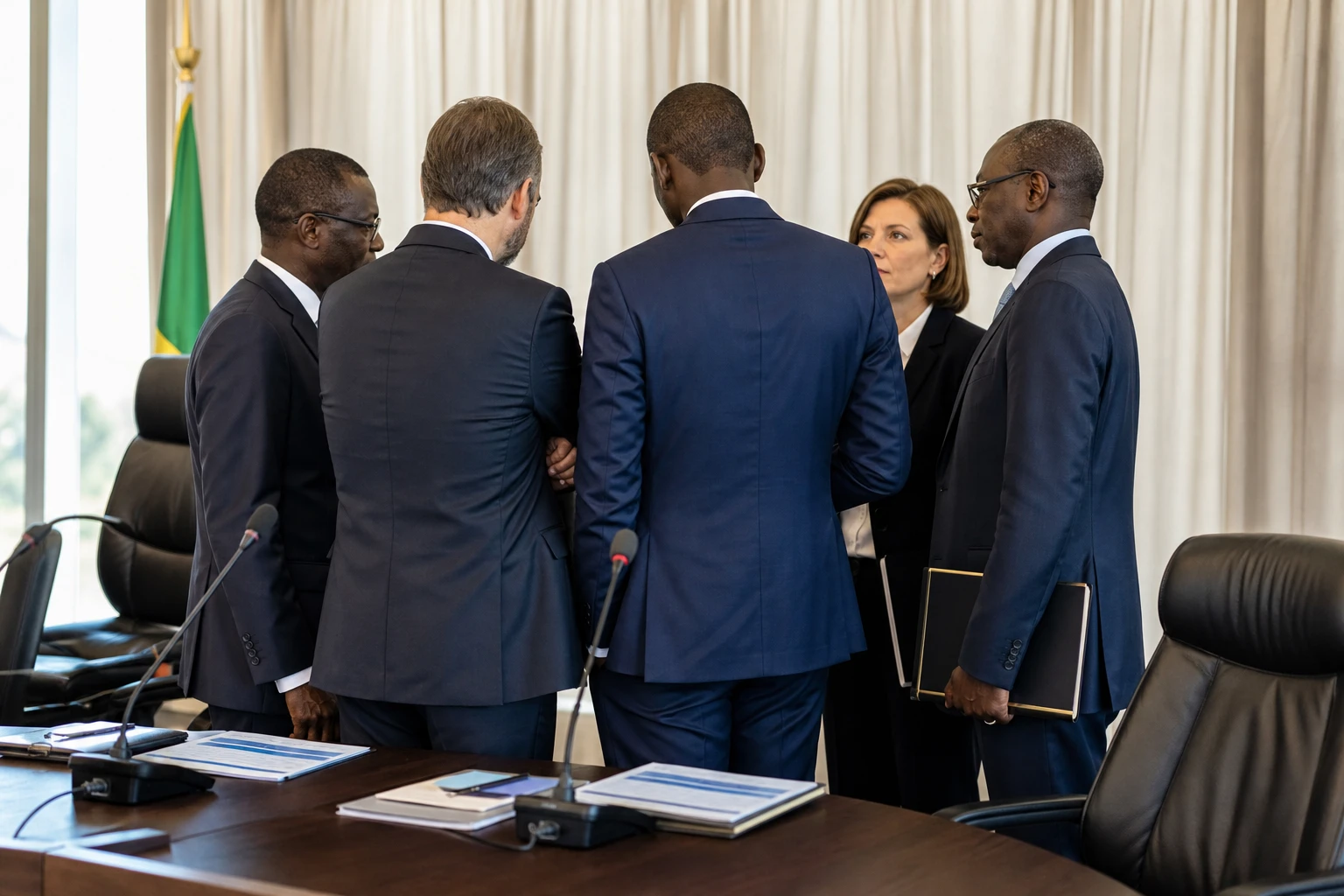
On 15 September 2026, Senegal’s Ministry of Energy and Petroleum and Eni signed a memorandum of understanding in Bangkok, on the sidelines of Gastech 2026, to conduct preliminary studies and assess the oil and gas potential of five offshore blocks. The text covers blocks SN01M, SN02M, SN03M, SN07M and SN40M.
Minister El Hadji Abdourahmane Diouf presented the signing as a clear political signal: to put exploration back at the heart of the national strategy and strengthen the capabilities of PETROSEN, Senegal’s state-owned upstream oil company. The ministry nevertheless specifies that the agreement is neither an oil contract nor an automatic award of an exploration or exploitation licence. It opens only a phase of studies and discussions, which will subsequently be subject to the procedures set out in Senegalese law.
This distinction matters. In the extractive sector, a memorandum of understanding lays the groundwork but commits no one to anything. It allows the company to fund technical work, including geological and geophysical analyses, before any drilling decision. In other words, Senegal is testing Eni’s interest without immediately ceding a strategic asset. This reading is consistent with the current position of the Senegalese authorities, who have signalled their intention to renegotiate, clarify and better regulate existing contracts.
A better-known basin, but still largely open
The context for this move is already well documented in official records. The Senegalese sedimentary basin is divided into 32 blocks, 25 of them offshore, and 10 are currently covered by hydrocarbon research and production-sharing contracts. The authorities also note that eight research and production-sharing contracts were still in force at the end of the period covered by the 2019–2023 assessment, while the ministry has launched tenders for 12 unallocated blocks.
This energy geography is not theoretical. The ministry lists major discoveries made between 2014 and 2017: four oil fields, including FAN, SNE, FAN South and SNE North, as well as three natural gas fields, including Grand Tortue/Ahmeyim, Teranga and Yaakar. Sangomar, formerly SNE, began production in June 2024 with a nameplate capacity of 100,000 barrels per day, and Senegal has begun exporting gas from GTA, a cross-border project shared with Mauritania.
The Ministry of Energy and Petroleum also said in September 2026 that the country planned to offer 109 oil and gas blocks to local and international investors, when only four blocks were covered by contracts at the time of the announcement. This strategy points to a two-pronged approach: consolidating recent discoveries and expanding the pipeline of opportunities for the years ahead.
What Dakar is really seeking to secure
For the Senegalese state, the issue is not simply to multiply licences. It is about retaining control over the timetable, the quality of the data and the sharing of value. The government has established a clearer framework with the 2019 Petroleum Code, the 2020 Gas Code, the local content law and legislation on the regulator and revenue governance. This foundation is intended to reassure investors while giving the administration more tools to oversee projects.
The benefits will not be the same for everyone. For the government, new exploration work extends the momentum created by Sangomar and GTA and reinforces the image of a country that is now a producer. For PETROSEN, the challenge is more operational: strengthening its ability to interpret the subsurface, negotiate technical agreements and influence future contracts. For local communities, the concerns are different: jobs, subcontracting, coastal protection, revenue transparency and environmental pressure.
The environmental dimension remains central. The Atlas of the Environment of Senegal’s Offshore and Coastal Areas notes that offshore development can have a significant impact on marine biodiversity, fisheries resources and the coastline, which is already subject to other uses such as fishing and tourism. The government has therefore introduced strategic environmental assessments and specific operating permits before any project is commissioned. In a country where the informal fishing economy supports thousands of coastal families, this balance is no incidental matter.
A Senegalese move with West African reach
The signing with Eni resonates beyond Senegal. The Italian group is expanding its presence in West Africa and the Atlantic basin, from Guinea to Sierra Leone, as well as Equatorial Guinea and other offshore markets. The move confirms that major operators are still looking for basins capable of replenishing their reserves, while African states seek to secure more local value, national content and visibility over contracts.
For Senegal, the continental significance is clear: the country wants to establish itself as a more robust energy player within ECOWAS and in the broader dialogue with producers along the Atlantic coast. The next step will show whether this memorandum of understanding leads to contracts, seismic data acquisition campaigns or, later, new investment decisions. In the short term, the real test will be Dakar’s ability to turn the majors’ interest into useful data, balanced contracts and lasting benefits for the national economy.