Algeria
 Egypt
 Libya
 Morocco
 Sudan
 Tunisia
 Benin
 Burkina Faso
 Cabo Verde
 Côte d'Ivoire
 Ghana
 Guinea
 Guinea-Bissau
 Liberia
 Mali
 Niger
 Nigeria
 Senegal
 Sierra Leone
 The Gambia
 Togo
 Cameroon
 Central African Republic
 Chad
 DR Congo
 Equatorial Guinea
 Gabon
 Republic of the Congo
 São Tomé and Príncipe
 Burundi
 Comoros
 Djibouti
 Eritrea
 Ethiopia
 Kenya
 Madagascar
 Malawi
 Mauritius
 Mozambique
 Rwanda
 Seychelles
 Somalia
 South Sudan
 Tanzania
 Uganda
 Angola
 Botswana
 Eswatini
 Lesotho
 Namibia
 South Africa
 Zambia
 Zimbabwe
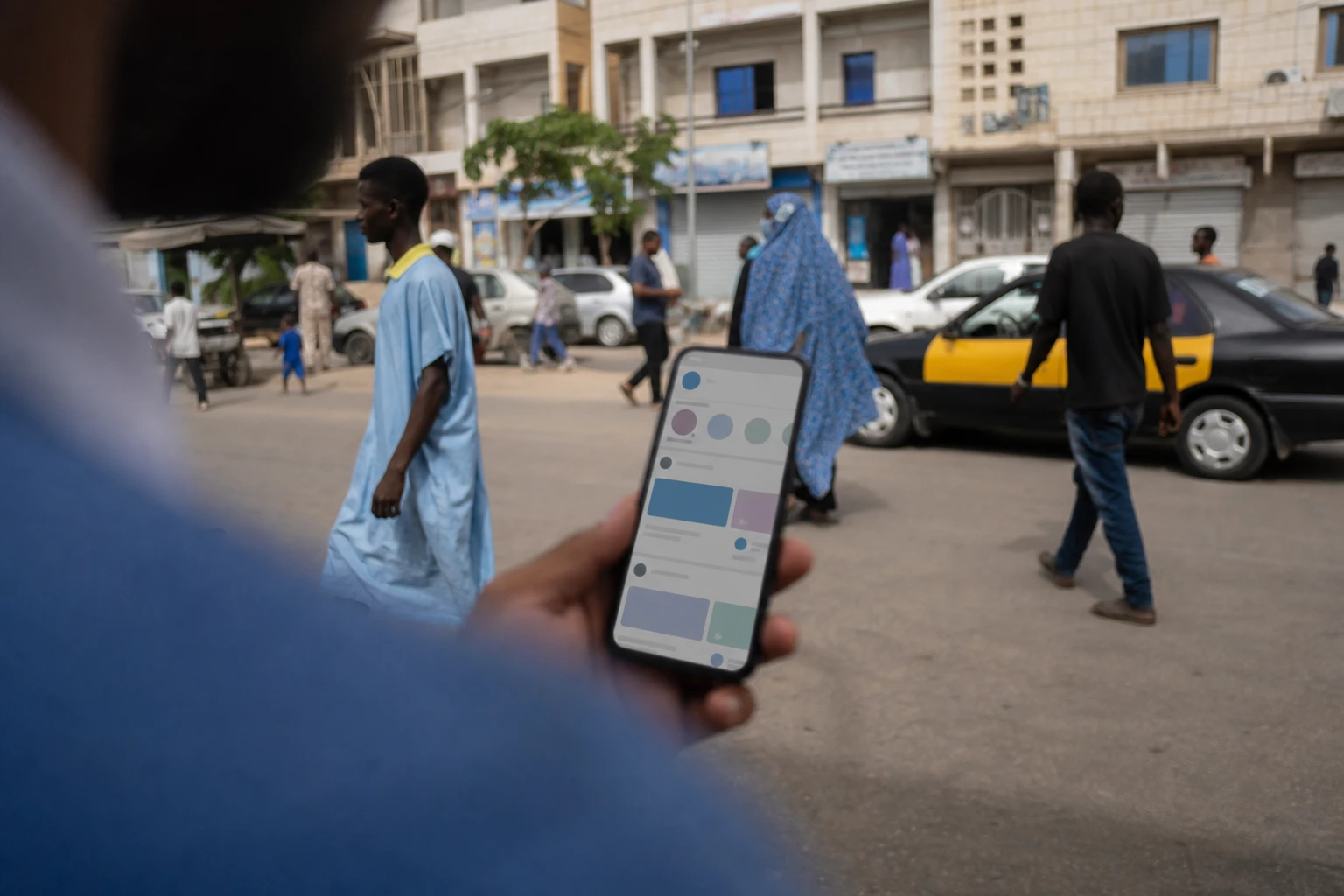
In Nouakchott, the government’s red line is now being discussed openly
In Mauritania, one simple question is now concentrating political tensions: will the Constitution be respected to the letter, or will debate over a third term overshadow the end of the current cycle? In Nouakchott, this question is no longer background noise. It affects the credibility of institutions, the timetable for national dialogue and the already fragile trust between the ruling majority and the opposition.
The issue is all the more sensitive because the country has just reopened a political dialogue process, following a lengthy consultation phase formalised in July 2026. The reference document for this dialogue was signed in Nouakchott on 14 July 2026 by the various political groups, with the aim of setting up supervisory committees and launching workshops on several reforms. In this context, any controversy over succession or a possible revision of the rules of the electoral game immediately weighs on the political climate.
A clear constitutional framework, but a politically combustible debate
Mauritanian law leaves little room for ambiguity. The Constitution provides for a five-year presidential term, renewable once, and prohibits any amendment that would undermine the principle of democratic alternation or this two-term limit. The constitutional text goes further still: it explicitly locks down the core of the presidential system.
This safeguard is not merely theoretical. At Mohamed Ould Cheikh El Ghazouani’s swearing-in on 1 August 2024, the president of the Constitutional Council publicly recalled that, under the Constitution, this second term was his last. He also warned against speculation about a third term, describing it as unnecessary and inappropriate. This institutional position gives opposition reminders particular weight today.
At the same time, the political sequence has gathered pace. On 2 September 2026, the Democratic Opposition Coalition’s grouping held a press conference in Nouakchott. On 3 September, consultations began to appoint members of the supervisory committee for the national dialogue. Then, on 9 September, a party belonging to the grouping announced that it was withdrawing from the committee’s chairmanship and boycotting the dialogue. The issue has therefore entered a more sensitive phase.
The opposition’s position: uphold the rules before the debate goes off course
Meeting in a general assembly, the democratic opposition sought a common position in response to renewed calls for a third term. Its central argument is legal before it is partisan: the Constitution sets a clear limit, so discussion of a new candidacy should not be opened. This interpretation is reflected in remarks by Abdoul Gourmo Lo, vice-president of the Union of the Forces of Progress, who sees the revival of this campaign as a worrying political signal for preparations for the dialogue.
Calls for a new candidacy have come not only from the streets or social media. They have also been echoed by elected officials and figures close to the government, who have highlighted the head of state’s record. It is precisely this shift, from whispers to public statements, that angers opponents. For them, the debate is no longer mere speculation. It is becoming a way of testing the strength of institutional safeguards.
In practice, the opposition also wants to protect its own negotiating capacity. If political dialogue is to clarify electoral rules, the composition of institutions and future reforms, it cannot begin under threat of a challenge to the founding text. This is one of the sticking points in the current phase: agreeing to discuss the system without reopening the question of term limits.
The real stakes: trust, stability and the balance of power in Nouakchott
For the government, the challenge is to prevent the debate over a third term from blocking the political agenda and turning a dialogue presented as inclusive into a premature battleground. For the opposition, the challenge is the reverse: not to allow political pressure to become normalised in a way that would ultimately make a constitutional amendment seem commonplace, even if it remains legally barred. In between, citizens are chiefly watching persistent high living costs, strains on public services and strong demand for tangible results.
This debate goes beyond Mohamed Ould Cheikh El Ghazouani himself. It touches on the balance of a political system seeking to combine openness to dialogue, the preservation of institutional order and the management of social expectations. In Mauritania, where the central state remains highly present in the capital and the interior regions, any uncertainty at the top quickly affects public administrations, local elected officials and how the population views promises of reform.
The implications are also regional. Mauritania belongs to the Arab Maghreb Union and the African Union, in a Sahelian region where transitions, challenges to constitutional order and crises of confidence have often had cascading effects. The Mauritanian Constitutional Council has also recalled that abuses over presidential terms have already caused damage in other African countries. In this context, the strength of Mauritania’s rules is being watched far beyond Nouakchott.
What to watch in the coming weeks
What happens next will depend on two political milestones. First, whether the dialogue’s supervisory committee can establish a credible and inclusive framework despite withdrawals and partial boycotts. Second, how the government responds to calls for a third term: with silence, a clear denial or acquiescence. In a country where the Constitution has already settled the question on paper, political discipline is now what will be tested.
If the ruling majority and the opposition manage to keep the discussion focused on reforms rather than personal ambitions, the dialogue could still produce a useful framework for the years ahead. Otherwise, Mauritania risks entering a premature period of mistrust just as its institutions need clarity. In Nouakchott, then, the debate is not only about a name or a candidacy. It is about the rules everyone shares.