Algeria
 Libya
 Morocco
 Sudan
 Tunisia
 Benin
 Burkina Faso
 Cabo Verde
 Côte d'Ivoire
 Ghana
 Guinea
 Guinea-Bissau
 Liberia
 Mali
 Mauritania
 Niger
 Nigeria
 Senegal
 Sierra Leone
 The Gambia
 Togo
 Cameroon
 Central African Republic
 Chad
 DR Congo
 Equatorial Guinea
 Gabon
 Republic of the Congo
 São Tomé and Príncipe
 Burundi
 Comoros
 Djibouti
 Eritrea
 Ethiopia
 Kenya
 Madagascar
 Malawi
 Mauritius
 Mozambique
 Rwanda
 Seychelles
 Somalia
 South Sudan
 Tanzania
 Uganda
 Angola
 Botswana
 Eswatini
 Lesotho
 Namibia
 South Africa
 Zambia
 Zimbabwe
Quiet money, but decisive for millions of households
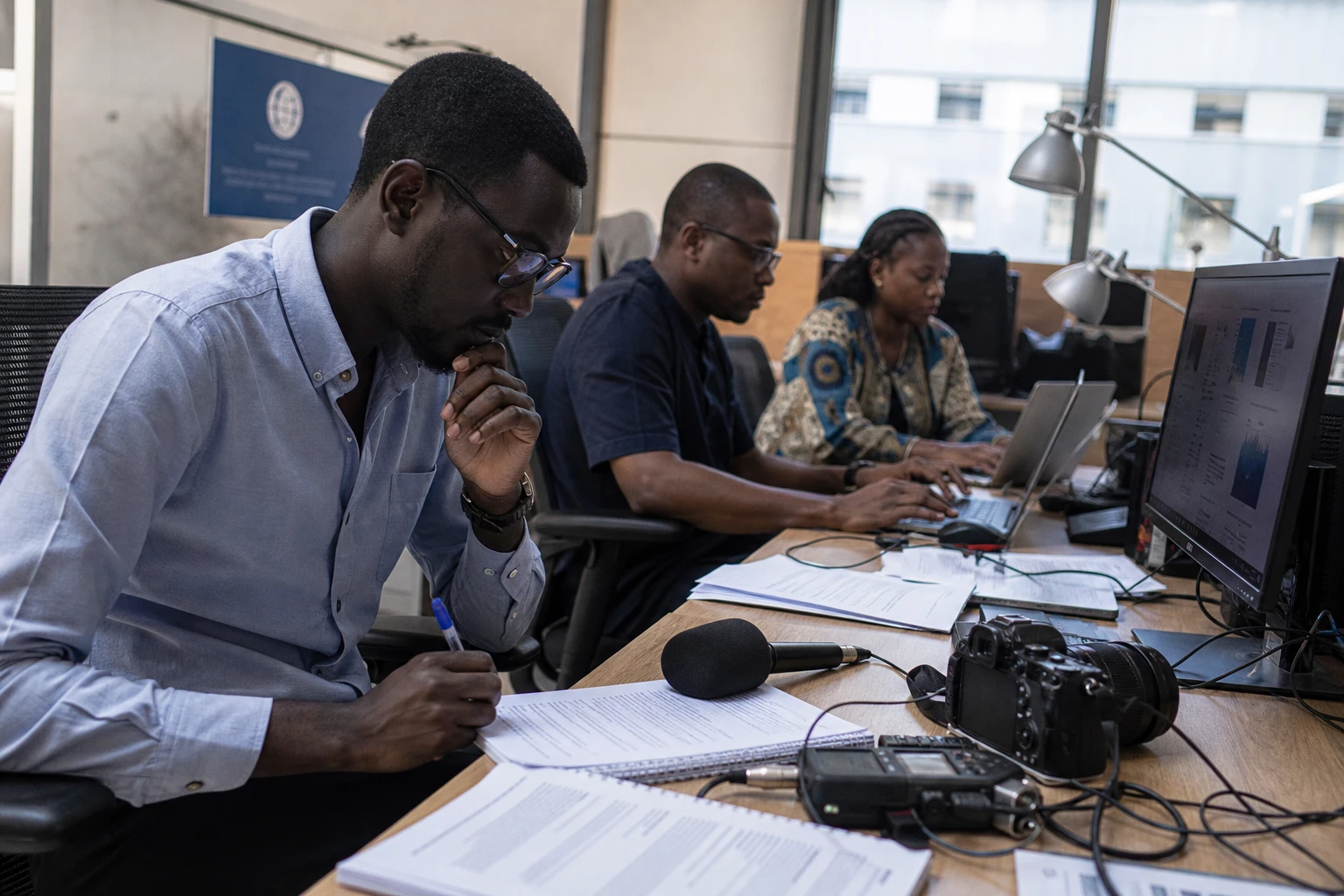
For many African families, remittances from the diaspora are neither supplementary income nor a luxury. They pay for healthcare, school, rent and harvests, and sometimes simply help make ends meet. In several countries, this private lifeline now carries as much weight as a public social-support policy, without passing through the state or foreign aid. According to IFAD’s latest report, remittances to Africa reached $124.2bn in 2025, an increase of 86% in ten years.
This growth says something about the place diasporas have come to occupy in the continent’s economy. It also points to something else: the steadiest flows do not always come from financial markets, but from family ties. IFAD notes that remittances have remained one of the most consistent sources of household finance over the past decade, even as official development assistance contracts and foreign direct investment remains erratic.
A highly uneven geography, with West Africa at its centre
The continent is not a homogeneous whole. Gains are concentrated in a few large economies, but also in smaller countries where external transfers have become structural. IFAD says Egypt, Nigeria, Morocco, Ethiopia and Kenya together account for three-quarters of the amounts received in Africa. At the same time, West Africa has seen a marked increase in flows, driven by the proliferation of migration corridors and the rise of digital payments.
This regional trend is part of a broader context. The African Union has for several years considered the diaspora a “sixth region” of the continent, while ECOWAS and WAEMU are seeking to facilitate cross-border payments, particularly between neighbouring countries. In West Africa, the issue is tangible: seasonal mobility, labour migration and family networks fuel regular transfers to Senegal, Côte d’Ivoire, Mali, Benin, Togo and The Gambia. The UN Office of the Special Adviser on Africa notes that, in the subregion, remittances account for a significant share of GDP and often exceed official aid and foreign investment combined.
Digital technology has changed the speed, cost and frequency of transfers
The increase in remittances is not explained by emigration alone. It also reflects the transformation of the market. Mobile money has brought sending and receiving points closer together. It has reduced reliance on bank branches, which remain scarce in many rural areas. It has also intensified competition between operators. The result is simple: when transfers become faster and cheaper, households send small amounts more often instead of making a single large payment. IFAD and the World Bank both report that digital channels cost less than traditional ones.
The problem has not gone away, however. The World Bank estimates that the global average cost of sending $200 was still 6.4% at the end of 2023, with sub-Saharan Africa at 7.9%, the highest regional level. In 2025, the situation remains comparable in several African corridors, despite advances in digital technology. The continent therefore remains the most expensive region for sending money, directly reducing the amount received by households.
In this market, lower prices have an immediate effect. They improve the purchasing power of recipient households. They also increase volumes, as families make greater use of a service they consider more accessible and reliable. IFAD also notes that more than half of remittances now begin through a digital channel, even though the chain remains incomplete in many countries.
A safety net for households, not a substitute for development
Remittances are often described as a source of dependency. That is too simple a reading. In practice, they often act as a buffer. IFAD presents them as a source of resilience, particularly during periods of economic crisis, climate shocks or political tension. The World Bank observes the same pattern: when a country’s economy falters, migrants frequently maintain their transfers to protect families back home.
This stability does not relieve states of the need to build other levers. Remittances are no substitute for public services, productive investment or social protection. They can nevertheless support specific sectors, especially in rural areas. IFAD estimates that nearly a third of the money sent by migrants reaches the countryside. A significant share goes towards immediate consumption, but another goes to agriculture, small businesses, housing and education. The report puts the amount invested by recipient families in rural agrifood systems at $22bn a year.
Senegal illustrates the issue well. The country is among the markets where the diaspora plays a visible macroeconomic role. IFAD says remittances there account for around 10% of GDP, while AFD and IFAD cite record amounts in recent years. In 2026, the African Development Bank’s governor’s digest even estimated transfers at CFA francs 2,211.4bn in 2024, or 11.1% of Senegalese GDP. This is a powerful resource, but also a signal: when an economy depends so heavily on external transfers, it must do more to turn this social force into sustainable local investment.
What Africa is now watching closely
The real battle is now over interoperability, transparency and lower costs. In other words, making money move between African countries as easily as it already does within some major global platforms. Regulators, central banks and payment operators have a decisive role to play, particularly in the WAEMU region, where regional payments could be better integrated with mobile money and banking systems. IFAD’s work in West Africa shows that the most useful innovations are often those that connect the formal sector with households’ actual practices, in cities and rural areas alike.
Across the continent, this issue resonates with a broader question: how can development be financed without relying solely on debt, foreign aid or volatile capital? Remittances do not offer a complete answer. But they are already among the most regular, resilient flows, and among those most deeply rooted in African realities. The next stage will therefore depend less on slogans than on payment infrastructure, cost regulation and states’ ability to turn family support into a broader economic lever. IFAD and the African Development Bank are both pushing in this direction, at a time when the continent is seeking more sovereign and predictable sources of finance.