Algeria
 Egypt
 Libya
 Morocco
 Sudan
 Tunisia
 Benin
 Burkina Faso
 Cabo Verde
 Côte d'Ivoire
 Ghana
 Guinea
 Guinea-Bissau
 Liberia
 Mali
 Mauritania
 Niger
 Nigeria
 Sierra Leone
 The Gambia
 Togo
 Cameroon
 Central African Republic
 Chad
 DR Congo
 Equatorial Guinea
 Gabon
 Republic of the Congo
 São Tomé and Príncipe
 Burundi
 Comoros
 Djibouti
 Eritrea
 Ethiopia
 Kenya
 Madagascar
 Malawi
 Mauritius
 Mozambique
 Rwanda
 Seychelles
 Somalia
 South Sudan
 Tanzania
 Uganda
 Angola
 Botswana
 Eswatini
 Lesotho
 Namibia
 South Africa
 Zambia
 Zimbabwe
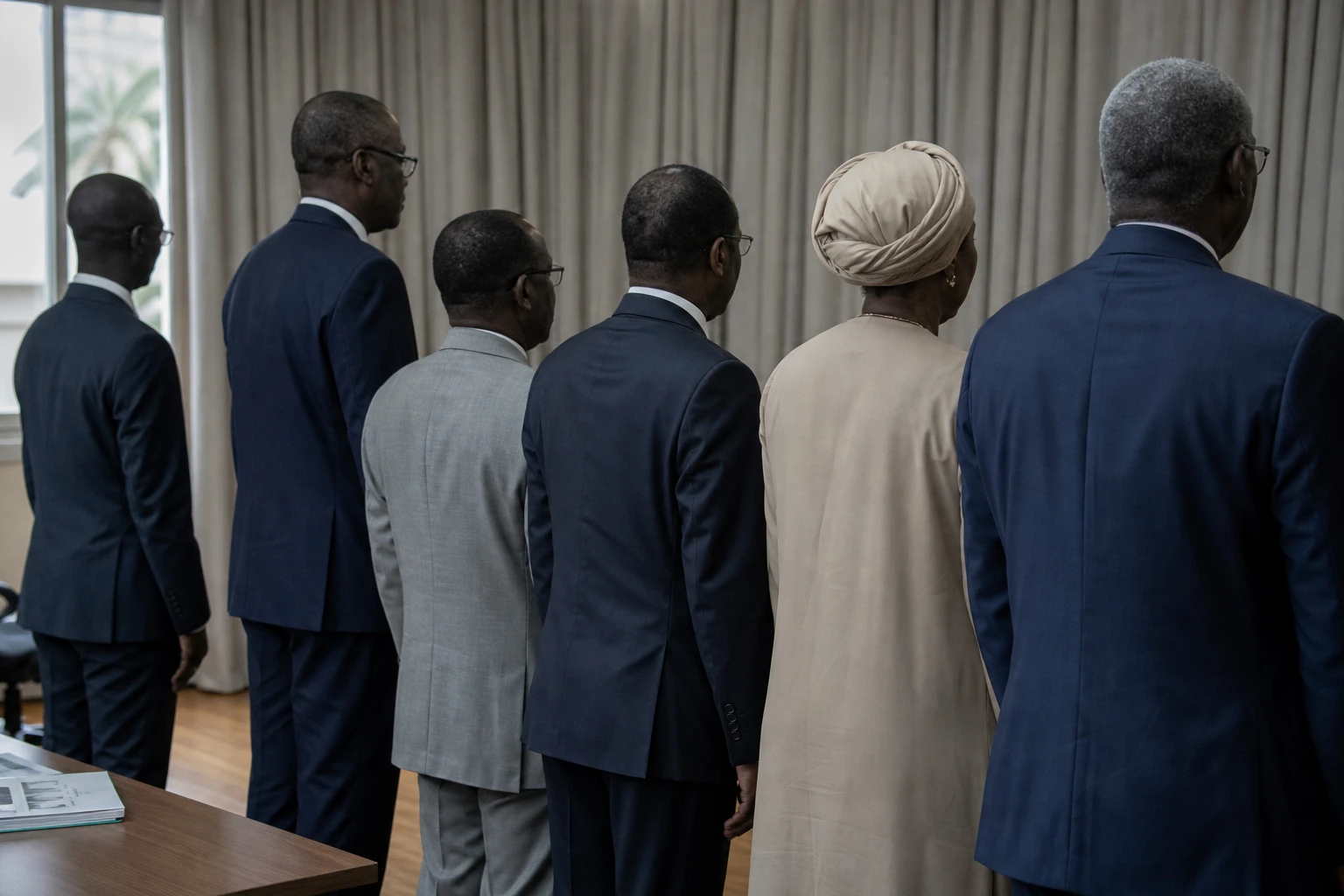
In Dakar, everyday costs are rising faster than incomes
When the household shopping basket comes under pressure, the inflation debate becomes tangible. In Senegal, price rises remain modest on the surface, but they are hitting first the items households cannot put off: food, transport and everyday services.
In August 2026, consumer prices rose by 1.2% year on year. The increase remains moderate compared with some rises seen elsewhere in the sub-region, but it is already weighing on urban families in Dakar, as well as rural households that are selling their produce for more while also paying more for goods they do not produce themselves.
This pressure comes in a country where keeping prices in check remains a central political objective. Senegal is part of the West African Economic and Monetary Union (UEMOA), whose common central bank, the BCEAO, seeks to preserve monetary stability in an area exposed to food, energy and geopolitical shocks. The region is therefore closely monitoring price movements in Senegal, as they reveal something about the strength of the real economy, not just the statistics.
Targeted increases, with housing and fuel acting as a brake
The clearest signal comes from food. Food and non-alcoholic beverages rose by 1.4% year on year. Restaurant and accommodation services increased by 2.2%, while personal care, social protection and miscellaneous goods rose by 2.5%. Transport goods and services, meanwhile, increased by 1.7%.
The pressure is not confined to a single category. Health prices also rose by 2.0%, while clothing and footwear were up 1.1%. At the other end of the index, some items fell, cushioning the overall increase. Housing, water, electricity, gas and other fuels declined by 0.9%. Without this fall, the overall index would probably have been higher.
Another point to watch is the 12.6% surge in prices for alcoholic beverages, tobacco and narcotics. This category accounts for less of household spending than rice, oil or transport, but it also reflects price pressures in segments that are highly sensitive to taxes, distribution channels and urban demand.
The report published by ANSD on 10 September 2026 thus shows low but widespread inflation. It does not describe a generalised price crisis. Rather, it shows a build-up of increases in ordinary expenses, alongside a few technical declines that limit the scale of the shock.
The lean season, fuel and public policy trade-offs
The timing is significant. Senegal is going through the lean season, the period between harvests when stocks dwindle and markets become more vulnerable to supply pressures. The food situation has deteriorated in several departments, increasing poor households’ dependence on market purchases.
To limit the shock, the state has mobilised more than CFAF 7.2bn. The funding covers cash transfers, food kits, nutritional support and assistance for livestock. The programme targets both vulnerable families and livestock farmers, whose incomes depend directly on pasture and the cost of animal feed. This choice says much about the country’s social structure: in Dakar, people are hit mainly by the rising cost of everyday shopping; in several inland areas, they also face the erosion of productive assets.
Transport has also played a part. Higher fuel prices have raised logistics costs and added to pressure on fares. The government adjusted pump prices in August after absorbing part of the shock through subsidies. In other words, the state sought to prevent international prices from being passed on too abruptly to local markets. This mechanism offers short-term protection, but it is costly for the public budget and does not address the underlying problem.
Against this backdrop, Senegal’s economic policy is moving on two fronts. On the one hand, emergency measures aim to protect purchasing power. On the other, deeper reforms seek to tackle structural causes: local production, secure supply, better-targeted assistance and more efficient subsidies. The government has also said it wants to move beyond simply managing the high cost of living towards more lasting structural reforms.
What this bout of inflation says about Senegal today
The issue goes beyond August alone. Senegal is entering a period of high social expectations, while its budgetary room for manoeuvre remains limited. The authorities want to extend social protection, better target vulnerable households and reduce leakages in subsidies. At the same time, the technical agreement reached with the IMF in early September paves the way for financial support of $2.2bn, amid efforts to consolidate public finances. This sequence shows that prices, the deficit and support for households are now interconnected.
For households in the formal economy, the increase is visible in shopping bills and fuel costs. For informal workers, it is felt chiefly through the erosion of real income, with no automatic wage indexation. For rural households, it also depends on the season, the availability of harvests and the state of livestock. And for the state, it demands a constant balancing act between immediate assistance and budgetary discipline.
The BCEAO, for its part, is maintaining a cautious approach. At its June 2026 meeting, it kept its main policy rate at 3.00%, in a regional environment where inflation remains broadly under control. In other words, Senegal is operating within a stable monetary area, but that stability does not remove domestic pressures linked to food, energy and logistics. This is where the difference lies between inflation that is statistically low and inflation that is socially felt.
Across West Africa, Senegal’s case is a reminder of a simple reality: price stability is measured by more than the annual figure. It is judged by a state’s ability to protect essential goods, contain imported shocks and make its support mechanisms more precise. In the UEMOA, where economic trajectories remain uneven, every price movement in Senegal also serves as a test of regional resilience.
The next point to watch lies as much in markets as in public policy decisions. Price movements in the final quarter will show whether August’s rise was merely seasonal or a sign of more persistent pressure on the cost of living.