Algeria
 Egypt
 Libya
 Morocco
 Sudan
 Tunisia
 Benin
 Burkina Faso
 Cabo Verde
 Côte d'Ivoire
 Ghana
 Guinea
 Guinea-Bissau
 Liberia
 Mali
 Mauritania
 Niger
 Nigeria
 Senegal
 Sierra Leone
 The Gambia
 Togo
 Cameroon
 Central African Republic
 Chad
 DR Congo
 Equatorial Guinea
 Gabon
 Republic of the Congo
 São Tomé and Príncipe
 Burundi
 Comoros
 Djibouti
 Eritrea
 Ethiopia
 Madagascar
 Malawi
 Mauritius
 Mozambique
 Rwanda
 Seychelles
 Somalia
 South Sudan
 Tanzania
 Uganda
 Angola
 Botswana
 Eswatini
 Lesotho
 Namibia
 South Africa
 Zambia
 Zimbabwe
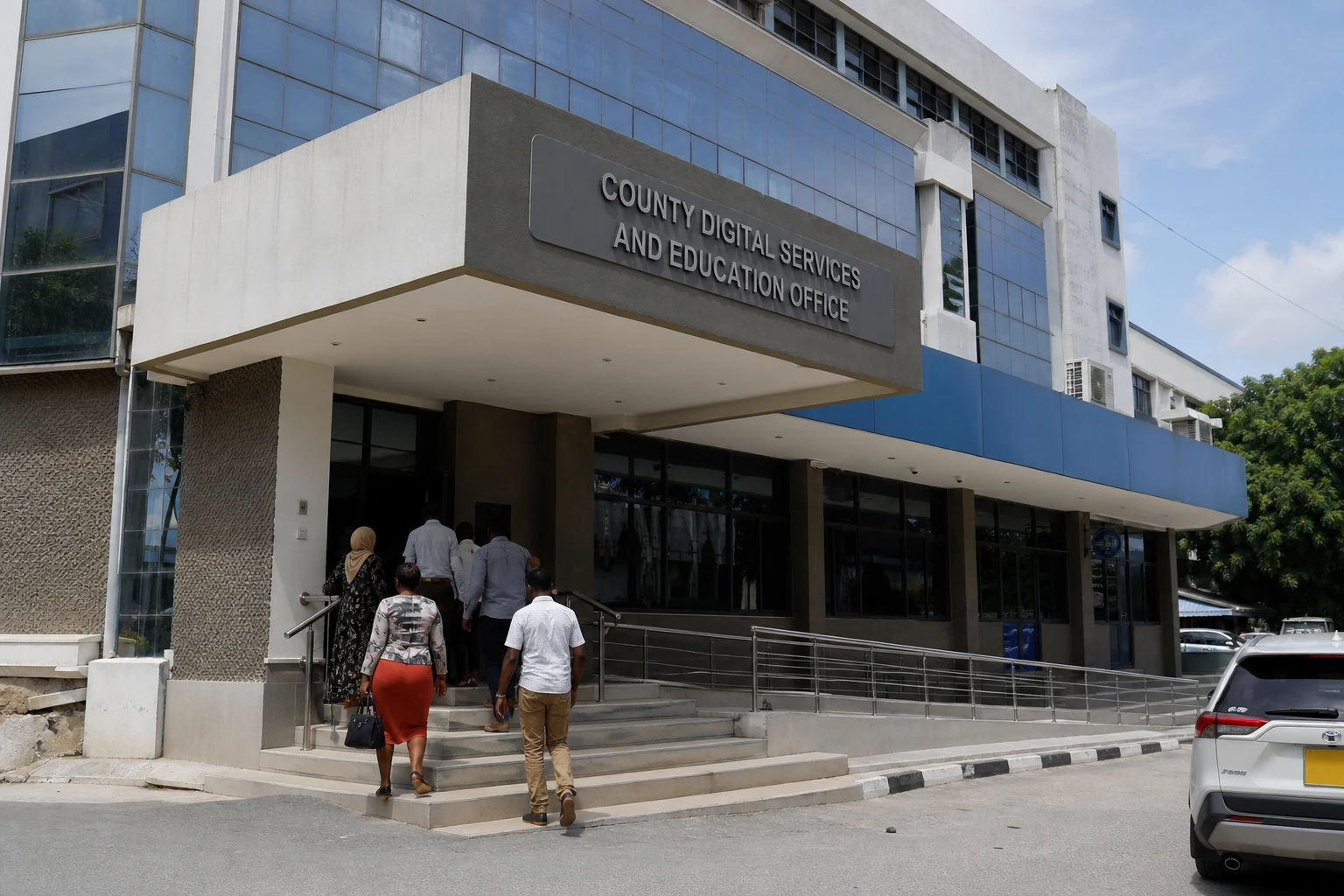
In Kenya, digital transformation is advancing, but not everywhere at the same pace
In Kenya, digital technology is no longer a distant promise. It is already a classroom tool, an administrative lever and an economic selling point. But between Nairobi, county capitals and areas that are still poorly connected, the question remains the same: who is really benefiting from this shift? The Kenya Digital Economy Acceleration Project, or KDEAP, was specifically designed to narrow this gap.
The programme forms part of the Kenyan government’s broader strategy to make the country a regional digital hub in East Africa. It is based on a simple principle: better connectivity for schools, public services and communities, so that digital growth does not remain concentrated in major urban centres. This approach is also aligned with Vision 2030 and, at continental level, with the African Union’s digital strategy.
What the figures show: visible progress in education, delays elsewhere
The progress review held on Monday 14 September 2026 highlighted tangible results in education. More than 62,000 teachers have been trained in digital tools. More than 5,000 interactive whiteboards have been installed. Nearly 100,000 pupils are already benefiting. In a country where reliable internet access remains uneven, these figures point to concrete progress, particularly for public schools.
The government now wants to move faster in underserved areas. This is a central issue. In rural counties, the question is not only whether classrooms have equipment. It also concerns connectivity, equipment maintenance, ongoing teacher training and schools’ ability to use the tools over time. Without these elements, the equipment may be visible, but its impact will diminish.
KDEAP is not limited to schools. Launched in 2023, it is worth $390 million, and its first phase runs from 2023 to 2028. The World Bank says the programme is also intended to improve broadband access, connect more public institutions, digitise some services and strengthen the skills needed for the digital economy. In short, it is about infrastructure as much as the capacity to use it.
The real challenge: delivering quickly in a country with highly uneven connectivity
The other side of the picture is less flattering. In a 2025 aide-mémoire, the World Bank noted that only 8 of the 25 results indicators had met or exceeded their targets. The same document reported disbursements of $10.6 million, or 3.1% of the approved financing, with several delays in procurement. This is no trivial matter: in digital projects, administrative delays can hold up both cables and skills.
These delays have very practical effects. For the central government, they undermine the credibility of a programme presented as a structural initiative. For schools, they delay access to educational tools now considered essential. For small businesses and users of public services, they prolong the gap between well-served areas and those left on the edge of the network. Kenya’s digital economy is advancing, but progress is still coming in stages.
The geographical dimension therefore remains decisive. The programme was designed to reduce disparities between regions, and the government itself acknowledges that the benefits of digital transformation are not evenly distributed. In a country where economic activity, access to information and administrative services are often concentrated along major corridors, the challenge is to connect outlying areas as quickly as the centres.
A closely watched phase in the region
This September review does not bring anything to a close. Rather, it serves as a test of pace. The Kenyan authorities and the World Bank will now have to accelerate the delayed components, particularly those related to procurement, connectivity and large-scale deployment. Timing matters, because the current phase must still deliver measurable results before 2028.
At regional level, the issue matters beyond Kenya alone. The country is seeking to strengthen its position in the East African Community, where competitiveness increasingly depends on the flow of data, services and skills. If Nairobi manages to deliver its programme, the message will be clear: Africa’s digital transformation is not just about announcements; it depends on infrastructure, training and governance.
Kenya already has recognised strengths, including a dynamic technology ecosystem and widespread use of mobile money. KDEAP aims to turn this advantage into lasting public capacity. That is where the next stage will be decided: not simply by the quantity of equipment installed, but by the system’s ability to make digital technology useful, accessible and equitable for Kenyans, from Nairobi to the most remote counties.