Algeria
 Egypt
 Libya
 Morocco
 Sudan
 Tunisia
 Benin
 Burkina Faso
 Cabo Verde
 Côte d'Ivoire
 Ghana
 Guinea
 Guinea-Bissau
 Liberia
 Mali
 Mauritania
 Niger
 Nigeria
 Senegal
 Sierra Leone
 The Gambia
 Togo
 Cameroon
 Central African Republic
 Chad
 DR Congo
 Equatorial Guinea
 Gabon
 Republic of the Congo
 São Tomé and Príncipe
 Burundi
 Comoros
 Djibouti
 Eritrea
 Ethiopia
 Kenya
 Malawi
 Mauritius
 Mozambique
 Rwanda
 Seychelles
 Somalia
 South Sudan
 Tanzania
 Uganda
 Angola
 Botswana
 Eswatini
 Lesotho
 Namibia
 South Africa
 Zambia
 Zimbabwe
When the state takes the wheel in a strategic market
In Antananarivo, the debate over fuel goes beyond technicalities. It touches on the continuity of electricity supplies, transport costs, companies’ margins and the Malagasy state’s ability to influence a vital sector. When diesel runs short or becomes more expensive, it is not only petrol stations that feel the impact: neighbourhood generators, urban buses, construction sites and part of the informal economy also take the hit. The question, then, is not only who imports, but who bears the risk when supplies come under pressure.
The shift is part of a broader political sequence. Madagascar belongs to SADC, the Southern African Development Community, which comprises 16 member states and makes economic integration, security of supply and the energy transition regional priorities. The African Union has also counted Madagascar among its members since 1963. In other words, the decision taken in Madagascar is not being made in isolation: it resonates across a region where energy has become both a lever of sovereignty and a test of governance.
What the downstream petroleum law changes
At the heart of the issue is Law No. 2026-006, validated by the High Constitutional Court on 3 August 2026. The text sets out the principles governing certain downstream petroleum activities — the part of the chain running from imports to the distribution of petroleum products. It authorises a public entity, the State Procurement of Madagascar, to intervene directly in hydrocarbon imports. The court found that the mechanism fell within the legislature’s remit and pursued an objective in the public interest: securing and maintaining continuity of national supplies.
On paper, the arrangement changes the logic of a sector long dominated by private operators. For more than 25 years, distributors selected their suppliers through open tenders. The SPM is now set to become the public linchpin, importing fuel and then supplying it to the market. The state promises more competitive prices on the international market. Oil companies, meanwhile, fear a loss of strategic autonomy and the concentration of financial risks in a single entity. The criticism is not merely ideological. It also concerns the SPM’s ability to take on an activity requiring substantial capital, guarantees and logistics.
The first test is already under way. The SPM has been mobilised to secure volumes for Jirama, the state-owned water and electricity company, whose power plants rely partly on diesel. Information published in late August points to a temporary mechanism involving 20,000 m³ of diesel made available to oil companies and a further 40,000 m³ offered for sale, 60,000 m³ in total. Other reports also refer to a shipment of 64,000 metric tonnes of diesel from Nigeria for Jirama. These figures show less a theoretical reform than its practical implementation, with volumes already committed to avert a disruption to electricity supplies.
A bet on sovereignty, but also an industrial test
The Malagasy government makes a simple case: if the state buys directly, it can negotiate better terms. In a context where international prices remain volatile, the argument has political logic. But the oil supply chain is about more than signing a contract. It relies on advance financing, insurance, chartering, delivery times and strict traceability. The market is planned several months ahead. If the new system disrupts this timetable, the risk is not abstract: it could mean delayed deliveries and, in turn, pressure on petrol stations, power plants and productive activities.
Private operators also highlight another sensitive issue: the SPM was created in 2019 and has so far worked mainly on rice purchases. Its capital is described as limited in the distributors’ advocacy document, which warns that a newcomer to the oil sector could face powerful global suppliers with fewer guarantees than private groups accustomed to international transactions. In an island economy such as Madagascar’s, this potential weakness matters. A single public-sector player that is not properly equipped could undermine the entire chain, whereas several importers previously shared the risk.
The question of origin adds a political dimension. In recent months, the Malagasy authorities have made a series of overtures towards various external partners, including in energy. But petroleum products remain subject to compliance rules and international sanctions that some buyers — notably airlines, construction companies, telecoms operators and mining firms — cannot ignore. Oil companies therefore fear that fuel imported without clear certification of origin could be difficult to sell to buyers bound by strict traceability requirements. This concern is commercial as much as diplomatic.
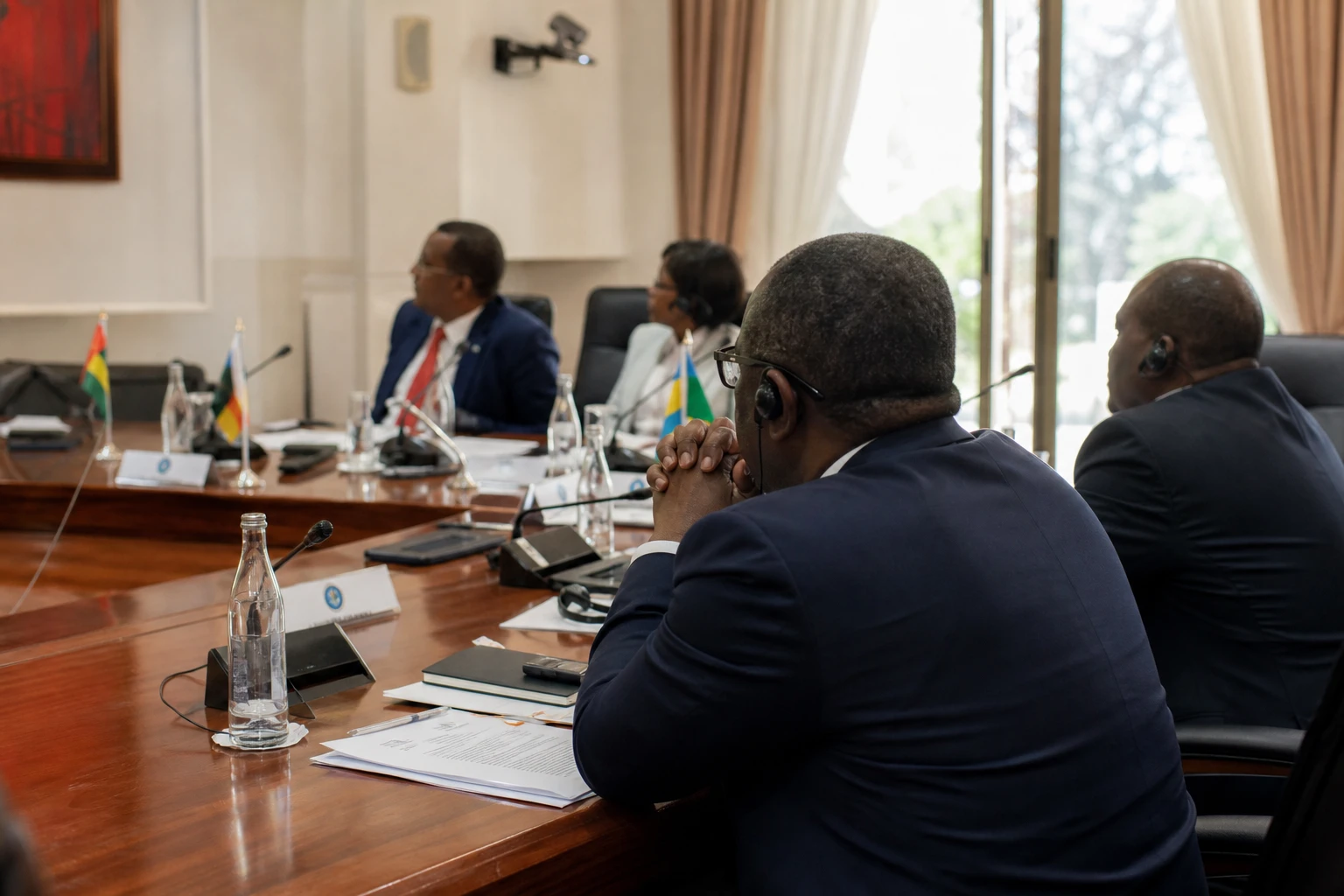
The regional context raises the stakes. SADC has put industrialisation and the energy transition at the centre of its agenda, and the August 2026 summit in Durban again called on Malagasy stakeholders to engage in dialogue and maintain stability. Madagascar must therefore show that it can secure its energy without creating new institutional vulnerabilities. For urban households, the immediate priority is to avoid queues, sharp price rises and power cuts. For exporting businesses, it is to guarantee the availability of traceable fuel. For the state, success will ultimately be measured by one thing: turning a political takeover into lasting operational capacity.
At heart, Madagascar is entering a very concrete test of economic sovereignty. If the SPM meets its deadlines, volumes arrive and the supply chain remains clear to operators, the model can be presented as an instrument of recovery. Otherwise, the country risks discovering that a public monopoly, when introduced too quickly, also concentrates mistakes, costs and responsibility. The real impact of this reform for Antananarivo and the rest of southern Africa will be determined in the months ahead.