Algeria
 Egypt
 Libya
 Morocco
 Sudan
 Tunisia
 Burkina Faso
 Cabo Verde
 Côte d'Ivoire
 Ghana
 Guinea
 Guinea-Bissau
 Liberia
 Mali
 Mauritania
 Niger
 Nigeria
 Senegal
 Sierra Leone
 The Gambia
 Togo
 Cameroon
 Central African Republic
 Chad
 DR Congo
 Equatorial Guinea
 Gabon
 Republic of the Congo
 São Tomé and Príncipe
 Burundi
 Comoros
 Djibouti
 Eritrea
 Ethiopia
 Kenya
 Madagascar
 Malawi
 Mauritius
 Mozambique
 Rwanda
 Seychelles
 Somalia
 South Sudan
 Tanzania
 Uganda
 Angola
 Botswana
 Eswatini
 Lesotho
 Namibia
 South Africa
 Zambia
 Zimbabwe
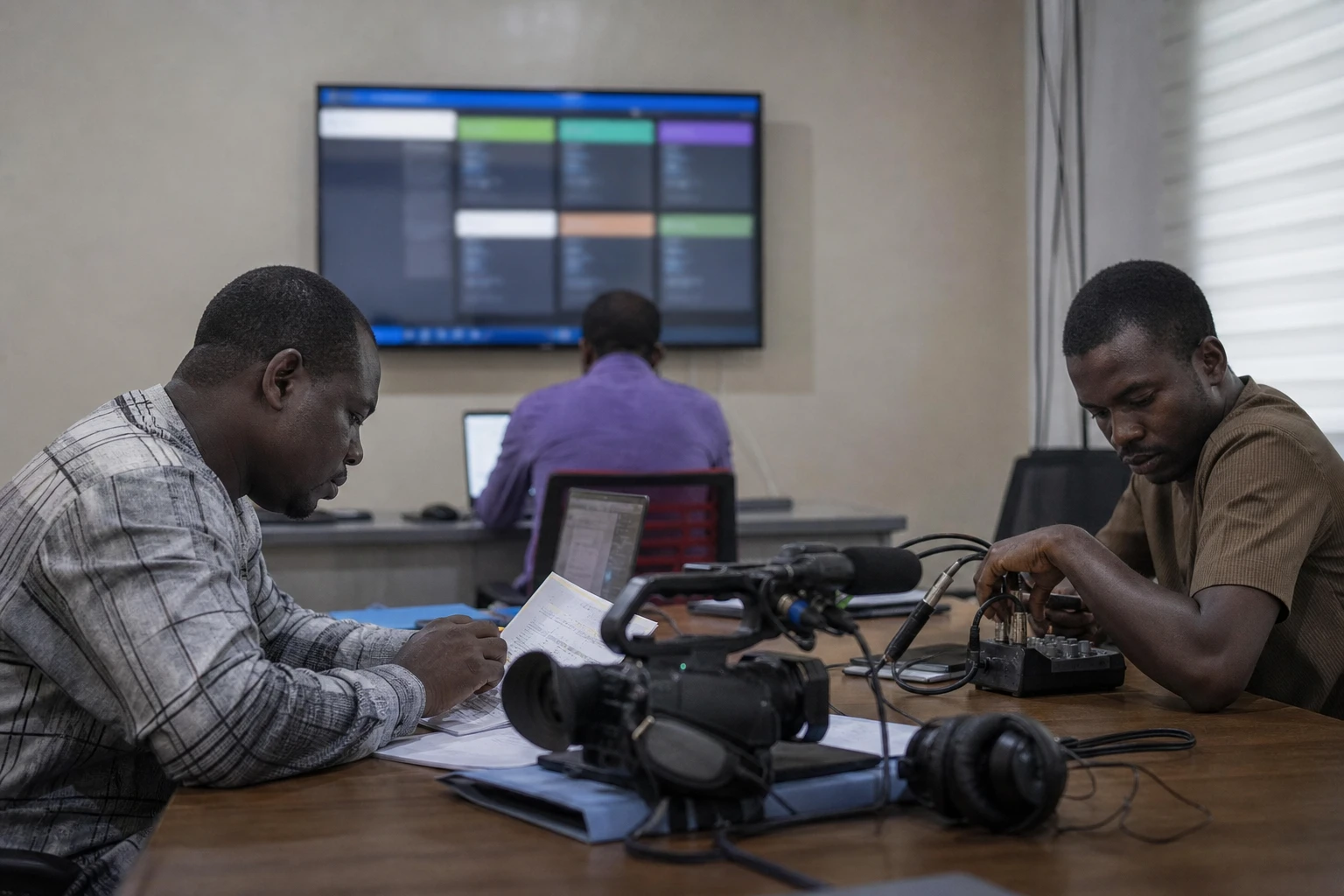
A school year under watch, but without giving up on education
In northern Benin, the start of the school year is not playing out only at the classroom door. It is also unfolding on the roads, in border villages and around the sites where the state must ensure children’s safety. On 14 September 2026, the government sought to send a clear signal: keep schools open while adapting arrangements in the most exposed areas.
It is a delicate balancing act. On one hand, the government is highlighting increased social support, including school kits, canteens and free tuition for all girls in public secondary schools from the 2026-2027 school year. On the other, it acknowledges that some schools in the north will have to be moved or brought together at sites considered safer. In a country where education is a strong marker of national cohesion, the security response cannot come at the cost of access to learning.
Northern Benin has been under pressure for several years
The area in question is not an abstraction. It refers to northern border municipalities, particularly in Alibori and Atacora, near Niger, Nigeria and Burkina Faso. Since armed threats in the Sahel have intensified and spilled over towards the Gulf of Guinea, Benin has had to strengthen its presence along these border corridors. The municipalities of Karimama, Malanville, Kandi, Matéri, Tanguiéta and Toucountouna, among others, regularly feature in protective measures and security alerts.
The authorities have already taken similar steps during previous school years, showing that the issue is no longer a one-off. As early as 2024, they began building new police stations in several border communities to strengthen security coverage. More broadly, the IOM reported in 2025 that the crisis had caused internal displacement in the north of the country, with host communities affected by population movements. The risk is therefore not only military. It is also educational, social and communal.
What relocating schools means in practice
The government says it wants to avoid exposing pupils, teachers and families to areas considered too vulnerable. In practice, this means some schools will not operate from their usual sites. Classes may be moved to secure locations, sometimes further away and sometimes harder to reach. This solution offers protection in the short term, but it also disrupts daily journeys, family arrangements and teacher attendance, especially in rural municipalities where transport options remain limited.
The government spokesperson referred, during an exchange in Parakou on 10 September 2026, to schools already closed or relocated in several high-risk communities. He did not give details on the number of schools affected or the number of pupils involved. The government is therefore retaining operational flexibility, but also leaving uncertainty over the true scale of the adjustment. This caution is understandable in a sensitive context. However, it makes close monitoring of educational continuity essential, as a poorly planned relocation could end up penalising the most vulnerable pupils.
The issue is particularly important for girls. From the 2026-2027 school year, free tuition for all girls in public secondary schools is a significant education policy measure. It reduces a direct cost for households and can limit family decisions that might otherwise discourage girls from continuing their studies. But this progress will have its full effect only if girls can actually reach a school that is accessible, stable and safe. A social measure loses its force when insecurity undermines classroom attendance.
Border security, public education and regional cohesion
Benin faces two urgent challenges here. The first is security. The second is social. The country must protect its northern borders without allowing the state’s educational role to recede. This is also a regional issue, as the threat facing these municipalities does not stop at administrative boundaries. It is part of a cross-border dynamic in which the movement of armed men, weapons, information and displaced people makes purely national responses insufficient.
In this context, ECOWAS retains a role in political and security coordination, even as coastal states such as Benin look above all for tangible results on the ground: intelligence-sharing, securing routes, protecting civilians and ensuring continuity of public services. The decision to relocate schools illustrates a pragmatic approach. It shows that a state can adapt its actions without retreating or accepting that fear should dictate the school calendar indefinitely.
The decision’s continental significance is clear. It is a reminder that violent extremism does not destroy only military posts. It also disrupts schools, local economies, family mobility and confidence in the future. In Benin, the 2026-2027 school year will therefore be watched beyond Porto-Novo and Cotonou. It will show whether the country can uphold two imperatives at once: protect the north and make education a continuous public service, even in areas of tension. That is where the strength of a state response is measured.