Algeria
 Egypt
 Libya
 Morocco
 Tunisia
 Benin
 Burkina Faso
 Cabo Verde
 Côte d'Ivoire
 Ghana
 Guinea
 Guinea-Bissau
 Liberia
 Mali
 Mauritania
 Niger
 Nigeria
 Senegal
 Sierra Leone
 The Gambia
 Togo
 Cameroon
 Central African Republic
 Chad
 DR Congo
 Equatorial Guinea
 Gabon
 Republic of the Congo
 São Tomé and Príncipe
 Burundi
 Comoros
 Djibouti
 Eritrea
 Ethiopia
 Kenya
 Madagascar
 Malawi
 Mauritius
 Mozambique
 Rwanda
 Seychelles
 Somalia
 South Sudan
 Tanzania
 Uganda
 Angola
 Botswana
 Eswatini
 Lesotho
 Namibia
 South Africa
 Zambia
 Zimbabwe
As screens move, a whole country is still searching for its place
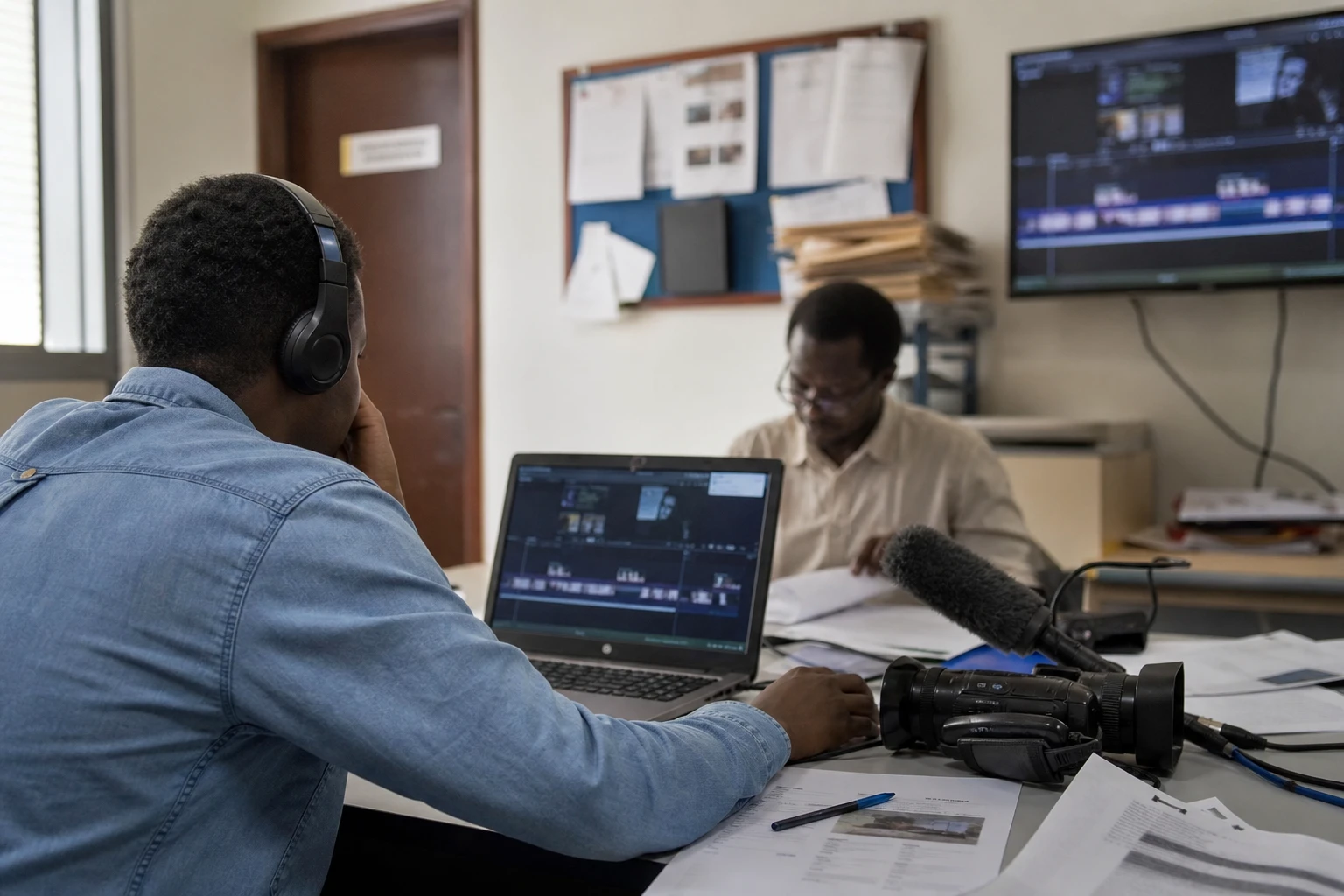
In Sudan, cinema lacks more than just cinemas. It lacks stability, distribution networks and, since 2023, a safe place to film. Yet Sudanese filmmakers continue to write, shoot and edit works about Khartoum, exile and memory, often for audiences they encounter abroad before they are seen at home.
This shift in perspective is no trivial matter. It says something about a country where culture remains alive even as infrastructure has collapsed, and where public space is also being reshaped in the diaspora, notably in Cairo, Nairobi, Paris and elsewhere in Europe. The Arkawït festival, held in Paris from 2 to 6 September 2026, is part of this fragmented geography.
A long heritage, broken by the closure of public space
At independence in 1956, Sudan had a network of cinemas that made it one of Africa’s early centres of cinema. Several sources recall that the country then had dozens of cinemas, with a notable concentration in Khartoum, before a long decline began in the late 20th century.
The shift intensified after Omar al-Bashir took power in 1989. Accounts and major studies agree on the gradual closure of cinemas, the subordination of cultural institutions and the disappearance of distribution networks. Khartoum’s former Coliseum cinema, turned into a riot police station, is often cited as a symbol of this rupture.
The 1990s deepened the isolation. International sanctions and economic collapse made it harder to import films, film stock and equipment. From then on, Sudanese cinema survived in fragments, without a strong domestic market or public policy capable of sustaining production over the long term.
A new generation took shape in the gaps
Despite this context, a generation of filmmakers revived creative work from the 2000s onwards. Digital technology made it possible to overcome some of the material obstacles. Workshops, collectives and organisations such as the Sudan Film Factory then played a decisive role in training and passing on skills.
Founded around 2009 with support from the Goethe-Institut, the organisation trained more than 300 young filmmakers, according to several consistent sources. It helped rebuild a basic professional pipeline where schools, funding and cinemas were lacking.
It was also during this period that films which became emblematic emerged. Talking About Trees, about the determination of Sudanese filmmakers to reopen a cinema in Khartoum, and You Will Die at Twenty, which came to prominence around the 2019 revolution, showed the vitality of a cinema forced to contemplate its own disappearance.
Exile is no longer just a consequence; it has become a place of production
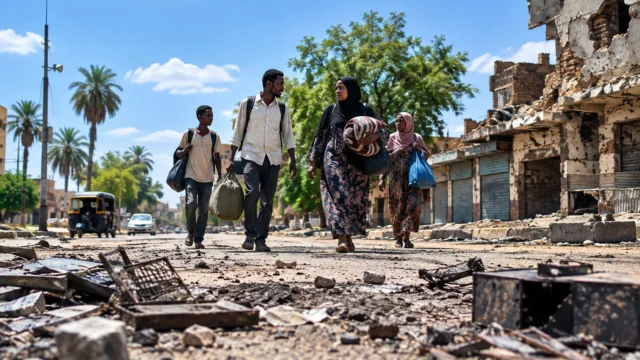
The war that began on 15 April 2023 between the Sudanese Armed Forces and the Rapid Support Forces has aggravated an already deep crisis. The UN and UNHCR now describe Sudan as the world’s largest internal displacement crisis, with more than 11 million people displaced within the country by the end of 2024, and nearly 12 million still displaced in estimates available in 2026.
In this context, cinema is exiled not only through its authors, but also through its shoots. The documentary Khartoum, begun in the Sudanese capital, was reorganised and continued in Nairobi when the directors and several participants became refugees. This shift illustrates a broader phenomenon: Sudanese creative work is now being made outside the country, for want of a safe and stable space in Khartoum.
The case of Goodbye Julia, the first Sudanese feature film presented in the Official Selection at Cannes in 2023, also shows this growing reliance on co-productions and external networks. Funding, the circulation of works and screening venues are often located somewhere other than the country where the story being told originates.
What this says about Sudan, and the region
Sudanese cinema tells a very African contradiction, but one rarely expressed so clearly: a country can retain a strong artistic memory while losing its cultural infrastructure. In Sudan, the issue is not just creative work. It also concerns the circulation of works, the right to open a cinema, and the capacity to train, distribute and preserve.
This cultural fragility is part of a wider political crisis. In June 2026, the African Union reaffirmed its commitment to Sudan’s unity, sovereignty and territorial integrity, while calling for an inclusive political process. IGAD, the regional organisation for the Horn of Africa, for its part stresses the need for a Sudanese-led settlement, as national institutions remain fragmented by the war.
The cultural sector does not exist on the margins of this crisis. In 2026, UNESCO stepped up efforts to safeguard Sudan’s heritage, particularly in Khartoum, showing that reconstruction concerns not only roads and ministries, but also museums, archives and the professions of memory. Cinema is fully part of this struggle.
In the short term, the challenge is both simple and daunting: can an industry be reborn without national cinemas, lasting security or the normal movement of people? In the longer term, Sudan is testing a broader idea for the continent: how to preserve cultural industries when war scatters artists, displaces audiences and reshapes the capitals of creative work.