Algeria
 Egypt
 Libya
 Morocco
 Sudan
 Tunisia
 Benin
 Burkina Faso
 Cabo Verde
 Côte d'Ivoire
 Ghana
 Guinea
 Guinea-Bissau
 Liberia
 Mali
 Mauritania
 Niger
 Nigeria
 Sierra Leone
 The Gambia
 Togo
 Cameroon
 Central African Republic
 Chad
 DR Congo
 Equatorial Guinea
 Gabon
 Republic of the Congo
 São Tomé and Príncipe
 Burundi
 Comoros
 Djibouti
 Eritrea
 Ethiopia
 Kenya
 Madagascar
 Malawi
 Mauritius
 Mozambique
 Rwanda
 Seychelles
 Somalia
 South Sudan
 Tanzania
 Uganda
 Angola
 Botswana
 Eswatini
 Lesotho
 Namibia
 South Africa
 Zambia
 Zimbabwe
In Dakar, the flame is more than a symbol. It also says something more concrete: a country preparing to host, for the first time on African soil, a major Olympic event, under the gaze of its young people and the continent. The dates are 31 October to 13 November 2026, and the relay launched this weekend opens the final major phase before the opening.
Senegal carefully staged the flame’s arrival in Dakar on Saturday 12 September. Lit a few days earlier in Athens, it was welcomed in the heart of the capital before a relay announced across the country’s 14 regions. Organisers say there will be around 450 torchbearers, while the welcome ceremony was marked by a symbolic turnout of women at Place du Souvenir Africain.
A sporting moment, but also a political and territorial one
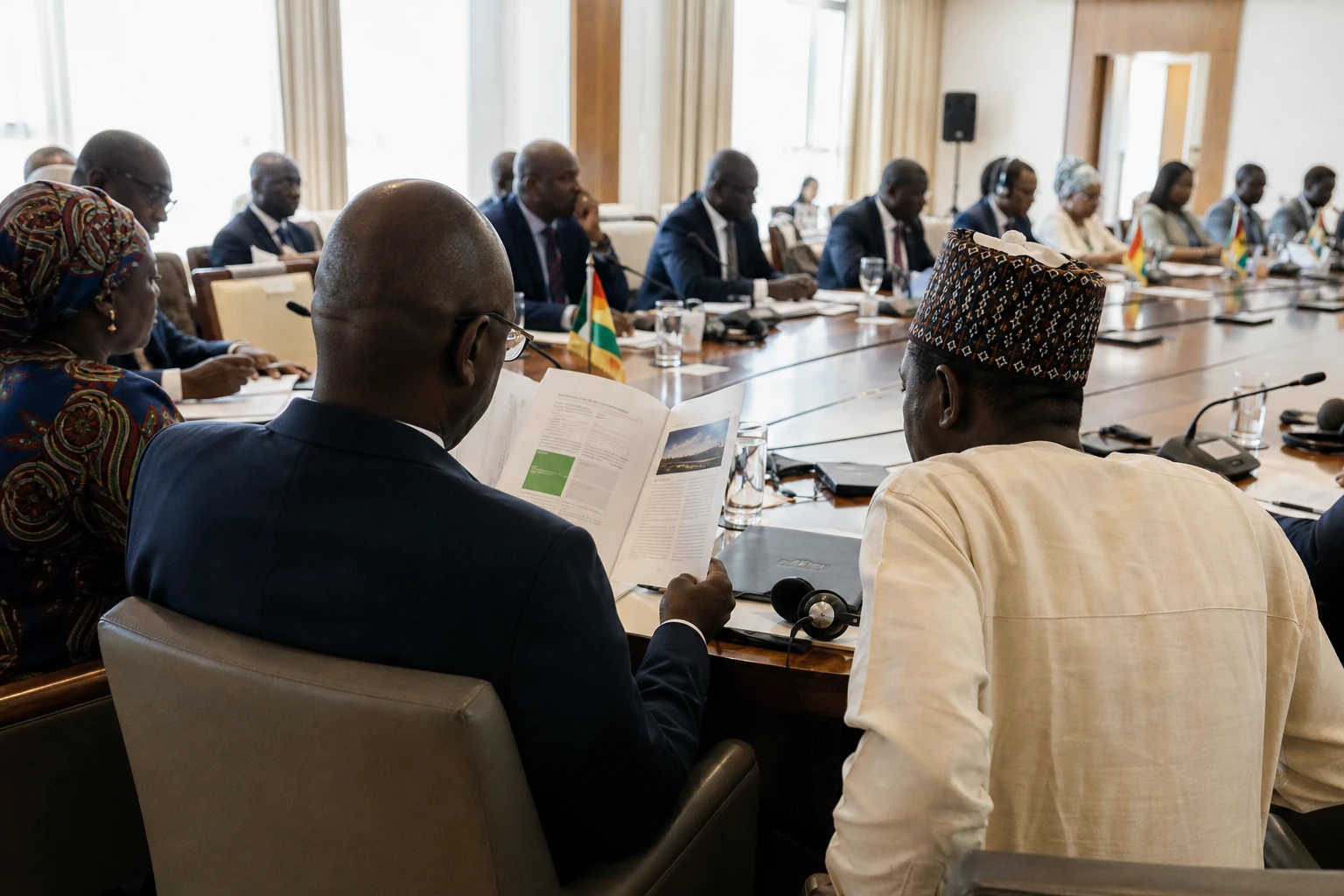
The choice of Dakar goes far beyond the sporting calendar. The 2026 Youth Olympic Games will be the first Olympic event ever held in Africa. For Senegal, this puts Dakar, Diamniadio and Saly within a shared geography of image and infrastructure. For ECOWAS, it is also a rare regional marker: a major international event hosted by a West African state at a time when the region is seeking to preserve its visibility, stability and organisational capacity.
The context matters. For several years, the Dakar 2026 project has served as a showcase for investment in sports facilities, transport and accommodation. Senegal’s Ministry of Sports has, in particular, referred to work under way at several sites, including Iba Mar Diop Stadium, the Olympic swimming pool, developments in Diamniadio and facilities in Saly. The challenge is therefore not simply to host competitions for two weeks, but to ensure lasting use for facilities designed to endure.
In West Africa, where major sports infrastructure often serves as a political argument before becoming a test of maintenance and funding, Dakar 2026 will be closely watched. Senegal is pursuing a different ambition: to show that a continental event can be designed around local needs, rather than as a mere imported showcase. The announced distribution of venues across Dakar, its new suburb and the Petite-Côte confirms this territorial wager.
What the flame really heralds
On the sporting front, the programme is already substantial. The Games are expected to bring together around 2,700 athletes, with 151 events and 35 disciplines, including 25 competitive sports and 10 so-called engagement sports. The organising committee also stresses a historic first for the Olympic movement: full equality between women and men, both in the overall quota and in the competition programme.
This is no trivial detail. It speaks to the place of young female athletes, access to facilities and how a host country can turn a major event into a lever for social change. In Dakar, the flame ceremony also highlighted women torchbearers, in a staging that links national memory, female representation and a vision of the future. In a country where young people make up the majority, the message is aimed as much at the capital’s working-class neighbourhoods as at secondary cities and less visible regions.
The event must also be viewed through its timetable. The relay is to travel around the country before returning to Dakar for the opening. This creates a political and symbolic circulation: from the coast to inland regions, each stage is intended to remind people that the Games are not just the capital’s business. The Olympic project thus becomes a tool for national cohesion, as well as a test of coordination between local authorities, government services and the organising committee.
Senegal also wants to make these Games a continental signal. The official programme speaks of legacy, inclusion, diversity and better integration of African youth into new sports disciplines. Amadou Mahtar Mbow University, in Diamniadio, is to host the Olympic Village. This choice links a public university, a new city and a global competition. The message is clear: sport is not separate from education, urban planning or young people’s training.
The continental significance is therefore clear. If Dakar 2026 goes ahead as planned, Africa will not merely have hosted a competition. It will have shown that it can design, deliver and stage a major Olympic event according to its own priorities. The next stage to watch is straightforward: the national relay through all 14 regions, followed by the official opening on 31 October 2026. That is when Senegal’s ability to turn a symbol into a lasting achievement will be measured, beyond the ceremony itself.