Algeria
 Egypt
 Libya
 Morocco
 Sudan
 Tunisia
 Benin
 Burkina Faso
 Cabo Verde
 Côte d'Ivoire
 Ghana
 Guinea
 Guinea-Bissau
 Liberia
 Mali
 Mauritania
 Niger
 Nigeria
 Senegal
 Sierra Leone
 The Gambia
 Togo
 Cameroon
 Central African Republic
 Chad
 DR Congo
 Equatorial Guinea
 Gabon
 Republic of the Congo
 São Tomé and Príncipe
 Burundi
 Comoros
 Djibouti
 Eritrea
 Ethiopia
 Madagascar
 Malawi
 Mauritius
 Mozambique
 Rwanda
 Seychelles
 Somalia
 South Sudan
 Tanzania
 Uganda
 Angola
 Botswana
 Eswatini
 Lesotho
 Namibia
 South Africa
 Zambia
 Zimbabwe
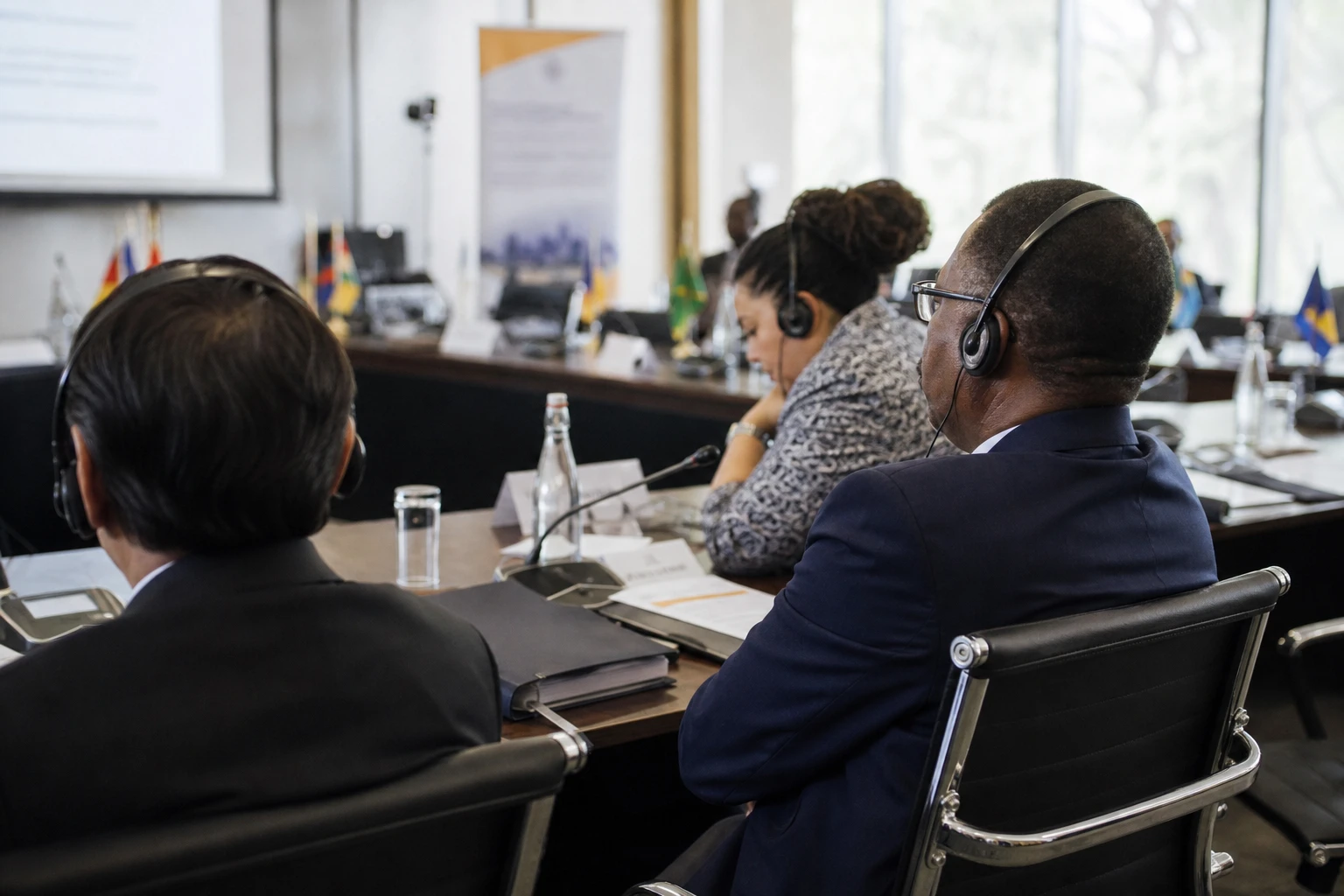
In Nairobi, the discussion was about more than façades or rooflines. It touched on a broader question: how to build African cities capable of absorbing rapid growth without sacrificing clean air, public space or local materials.
The question took concrete form in Kenya at the first Pan-African Architecture Biennale, held in the Kenyan capital from 7 to 11 September 2026. The event, presented as the first continental platform dedicated to the built environment, brought together architects, urban planners, researchers and students from several African countries and the diaspora. It comes at a time when urbanisation across the continent is accelerating, forcing states, municipalities and professionals working on the built environment to rethink their priorities.
Nairobi, a showcase for a continental debate
The choice of Nairobi was no accident. Kenya occupies a distinctive place in East Africa: the Kenyan capital is a political, economic and academic centre, as well as a laboratory for urban experiments, some successful, others uneven. The city concentrates the familiar pressures facing large African metropolises: land scarcity, congested traffic, housing needs and inequalities between formal and informal neighbourhoods.
Holding the biennale in Nairobi also builds on a regional trend. Across the East African Community, capital cities are growing rapidly and secondary cities are becoming more important. Local authorities are seeking answers on affordable housing, transport, energy and climate resilience. Architecture is no longer simply the art of building. It is becoming a tool of public policy.
The challenge extends beyond Kenya. According to UN-Habitat, urbanisation is one of the continent’s major drivers of change. The UN agency notes that Africa’s urban population is expected to continue growing sharply in the coming decades, making better planning of infrastructure, urban land and basic services essential. In Nairobi, this reality provided the backdrop to the biennale.
Local materials, a modernity rooted in place
The projects presented during the week emphasised one common point: the future of African cities cannot be conceived using imported models unchanged. The architects gathered in Nairobi championed a modernity rooted in local climates, practices and resources.
Christian Benimana, an architect and designer based in Kigali, Rwanda, called for more shared spaces and for a city that reconnects people with nature. His argument reflects a simple idea: urban density need not mean social isolation. In several African capitals, the question is not simply how to build more, but how to build differently.
In Nairobi, Kenyan architect Timothy Abong’o noted that nature can also be reflected in the choice of materials. On the Kenyan coast, thatch remains associated with building traditions suited to the climate. This is an important reminder. In many African cities, standardised buildings that are poorly ventilated and heavily reliant on air conditioning drive up energy costs and leave households and businesses more vulnerable.
Aboubacar Sidiki Komara, an architect from Guinea, highlighted bamboo, a fast-growing resource and renewable building material. His argument is a strategic one: in countries where rivers, forests, clay, laterite or plant fibres are abundant, the issue is not a lack of solutions, but whether they are recognised by markets, standards and architecture schools. In this view, Guinea is not only a country of mineral resources. It is also a site of material innovation.
Beninese architect Chadrac Agbodjogbe identified another central challenge: adapting to the climate. Building in Nairobi is not the same as building in Bamako. Temperatures, humidity, winds, material availability and patterns of land use differ. That is why buildings must be designed for each environment. Otherwise, cities inherit structures that are expensive to cool and maintain, and often poorly suited to local needs.
What the biennale means for African cities
The event’s impact is first and foremost professional. It gives continental visibility to African architects seeking to move beyond intellectual dependence on models from Europe, Asia or North America. This is more than a slogan. It has tangible effects on competitions, technical standards, training and public procurement.
It also affects residents. In central neighbourhoods and on the outskirts alike, urban planning decisions determine transport costs, access to water, air quality and the length of daily journeys. A city that is more walkable, better ventilated and better equipped with shared spaces benefits first those who bear the heaviest costs of congestion: informal workers, students, low-income families, street vendors and residents of peri-urban areas.
At the institutional level, this debate resonates with the agendas of the African Union, UN-Habitat and African cities themselves. The African Urban Agenda and the goals of Agenda 2063 emphasise inclusive, productive and sustainable cities. The Nairobi biennale gives this ambition a human face. It shows that solutions can come from architects, local authorities, universities and local materials industries, not only from major donors or international firms.
The question that remains is what happens next. The Kenyan biennale has spotlighted a generation of practitioners seeking to bring together heritage, climate, technology and social needs. It remains to be seen whether states, municipalities and investors will follow. On a continent where the city of tomorrow is already taking shape, the Nairobi debate is a reminder that there is no single African modernity, but many ways of living, saving energy and making room for the shared good.