Algeria
 Egypt
 Libya
 Morocco
 Sudan
 Tunisia
 Benin
 Cabo Verde
 Côte d'Ivoire
 Ghana
 Guinea
 Guinea-Bissau
 Liberia
 Mali
 Mauritania
 Niger
 Nigeria
 Senegal
 Sierra Leone
 The Gambia
 Togo
 Cameroon
 Central African Republic
 Chad
 DR Congo
 Equatorial Guinea
 Gabon
 Republic of the Congo
 São Tomé and Príncipe
 Burundi
 Comoros
 Djibouti
 Eritrea
 Ethiopia
 Kenya
 Madagascar
 Malawi
 Mauritius
 Mozambique
 Rwanda
 Seychelles
 Somalia
 South Sudan
 Tanzania
 Uganda
 Angola
 Botswana
 Eswatini
 Lesotho
 Namibia
 South Africa
 Zambia
 Zimbabwe
As public space closes, the battle moves online
In Burkina Faso, pressure on journalists no longer comes only through the courts, summonses or conscription. It is also taking the form of a digital war of attrition, more diffuse, faster and often harder to document. In a country where information is already weakened by insecurity, this online offensive targets people as much as their credibility.
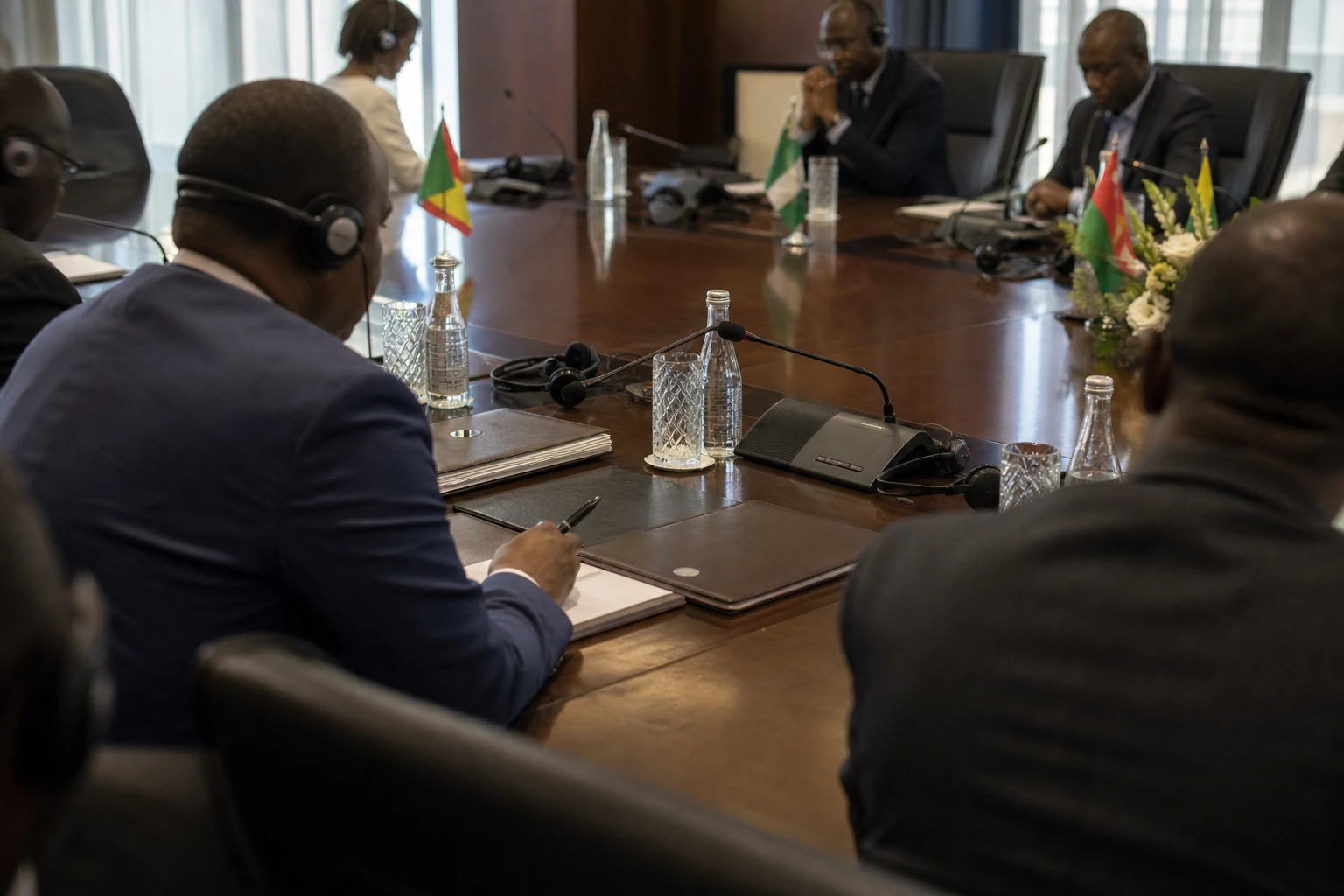
The phenomenon is part of a broader pattern observed in the Alliance of Sahel States, formed through closer ties between Burkina Faso, Mali and Niger. Since the three countries’ effective withdrawal from ECOWAS on 29 January 2025, regional balances have shifted, but the question of civil liberties remains unresolved. In Ouagadougou, Burkina Faso’s capital, journalists work in an environment where dissent is increasingly treated as a political threat.
An organised harassment machine with links reaching into circles of power
A recent investigation has uncovered a network presented as a group supporting the junta but operating as a digital militia. Its name crops up repeatedly in accounts from Burkinabè journalists: BIR-C, short for Rapid Communications Intervention Battalion. Behind the acronym is not a clearly identified official body, but a network of accounts, amplifiers and private conversations used to spread propaganda, identify targets and launch waves of harassment.
Several prominent media figures have been targeted. Issaka Lingani, editor-in-chief of L’Opinion, is among the names journalists themselves cite as one of the early targets of this machine. Others have seen threats move from the digital realm into the real world. Conscription has followed critical broadcasts, and some reporters have been sent to the front, sometimes after months of pressure. In a country at war with armed groups, this practice dangerously blurs the line between national mobilisation and political punishment.
The case of Yacouba Ladji Bama, founder of Bam Yinga, illustrates this pattern. Despite a court ruling that found the conscription unlawful, he was forcibly sent to the front for more than ten months, according to information corroborated by several press freedom organisations. Other journalists, including Atiana Serge Oulon, Serge Oulon, Adama Bayala and Kalifara Séré, have disappeared after being abducted between June 2024 and 2025. The authorities later acknowledged before the African Commission on Human and Peoples’ Rights that several of them had been conscripted under the general mobilisation decree of April 2023.
Visible targets, scattered evidence and questions over political responsibility
The heart of the case lies in the combination of several levels of activity. On one side, widely followed social media accounts expose journalists, insult them and portray them as enemies of the nation. On the other, signs of coordination have emerged in private exchanges linked to the network. In these conversations, investigators identified the number of Defence Minister Célestin Simporé as appearing in a group attributed to BIR-C. Pro-junta writer Adama Siguiré also appears as an active amplifier.
This proximity is not, by itself, enough to establish direct public funding. But it sheds light on a specific political climate. In Ouagadougou, protecting institutions now often takes precedence over protecting the right to debate. The results are clear: journalists hesitate before publishing, newsrooms censor themselves, and critical voices go into exile or fall silent. For the population, particularly outside the capital, this further restricts access to useful information about security, abuses and the management of the crisis.
The case of British-Sudanese journalist Yousra Elbagir is telling. After interviewing Captain Ibrahim Traoré in April, she was subjected to a coordinated digital raid. This kind of attack is not designed simply to silence one person. It also serves to deter other journalists, local and foreign, who might investigate the authorities or the security situation. It is a form of social control through fear, using modern tools against an age-old target: freedom to report.
What this means for Burkina Faso and beyond
For Burkina Faso, the stakes go beyond the press. When journalists are harassed, conscripted or reported missing, the quality of public debate collapses. In a country facing insecurity, citizens need reliable information about movements, attacks, public services and government decisions. Yet the subjugation of the media also leaves displaced families, traders, teachers and local actors more vulnerable, as they rely on this information to organise.
At the regional level, the case of Burkina Faso points to a broader trend in the Sahel. Similar mechanisms for putting pressure on critical voices have also been documented in Mali. In both countries, the concentration of power, the security crisis and the expansive use of the language of “national interest” are often used to justify restrictions. Leaving ECOWAS has further reduced a regional framework for political dialogue, even as the AES seeks to build its own institutions and its own narrative of sovereignty.
At continental level, the signal is worrying. The African Commission on Human and Peoples’ Rights has been seized of the matter, but institutional silence or slow responses leave a void. Meanwhile, Burkinabè journalists continue to work under pressure, in a context where media suspensions, abductions and conscription have become precedents. What is unfolding in Ouagadougou therefore concerns the whole continent: the ability of states to protect the right to report, even amid the most severe crises.
What happens next will depend on several deadlines already in view. The Burkinabè authorities will have to clarify the fate of journalists still reported missing. Regional organisations will have to say whether press freedom still has a place in the reshaping of the Sahel. And Burkinabè society will have to keep defending a simple principle: free information does not weaken a country. It prevents it from closing in on itself.