Algeria
 Egypt
 Libya
 Morocco
 Sudan
 Tunisia
 Benin
 Cabo Verde
 Côte d'Ivoire
 Ghana
 Guinea
 Guinea-Bissau
 Liberia
 Mali
 Mauritania
 Niger
 Nigeria
 Senegal
 Sierra Leone
 The Gambia
 Togo
 Cameroon
 Central African Republic
 Chad
 DR Congo
 Equatorial Guinea
 Gabon
 Republic of the Congo
 São Tomé and Príncipe
 Burundi
 Comoros
 Djibouti
 Eritrea
 Ethiopia
 Kenya
 Madagascar
 Malawi
 Mauritius
 Mozambique
 Rwanda
 Seychelles
 Somalia
 South Sudan
 Tanzania
 Uganda
 Angola
 Botswana
 Eswatini
 Lesotho
 Namibia
 South Africa
 Zambia
 Zimbabwe
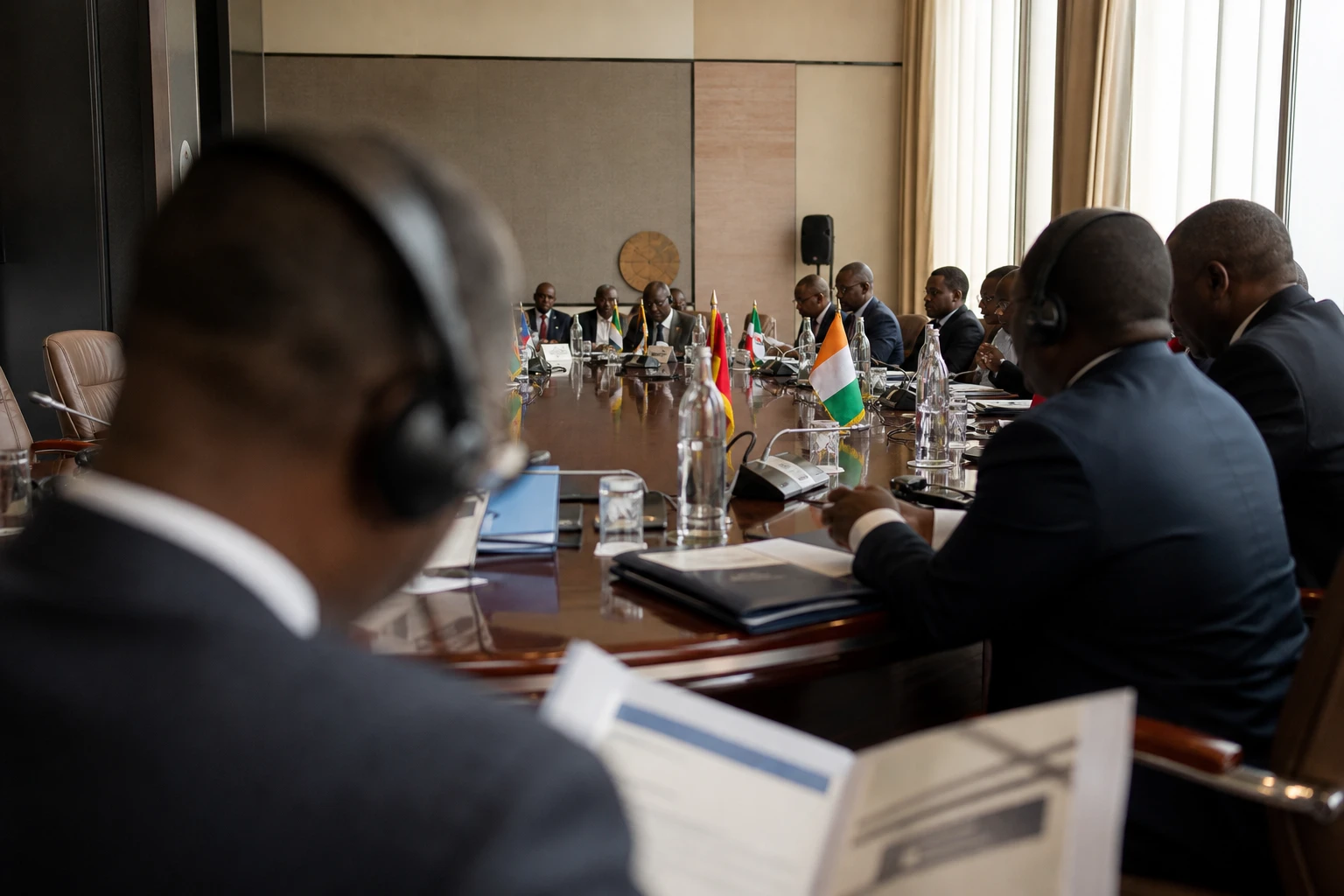
Rural areas still lack electricity networks
In Burkina Faso, electricity is about more than just generation. It affects schooling, healthcare, food preservation and the stability of small businesses. When power is unavailable, it is remote municipalities, rural health centres and informal workshops that pay the highest price. The new target set by the authorities addresses a very practical challenge: connecting more households, while also ensuring the network reaches areas where supply is still unreliable.
This issue is part of a broader regional trend. In West Africa, electricity integration advances in fits and starts, driven by interconnections and funding. Burkina Faso is also part of Mission 300, an initiative led by the World Bank and the African Development Bank that aims to provide 300 million Africans with access to electricity by 2030. In this context, national compacts seek to combine the grid, mini-grids, solar power and stronger public utilities.
What the Burkinabè government plans
On Thursday 10 September 2026, in Bobo-Dioulasso, the Council of Ministers approved funding of more than CFAF 104 billion to increase the country’s energy capacity. According to the official report, the funding is intended to strengthen the resources of SONABEL, the national electricity company, and the newly established Agence Faso Vêenem, while supporting the expansion of transmission and distribution networks. The stated goal is to reach 70% electrification by 2030.
The announcement did not come out of nowhere. The 2026-2030 National Energy Compact sets a broader target: 90% national access to electricity by 2030, including 100% in urban areas and 70.73% in rural areas. The official document states that the national electrification rate was 34.20% in 2024. It also says the urban rate stood at 87.83%, compared with 10.21% in rural areas.
The details matter. The authorities are not relying solely on new power plants. The compact also provides for decentralised solutions, solar mini-power plants, network equipment and greater use of public-private partnerships. The June 2026 document even sets out a network expansion pathway, with additional medium- and low-voltage lines, substations to be built or rehabilitated, and a larger share of solar power in the national energy mix.
A stark urban-rural divide remains
The core problem remains the gap between Ouagadougou, Bobo-Dioulasso and rural areas. The World Bank had already noted in its July 2025 economic update that access to electricity remained well below the regional average. In a technical document, the institution said that in 2023 urban access had reached 87.0%, while the rural rate remained at 7.0%. The Burkinabè compact shows that the latter figure had risen a year later, but from a very low base.
This contrast makes a difference to households. In cities, the main challenge is reliability: reducing outages, stabilising voltage and supporting business consumption. In the countryside, the issue is more fundamental. The network must first be installed, or off-grid solutions found. That is why the compact emphasises decentralised rural electrification and next-generation installations, rather than simply extending existing lines.
Financing is another challenge. The official document gives the private sector a central role, calling on it to contribute significantly to energy investment. It also says the country wants to reduce its energy dependence and make public electricity services more financially viable. In short, the government is seeking to move away from a model in which demand grows faster than generation and distribution capacity.
Why this project matters beyond Burkina Faso
For West Africa, this kind of programme has implications beyond Burkina Faso’s borders. ECOWAS has for years promoted interconnected grids and regional electricity trade. As a landlocked country, Burkina Faso has much to gain from better aligning its own strategy with these developments. If the announced investments deliver stronger networks and more evenly distributed generation capacity, they could also reduce pressure on imports and improve energy security in the central Sahel.
The timetable will therefore be crucial. The national compact runs through to 2030. Until then, the country will have to turn announcements into actual connections, especially in rural areas, where a significant share of the population still lives. The real test will be easy to read: a shorter distance between the plan’s figures and the light in homes, schools, health centres and workshops. That is where the credibility of the target set in Bobo-Dioulasso will be decided.