Algeria
 Egypt
 Libya
 Morocco
 Sudan
 Tunisia
 Benin
 Burkina Faso
 Cabo Verde
 Côte d'Ivoire
 Guinea
 Guinea-Bissau
 Liberia
 Mali
 Mauritania
 Niger
 Nigeria
 Senegal
 Sierra Leone
 The Gambia
 Togo
 Cameroon
 Central African Republic
 Chad
 DR Congo
 Equatorial Guinea
 Gabon
 Republic of the Congo
 São Tomé and Príncipe
 Burundi
 Comoros
 Djibouti
 Eritrea
 Ethiopia
 Kenya
 Madagascar
 Malawi
 Mauritius
 Mozambique
 Rwanda
 Seychelles
 Somalia
 South Sudan
 Tanzania
 Uganda
 Angola
 Botswana
 Eswatini
 Lesotho
 Namibia
 South Africa
 Zambia
 Zimbabwe
A country that sells electricity to its neighbours but remains dependent on gas
In Ghana, the debate on electricity is no longer limited to outages or tariffs. It now touches on a broader question: how can a country present itself as a regional hub while still relying heavily on thermal power stations — and therefore on gas and fuel oil — to run its grid? In July 2026, this tension remained visible in figures published by the sector authorities.
The answer lies in the structure of Ghana’s electricity system itself. The country produces, transmits and trades electricity within a West African region already organised around the West African Power Pool, the regional network linking the electricity utilities of ECOWAS member states, the Economic Community of West African States. In Accra, regional regulation is also overseen by ERERA, the West African electricity regulator, whose headquarters are in the Ghanaian capital.
Solid generation, but a mix still highly exposed
Figures in Ghana’s monthly electricity market bulletin show that total generation reached 2,317 GWh in July 2026, up 6.20% year on year, despite a 3.99% decline from June. Thermal power supplied 1,722 GWh, or 74.33% of the total, after rising 11.25% year on year. Hydropower fell to 579 GWh, while solar remained marginal at 15 GWh. The document also puts peak demand at 3,968 MW in July, down from 4,350 MW in April, the annual record reached earlier in the year.
| Indicator | July 2026 | Change |
|---|---|---|
| Total generation | 2,317 GWh | +6.20% year on year |
| Thermal | 1,722 GWh | +11.25% year on year; 74.33% of the mix |
| Hydropower | 579 GWh | -7.41% year on year |
| Solar | 15 GWh | 0.66% of the mix |
| Peak demand | 3,968 MW | +6.61% year on year |
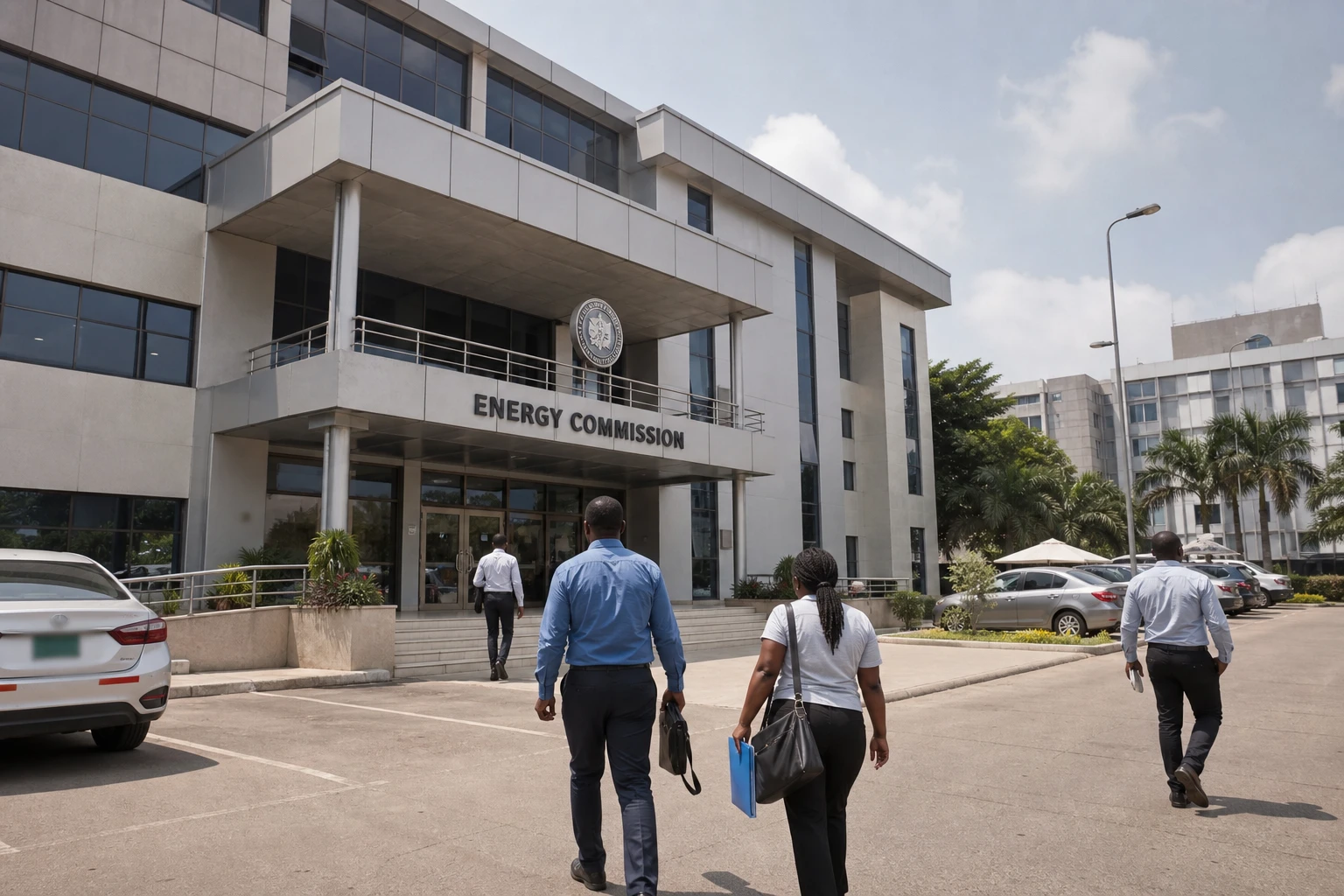
These volumes reveal more than the strength of demand. They also show that system stability still depends on a small number of operators and power stations. The Ghanaian energy ministry’s website says the national electricity mix combines hydropower, thermal power, solar and imports, but that cross-border trading remains part of a strategy to expand the grid. In 2025, the Energy Commission had already indicated that the country’s generation relied heavily on thermal power, with renewables other than large-scale hydropower accounting for a smaller share.
Gas, fuel oil and reserve capacity: grid security hinges on efficiency
The July bulletin highlights a reserve margin of 24.82%, above the adequacy threshold of 18%. On paper, the system therefore has room to absorb the peak. But this margin is costly, as it rests on continued dependence on fossil fuels. The document cited by the Ghanaian press says the Karpower floating power plant supplied 312 GWh, or 13.45% of the national total, while Sunon Asogli contributed 285 GWh. The weight of these large thermal units confirms a familiar reality in the sector: gas availability directly affects the quality of service.
Gas consumption rose 9.25% year on year, and a significant share of supplies comes from the offshore Cape Three Points field operated by Eni, according to figures reported in the bulletin. When gas is scarce or becomes too expensive, power stations switch to fuel oil. In July, they consumed 187,517 barrels of liquid fuel, comprising heavy fuel oil, light fuel and diesel. This dependence raises generation costs, which then feed into budgetary decisions and tariffs and ultimately affect households and businesses.
The Minister for Energy and Green Transition, John Abdulai Jinapor, confirmed in August that Ghana was working to export electricity to Nigeria. This ambition is part of a broader strategy to turn the country into a West African energy hub. But the regulator points to a simple constraint: exports must not undermine domestic supply. At this stage, capacity is available, but its deployment depends on maintenance, access to gas and the grid’s operational discipline.
Real exports, but declining
Regionally, Ghana remains a net electricity exporter. In July 2026, 191 GWh was sent to three main destinations: Burkina Faso, Togo and Benin, and Côte d’Ivoire. Imports remained marginal, at 2.62 GWh from Côte d’Ivoire. This trade takes place within a West African region where interconnections have been in place for many years and Ghana already plays a role in transit and exchange, notably through links with Togo, Benin and Burkina Faso.
But exports fell 5.63% year on year and 15.28% compared with June 2026. This is an important signal. A country can have spare capacity and remain an exporter, yet see its ability to sell abroad fluctuate as domestic demand rises or fuel supplies tighten. This matters to industrial operators. It also matters to urban households, since the domestic market may again take priority under stress. In rural areas, where service quality depends even more on grid resilience, the issue is less symbolic than operational.
What this says about Ghana and West Africa
Ghana is at a regional crossroads. On the one hand, it has a sufficiently robust electricity base to support exports and its integration ambitions. On the other, it remains dependent on a thermal model that leaves it vulnerable to gas shocks, changes in fuel oil prices and maintenance constraints. This situation is not unique to Ghana. More broadly, it reflects the unfinished transition of several West African electricity systems: the need for interconnections, reserves and financing, but also for a faster expansion of renewables and energy efficiency.
At continental level, the issue connects with discussions on the African electricity market and cross-border trade envisaged by the African Union and its regional partners. Ghana’s case shows that a country can be technically ready to export more while remaining locked into a costly and overly concentrated mix. The next test will therefore have less to do with hub rhetoric than with three concrete factors: access to gas, the stability of the thermal fleet and the ability to protect the domestic market without giving up Ghana’s role in West African trade.