Algeria
 Egypt
 Libya
 Morocco
 Sudan
 Tunisia
 Benin
 Burkina Faso
 Cabo Verde
 Côte d'Ivoire
 Ghana
 Guinea
 Guinea-Bissau
 Liberia
 Mali
 Mauritania
 Niger
 Nigeria
 Senegal
 Sierra Leone
 The Gambia
 Togo
 Cameroon
 Central African Republic
 Chad
 DR Congo
 Equatorial Guinea
 Gabon
 Republic of the Congo
 São Tomé and Príncipe
 Burundi
 Comoros
 Djibouti
 Eritrea
 Ethiopia
 Kenya
 Madagascar
 Malawi
 Mauritius
 Mozambique
 Rwanda
 Seychelles
 Somalia
 South Sudan
 Tanzania
 Angola
 Botswana
 Eswatini
 Lesotho
 Namibia
 South Africa
 Zambia
 Zimbabwe
In Tooro, succession is never just a name
In Fort Portal, western Uganda, the death of a ruler does not only unsettle a palace. It also tests the balance within a traditional kingdom, the expectations of a royal family and the stance of a state that regulates these institutions without granting them political sovereignty. The battle over the succession to the kingdom of Tooro makes this clear.
The issue is all the more sensitive because Tooro remains one of Uganda’s historic recognised kingdoms, alongside Buganda, Bunyoro, Busoga and Rwenzururu. These institutions have a cultural, not state, role, but retain real influence in social life, clan alliances and symbolic arbitration. In a country where traditional authority coexists with central government, a transition at the head of a kingdom is always more than a formality.
A transition opened by Oyo’s death
King Oyo Nyimba Kabamba Iguru Rukidi IV died on 27 August 2026, aged 34, after suffering from cancer, according to consistent reports. His death ended a reign that began in 1995, when he was just three years old. He became known in the public imagination as the “world’s youngest king”. His official funeral is scheduled for 12 September 2026, after his body arrives in Uganda and tributes are paid on his return.
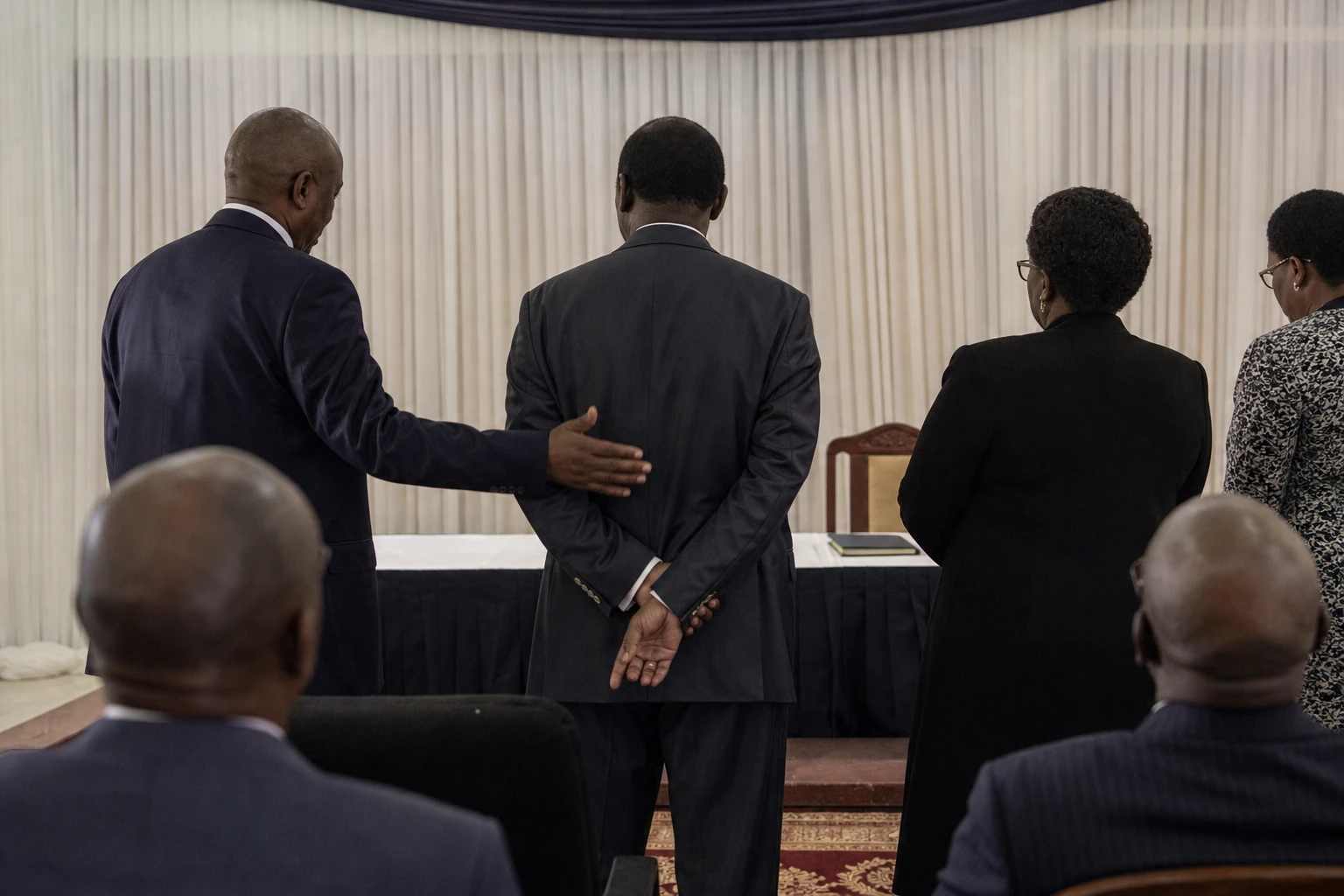
Succession was entrusted to a committee drawn from the royal Babiito clan. The committee announced that it had chosen Edward Rukidi Kijanangoma, a journalist and editor at public broadcaster Uganda Broadcasting Corporation, as the future monarch. The announcement was made at Karuziika Palace in Fort Portal, following internal consultations and a vote described as in keeping with clan custom.
But the choice did not settle the matter. It shifted it. The late king’s immediate family is challenging the process. Oyo’s sister, Ruth Komuntale, says she rejects a decision she considers divisive. Queen Mother Best Kemigisa, for her part, says the process was monopolised by a group of clan members and is calling for the family to be allowed to mourn without pressure. She has also spoken of soldiers around the royal palace. The government, meanwhile, has called for calm and reiterated that disputes over cultural leaders should first be handled through the customary mechanisms provided for under Ugandan law.
A cultural legacy, but also a political test
The tension goes beyond the question of who will wear the crown. It concerns how Uganda administers its kingdoms, restored in 1993. These institutions cannot exercise partisan power, but remain protected by a specific legal framework. The Institution of Traditional or Cultural Leaders Act, passed in 2011, provides mechanisms for resolving internal disputes and, as a last resort, allows recourse to the High Court if disagreements are not settled locally. In other words, Tooro’s succession is not just a family matter: it is also a test of the legal framework governing culture in Uganda.
The profile of the chosen candidate also sheds light on the clan’s decision. Edward Rukidi Kijanangoma is not only a member of the lineage; he is also a well-known media figure, which may reassure those seeking a clear, adult and swift transition after the prolonged period in which Oyo reigned from a very young age under a regency. By contrast, the late king’s relatives argue for a stricter reading of his presumed wishes and his will, citing the existence of an heir whose identity has not been made public. The conflict therefore pits two claims to legitimacy against each other: that of the clan chosen to decide, and that of the family calling for a presumed final wish to be honoured.
In the west of the country, the stakes are also social. The king’s funeral is expected to draw a large crowd to Fort Portal and the surrounding districts. For residents, traders, transport services and local authorities, an event of this kind involves the entire city. It also renews ties between clans, chieftaincies and local dignitaries. In a kingdom without sovereign power, ceremony nevertheless remains an instrument of influence.
What Tooro says about Uganda today
The Tooro affair is a reminder of a constant in Ugandan public life: central government and traditional institutions operate side by side, sometimes in cautious cooperation, sometimes in a grey area of symbolic rivalry. In Kampala, the authorities watch these monarchies closely because they can stabilise communities, but can also become centres of dissent if a succession is seen as having been seized. The culture ministry’s swift response and call for restraint show that the government wants to prevent the conflict from turning into an open crisis.
At regional level, the message is clear. In an East Africa shaped by political realignments, border tensions and debates over local authority, Uganda’s kingdoms remain important markers of identity. Tooro, located not far from the Congolese border, is also a reminder of how the cultural spaces of the Rift and Great Lakes regions extend beyond modern administrative boundaries. What happens next will depend on the ability of the clans, the state and the royal family to prevent a prolonged deadlock ahead of Oyo’s burial on 12 September 2026, and then to secure acceptance of a transition that remains contested.