Algeria
 Egypt
 Libya
 Morocco
 Sudan
 Tunisia
 Benin
 Burkina Faso
 Cabo Verde
 Côte d'Ivoire
 Ghana
 Guinea
 Guinea-Bissau
 Liberia
 Mali
 Mauritania
 Niger
 Nigeria
 Senegal
 Sierra Leone
 The Gambia
 Togo
 Cameroon
 Central African Republic
 Chad
 DR Congo
 Equatorial Guinea
 Gabon
 Republic of the Congo
 São Tomé and Príncipe
 Burundi
 Comoros
 Djibouti
 Eritrea
 Ethiopia
 Kenya
 Madagascar
 Malawi
 Mauritius
 Mozambique
 Rwanda
 Seychelles
 Somalia
 South Sudan
 Tanzania
 Uganda
 Botswana
 Eswatini
 Lesotho
 Namibia
 South Africa
 Zambia
 Zimbabwe
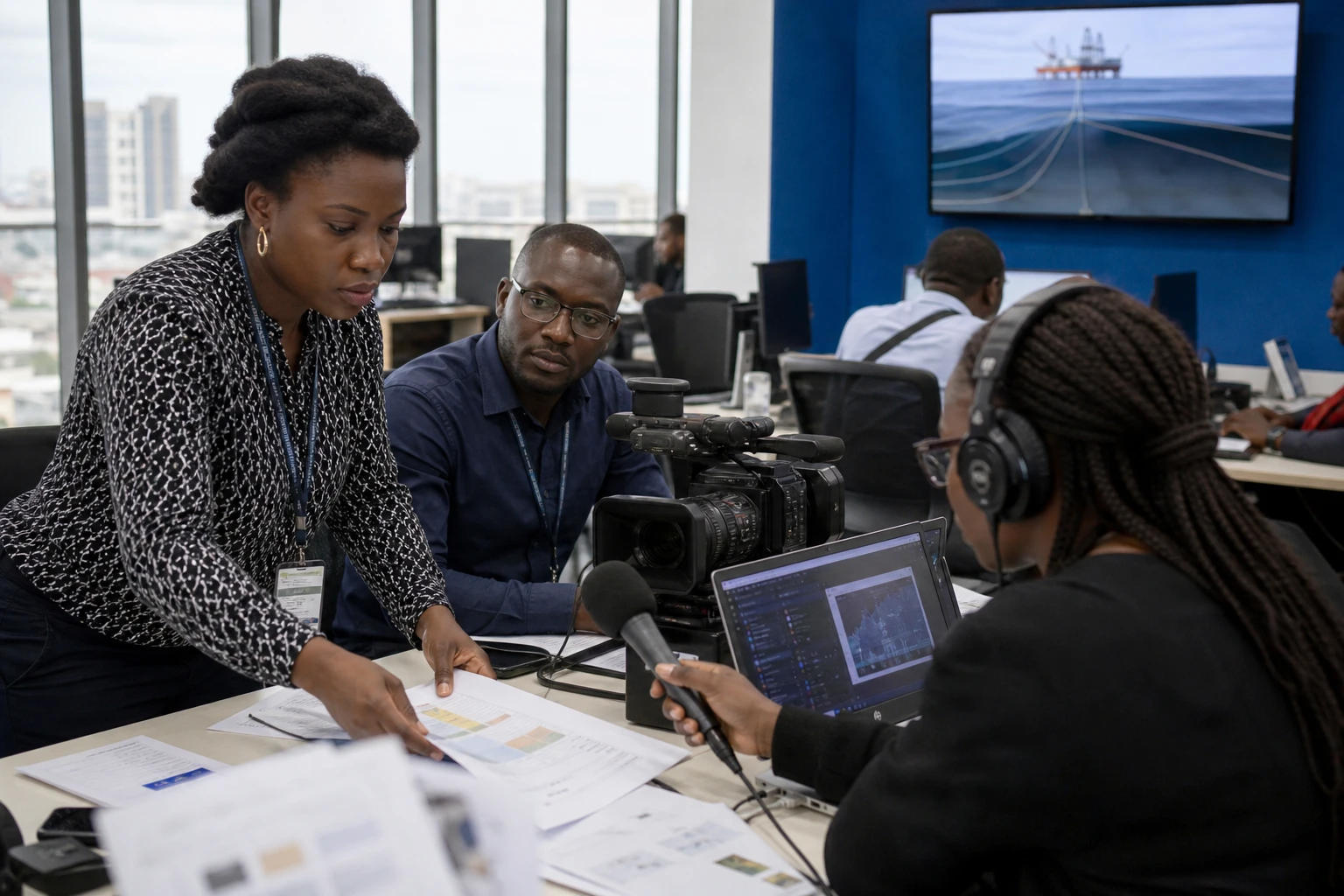
An old block that continues to deliver oil
In Angola, an offshore discovery is never just about barrels. It also shows how dependent the country remains on its subsoil, even as Luanda has spent years seeking to broaden its economic base. The latest announcement from Block 15 highlights this tension: extending oil revenues to fund the state while preparing an economy less dependent on crude.
On 9 September 2026, in Luanda, the National Agency for Petroleum, Gas and Biofuels and ExxonMobil reported a discovery at the Vicango Este-01 exploration well, in offshore Block 15 off Angola. The statement refers to a roughly 25-metre layer of hydrocarbon-bearing sandstone, drilled in about 940 metres of water. Recoverable volumes have not yet been specified. Reuters confirmed the announcement on the same day.
A strategic asset for Luanda and SADC
Block 15 is not a new exploration frontier. It is one of the country’s major mature fields and has been producing since the early 2000s. ExxonMobil says it holds interests in three deepwater blocks in Angola and reports that its net production in the country averaged 100,000 barrels a day in 2024. With oil still accounting for about 65% of public revenue, according to the World Bank, each additional discovery extends the life of infrastructure that has already been paid for.
The stakes also go beyond the national context. Angola is a member of the Southern African Development Community, SADC, which brings the region’s economies together around stability, trade and market integration. In this area, Angola carries weight through its hydrocarbons, but also through its investment needs, logistics corridors and ability to attract capital for large-scale projects. Block 15 is therefore part of a broader regional equation: how to monetise existing resources without delaying diversification.
What the figures say, and what they do not yet tell us
The new Vicango Este-01 well adds to a series of finds in the same area. ExxonMobil and its partners had already announced the discovery of Bavuca South-1 in 2022, the first on this block in nearly 20 years. In May 2024, Likembe-01 extended that momentum. The September 2026 announcement brings the number of discoveries claimed on Block 15 over the past three decades to 20, according to Angola’s regulator.
But a discovery does not yet amount to new production. Testing and reservoir assessments are needed, and often further investment is required to connect the new volume to existing facilities. This is where Block 15 remains valuable to ExxonMobil and the Angolan state: incremental developments cost less than building an entirely new platform. In May 2026, specialist sources reported a subcontract for the subsea network linked to the Likembe Redevelopment 2.0 project, evidence that the operator continues to invest in unlocking the value of existing assets.
The timing of this announcement is significant. In July 2025, ANPG confirmed an addendum extending the Block 15 licence to 2037. A few months later, in November 2025, the regulator approved a final investment decision to extend the life of the Mondo and Saxi-Batuque facilities to 2032. In other words, Luanda is not betting only on a new field. It is securing a longer cycle around the same industrial basin.
Why this discovery matters for Angola’s economy
Angola remains highly exposed to oil. The World Bank estimates that crude still accounts for about 30% of GDP, 65% of revenue and more than 95% of goods exports. The International Monetary Fund, for its part, notes that a sharp decline in oil production weakened the fiscal and external positions in 2025, while public financing needs continue to weigh on private credit and social spending. In this context, any improvement in reserves or future output is immediately political.
For the Angolan state, the question is not simply how to produce more. It is also how to turn this resource into fiscal headroom, foreign exchange and skilled jobs. For companies, the incentive is different: to extend still-profitable assets, limit infrastructure costs and secure a deepwater portfolio. For households, the effect is more indirect. In a country where low non-oil incomes remain a major challenge, the discovery will not immediately change daily life. It could, however, support public finances, provided revenues are channelled more effectively into transport, energy, education and health.
The sector is already showing signs of a technical recovery. Angola’s Ministry of Mineral Resources, Petroleum and Gas says the Angola Oil & Gas 2026 conference, held in Luanda on 9 and 10 September, is focusing its discussions on deepwater exploration, financing, new licences and extending asset life. This concentration of topics captures the current approach: the country still wants to benefit from its offshore resources, but through a strategy of returns and asset life extension, not a headlong rush.
What to watch in the coming months
What happens next will depend on three stages. First, the technical results from Vicango Este-01 and possible confirmation of commercially exploitable volumes. Second, investment decisions that could connect the well to the floating units already operating on Block 15. Finally, Luanda’s ability to turn this new momentum into macroeconomic stability, after leaving OPEC in late 2023 to regain greater freedom over its oil policy. If these pieces fall into place, Block 15 will remain one of the pillars of Angola’s offshore sector. Otherwise, the discovery will be another promise in an economy still seeking to free itself from oil without giving it up.