Algeria
 Egypt
 Libya
 Morocco
 Sudan
 Tunisia
 Benin
 Cabo Verde
 Côte d'Ivoire
 Ghana
 Guinea
 Guinea-Bissau
 Liberia
 Mali
 Mauritania
 Niger
 Nigeria
 Senegal
 Sierra Leone
 The Gambia
 Togo
 Cameroon
 Central African Republic
 Chad
 DR Congo
 Equatorial Guinea
 Gabon
 Republic of the Congo
 São Tomé and Príncipe
 Burundi
 Comoros
 Djibouti
 Eritrea
 Ethiopia
 Kenya
 Madagascar
 Malawi
 Mauritius
 Mozambique
 Rwanda
 Seychelles
 Somalia
 South Sudan
 Tanzania
 Uganda
 Angola
 Botswana
 Eswatini
 Lesotho
 Namibia
 South Africa
 Zambia
 Zimbabwe
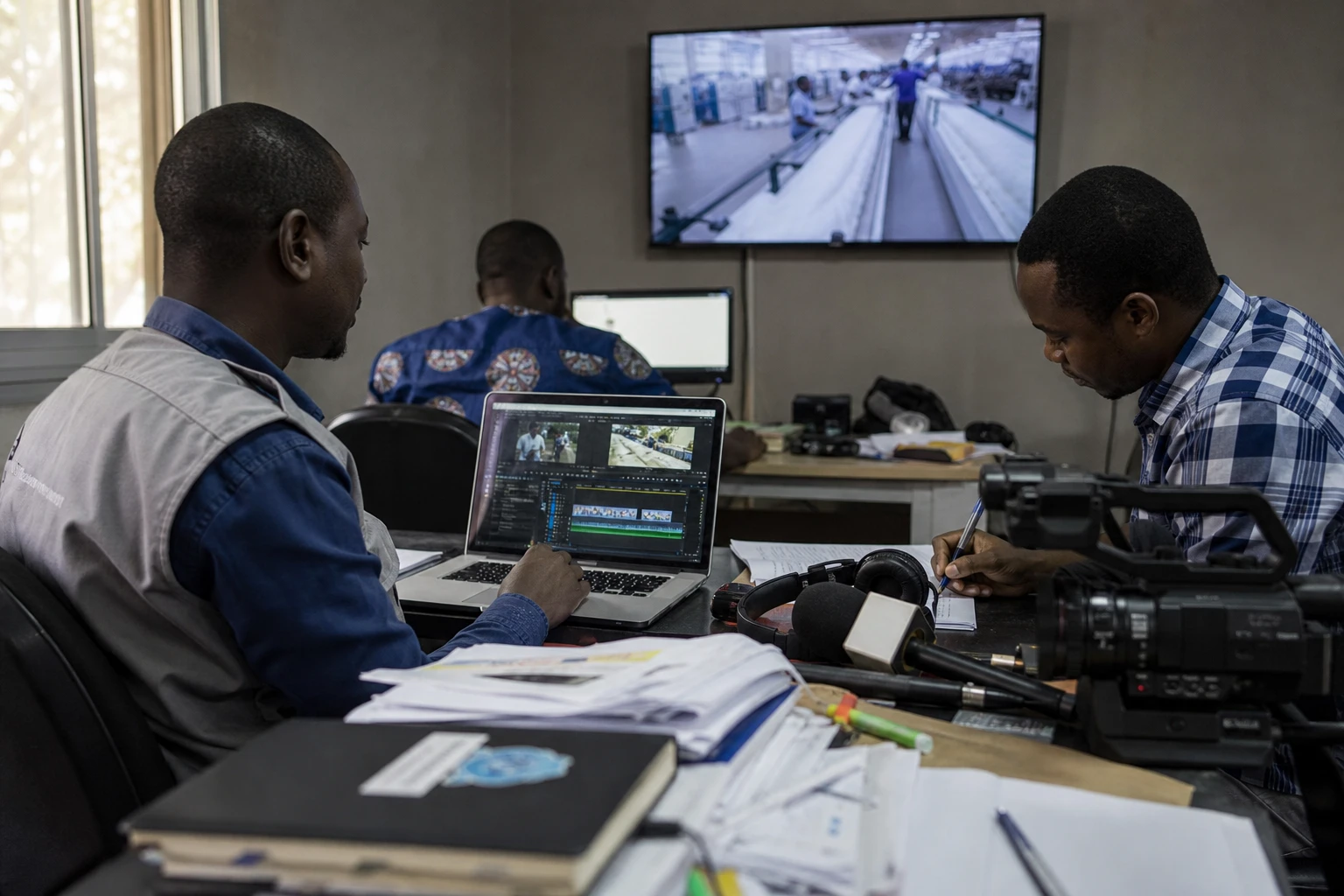
When cotton leaves not just as bales, but as fabric
In Burkina Faso, the question is no longer just how to produce cotton. It is now where value is created. In Bobo-Dioulasso, the TEXFORCES-BF textile complex has just opened a new chapter in this industrial drive: processing more local fibre at home, rather than letting most of the wealth leave the country. The inauguration took place on Wednesday 9 September 2026 in Logofourousso, in the commune of Bobo-Dioulasso.
This approach addresses a very practical issue for the people of Burkina Faso: reducing dependence on imports, creating skilled jobs and strengthening the local productive base. It is also part of a broader industrialisation drive pursued by the Burkinabè authorities in recent months, with SOFITEX at the heart of the cotton sector.
Bobo-Dioulasso, an industrial crossroads and cotton-growing area
The choice of Bobo-Dioulasso is no coincidence. The city remains the country’s main economic hub in the west and an area directly linked to the cotton sector. The factory is located in Logofourousso, on the Bobo-Orodara road, at the heart of an agricultural and commercial zone already structured around this crop.
The complex is part of a national context in which SOFITEX is seeking to revive production and secure industrial outlets. The state-owned company recently reiterated its ambition to reach at least 500,000 tonnes of seed cotton for the 2026-2027 season, while the authorities have presented textiles as a lever for economic sovereignty.
In a country that is a member of WAEMU, a West African bloc sharing the CFA franc and some monetary rules, this kind of project goes beyond a single factory. It has implications for regional competitiveness, sub-regional trade and Burkina Faso’s ability to retain a larger share of added value at home.
What TEXFORCES-BF plans
The industrial complex brings together several links in the textile chain: spinning, weaving and knitting, dyeing, finishing and garment-making. According to information published by Burkinabè media, its annual capacity can reach 20 million metres of woven fabric, 5 to 6 million knitted items, up to 20 million metres of fabric finished and dyed, as well as several million garments, T-shirts and pairs of socks. Ultimately, the stated ambition is to process up to 50,000 tonnes of cotton a year and produce more than 20 million garments annually.
The site itself covers 30 hectares. The infrastructure was designed primarily to meet the needs of the Defence and Security Forces, the Volunteers for the Defence of the Homeland and paramilitary corps. But it is also targeting the civilian market, with a gradual move upmarket towards professional customers, followed by sub-regional and international outlets.
The project did not spring up overnight. The company was launched in March 2024, the foundation stone was laid in April 2024, and its share capital was raised to 17 billion CFA francs to support industrial expansion. This speed says something about the pace sought by the authorities: to move quickly while giving concrete shape to the promise of industrialisation.
Burkinabè cotton, from harvest to processing
On the agricultural front, the figures show that there is a raw-material base. The 2025-2026 season was reported at 314,293 tonnes of seed cotton by some Burkinabè sources, while other market estimates put it at 336,812 tonnes for the same season. For 2026-2027, SOFITEX is targeting at least 500,000 tonnes, while figures reported in national media cite a government target of 532,000 tonnes of conventional seed cotton. The exact figure therefore depends on the source and the date of the projection, but the trend is the same: production is recovering and the country wants to process more of it.
This is central. Burkina Faso is one of the region’s major cotton producers, but for a long time it exported a large share of its fibre without sufficient processing. The economic gains were then made elsewhere: in spinning, weaving, garment-making and distribution. With TEXFORCES-BF, the aim is to retain more jobs, skills and foreign currency in the country.
For producers, the expected benefits are twofold. First, a closer industrial outlet. Second, the prospect of stabilising the sector if local processing absorbs more of the harvest. For transporters, technicians, engineers, tailors and suppliers, an entire chain of occupations could take shape around textiles.
A signal for Burkina Faso and West Africa
Beyond Burkina Faso, the inauguration of TEXFORCES-BF sends a signal across West Africa. Several countries in the region produce cotton, but few process it on a large scale. The challenge is the same everywhere: to move beyond the status of raw-material supplier and towards local processing, regional integration and the development of industrial skills.
The project also comes amid mounting global pressure on the cotton sector. Markets remain marked by intense competition and price volatility, making local processing even more strategic for producing countries. In this context, Burkina Faso’s ability to link agriculture, industry and public procurement could influence its position in regional trade.
What happens next will depend on how quickly production is ramped up, access to energy, logistical quality, the availability of seed cotton and the competitiveness of finished products. But one thing is clear: in Bobo-Dioulasso, cotton is no longer seen simply as a harvest. It is becoming an industrial, social and strategic project, with Ouagadougou providing political support and Bobo-Dioulasso serving as its productive showcase.