Algeria
 Egypt
 Libya
 Morocco
 Sudan
 Tunisia
 Benin
 Burkina Faso
 Cabo Verde
 Côte d'Ivoire
 Ghana
 Guinea
 Guinea-Bissau
 Liberia
 Mali
 Mauritania
 Niger
 Nigeria
 Senegal
 Sierra Leone
 Togo
 Cameroon
 Central African Republic
 Chad
 DR Congo
 Equatorial Guinea
 Gabon
 Republic of the Congo
 São Tomé and Príncipe
 Burundi
 Comoros
 Djibouti
 Eritrea
 Ethiopia
 Kenya
 Madagascar
 Malawi
 Mauritius
 Mozambique
 Rwanda
 Seychelles
 Somalia
 South Sudan
 Tanzania
 Uganda
 Angola
 Botswana
 Eswatini
 Lesotho
 Namibia
 South Africa
 Zambia
 Zimbabwe
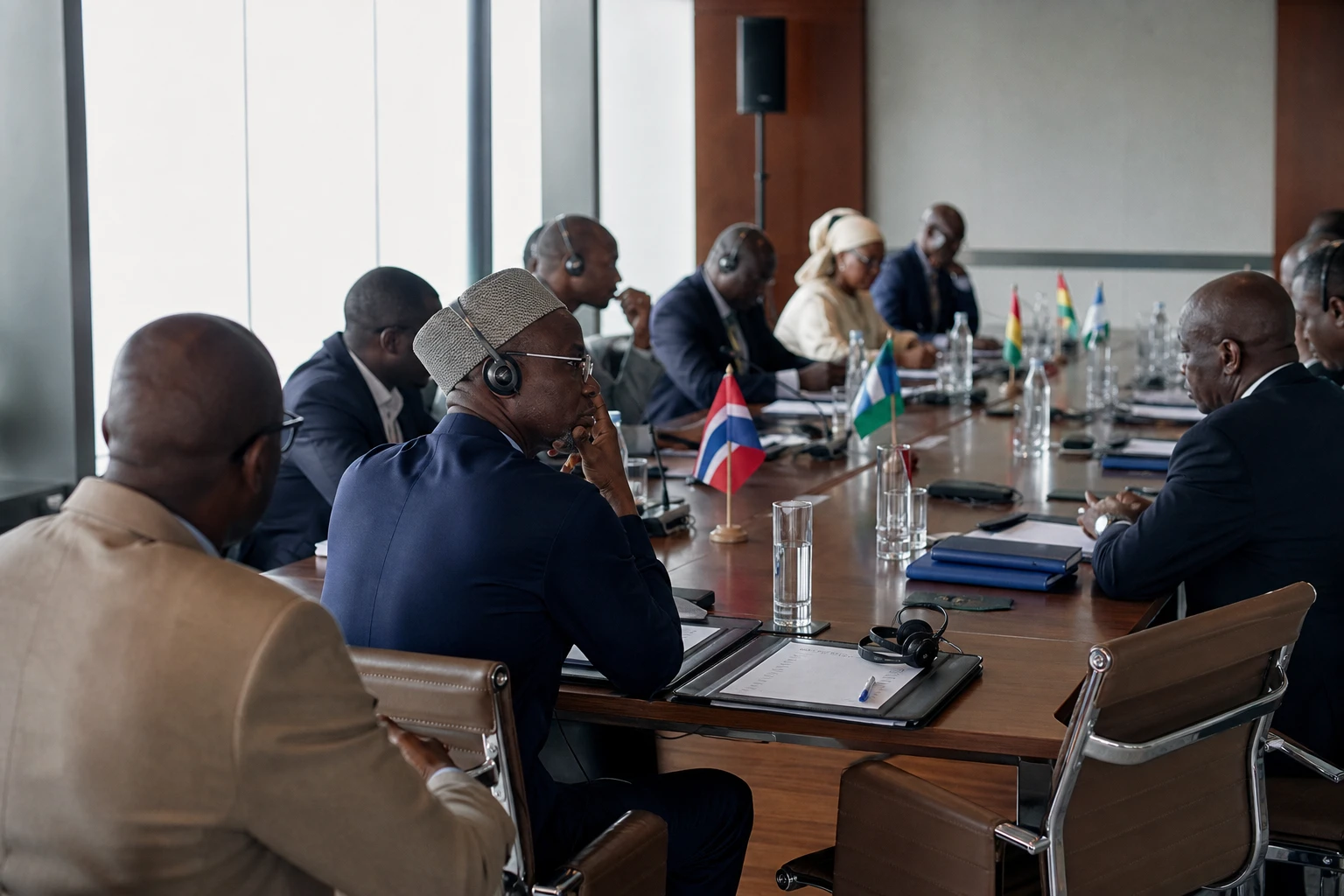
Outages spill beyond the technical sphere
In Banjul, a power cut is no longer just a domestic inconvenience. When fans stop, shops close early and darkness deepens over poorer neighbourhoods, anger turns political. This was the shift seen in The Gambia on the night of Monday 7 to Tuesday 8 September, with spontaneous gatherings in the capital and several localities in the Greater Banjul Area.
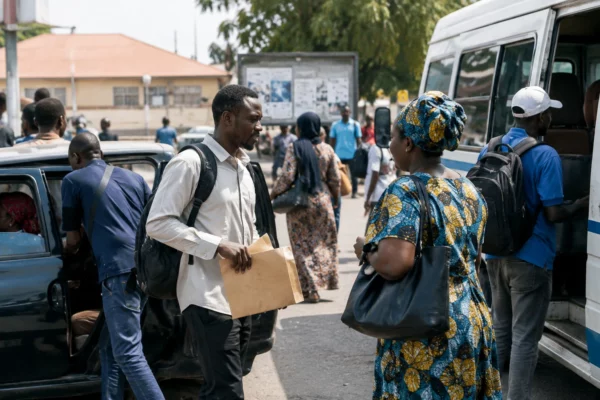
The movement’s symbolism was powerful: residents tried to march towards the headquarters of the National Water and Electricity Company, NAWEC, the state-owned water and electricity company. Police dispersed some groups, while clashes were reported around public infrastructure. At least 10 young people were arrested, according to the Gambian police, who also cited damage to police stations and NAWEC offices.
Power crisis returns to the fore
In The Gambia, debate over electricity has run through the country’s recent history. For several years, the authorities have promised a lasting improvement in supply in a state where NAWEC remains the central operator and provision also depends on regional interconnections, particularly with West African networks. The country belongs to ECOWAS, and the West African Power Pool, a specialised body of the Economic Community of West African States, covers 14 of the region’s 15 member states.
The Gambian government had already made energy a major priority on its agenda. In June 2026, NAWEC said the system’s difficulties stemmed in particular from a reduction in regional supply and set out a temporary emergency plan to secure electricity provision. Two months earlier, the company had also acknowledged night-time rationing, with planned outages between 8pm and 5am, because of insufficient generating capacity and fuel shortages.
This fragility is not new. Official documents and international partners have long described electricity as one of the weak points in Gambian development. The country has launched several projects to modernise and restore the network, while regional institutions are pushing for greater electricity integration in West Africa.
What the facts say about the protests
The protests broke out after weeks of prolonged outages, according to local media and the first reports from Banjul. Similar scenes were reported in Brusubi, Busumbala, Wellingara and other parts of the metropolitan area. In several neighbourhoods, tyres were burned, roads blocked and slogans hostile to the government chanted. Images circulated on social media amplified the movement within hours.
As tensions rose, President Adama Barrow spoke on the evening of Tuesday 8 September, according to Gambian press reports. In his address, he acknowledged difficulties in the electricity sector and promised an improvement by the end of October 2026. He also called for protests to remain peaceful and for public infrastructure not to be damaged.
A few days earlier, the head of state had already sought to reassure the country. On 3 September, he said his government was working urgently to address the sector’s crisis, while announcing the arrival of new machines and a 50-megawatt solar power plant project. These announcements show that the current unrest has not come as a complete surprise to the executive. Rather, it reveals a gap between public commitments and households’ lived experience.
Power crisis weighs on households and the informal economy
For Gambian families, outages first affect daily life. Food spoils, students revise in the dark, children sleep in the heat and small shops close early. In a country where the informal economy plays a major role, every hour without electricity means a direct loss of income for vendors, craftspeople, welding workshops, internet cafés, small shops and local services.
The pressure is also institutional. When an energy crisis leads to gatherings, the issue goes beyond NAWEC alone. It affects the state’s ability to provide a basic public service. It also raises questions about coordination between the presidency, the energy ministry, the regulator and the partners financing network upgrades. In The Gambia, where Banjul commands political attention while regions such as the West Coast and Lower River face the same tensions, the outage becomes a test of governance on a national scale.
The issue also touches on social cohesion. Protests over electricity can quickly become a space where social anger, political distrust and everyday frustration overlap. The authorities then try to maintain order without responding too harshly. Protesters, for their part, are demanding visible solutions, not just promises. This is where some of the government’s credibility is at stake.
What this episode says about The Gambia and the region
The Gambian case extends beyond Banjul. It is a reminder that West Africa’s energy transition still depends on fragile networks, regional imports, major investment and long lead times. ECOWAS and WAPP have established regional electricity market mechanisms, but the promise of more stable power is not being realised everywhere at the same pace.
The Gambia sits at this crossroads. The country is relying on regional integration to secure its electricity supply while seeking to increase domestic production. Progress is being made, but remains vulnerable to technical, financial and logistical setbacks. Until this equation is stabilised, any prolonged outage could reignite anger already poised to spill into the streets.
In the coming days, attention will remain focused on the implementation of the president’s announcements, the actual state of the network in the Greater Banjul Area and NAWEC’s ability to reduce the scheduled load-shedding. Beyond this episode, what is at stake in Banjul is the relationship between public services, public trust and West African energy integration.